
SpaceX's IPO submission highlights a contradiction in Musk's clean energy approach, as xAI consumes gas while Tesla offers solar solutions.
In summary, xAI utilizes unregulated gas turbines to power its data centers, while SpaceX’s IPO highlights a vision for solar energy in space. Tesla's solar efforts are notably absent from the conversation. The SpaceX IPO prospectus, filed on Wednesday, outlines plans for large-scale space-based solar power and indirectly indicates xAI's reliance on unregulated natural gas turbines, including intentions to purchase an additional $2.8 billion worth. Despite Tesla's founding premise of moving away from fossil fuels, it barely appears as a power provider, creating a contradiction now recorded with the SEC.
Tesla has issued four Master Plans over the years, consistently advocating for the electrification of the economy. In 2006, Musk articulated Tesla’s mission to facilitate the shift from a hydrocarbon economy to one powered by solar energy. Just three years ago, Master Plan Part 3 described a thorough strategy to eliminate fossil fuels, emphasizing terrestrial solar, battery storage, and electrified transport as crucial elements for decarbonizing the global economy.
However, with the formation of xAI, which merged with SpaceX in February at a valuation of $1.25 trillion, the company seems to have adopted the very fossil fuel-dependent approach Tesla sought to replace. xAI’s data centers in Memphis rely on numerous unregulated natural gas turbines; the planned $2.8 billion investment in additional turbines suggests a long-term commitment to fossil fuel infrastructure.
Musk’s companies have a history of transactions between them. SpaceX purchased $131 million worth of 1,279 Cybertrucks, and xAI has spent $697 million on Tesla Megapacks for energy management at its data centers. However, xAI hasn’t procured a substantial number of solar panels from Tesla Energy, which was created to promote solar technology that Musk once claimed would be foundational for the future economy.
The SpaceX filing does mention solar power but exclusively within the context of space. The company claims that space-based solar arrays can produce "more than five times the energy" compared to those on Earth due to continuous sunlight. With terrestrial AI data centers facing opposition from local communities, regulators, and grid operators, Musk and his team are exploring the possibility of deploying server racks in orbit, harnessed by constant sunshine. The Starship program, which has incurred over $15 billion in expenses, is being positioned as the vehicle that could make this feasible.
However, as noted by TechCrunch's Tim De Chant, the economics are quite challenging. The costs to power Starlink satellites are significantly higher than typical terrestrial data centers. Additional expenses arise from the need to protect AI chips from radiation, thermal changes, and micrometeorite impacts, which are not concerns on the ground. Furthermore, it remains uncertain whether AI training workloads can be distributed across multiple satellites, leaving a portion of intensive AI computation bound to Earth regardless of launch costs. Transporting solar panels via truck consumes less energy than launching them into orbit.
A notable claim in the filing indicates that SpaceX believes "third-party estimates on data center demand are constrained by the practical supply limitations that exist in a terrestrial context," suggesting that the real energy demand may exceed existing research figures. The company refers to “terawatt-scale annual AI compute growth,” projecting a significant rise in global energy needs, given that humanity currently uses around 4 terawatts continuously and data centers consume about 40 gigawatts collectively. Musk anticipates that AI alone will require annual additions measured in terawatts.
The SpaceX IPO, expected to generate $75 billion next month, will partially hinge on this vision of the future. Investors are encouraged to support a notion where the current terrestrial energy system is inadequate for AI demand, positioning SpaceX as the solution from space. This narrative is compelling, yet it conveniently overlooks the current reality that Musk’s AI company is relying on natural gas instead of utilizing the solar technology produced by Tesla.
The energy challenge facing AI data centers is pressing. OpenAI recently paused its Stargate UK project due to industrial electricity costs that are more than four times those in the US. Global data center power consumption is projected to reach 150 GW by 2030. The issue is not whether AI will require more energy but whether to invest in additional terrestrial solar, which has seen a 90% reduction in cost over the last decade and can be deployed on a large scale now, or to wait for technology that necessitates launching hardware into space on rockets that still struggle to reliably land boosters.
Tesla’s solar and energy storage division generated $2.8 billion in revenue in the first quarter of 2026 alone. The Megapack factory in Lathrop, California, supplies grid-scale batteries to utilities and industrial customers globally. Tesla Energy is undeniably one of the leading clean energy companies in the world, yet Musk’s latest venture opted for gas turbines.
Enterprise AI spending is accelerating rapidly, with Salesforce anticipating $300 million in Anthropic token spending this year. The infrastructure needed for this
Other articles
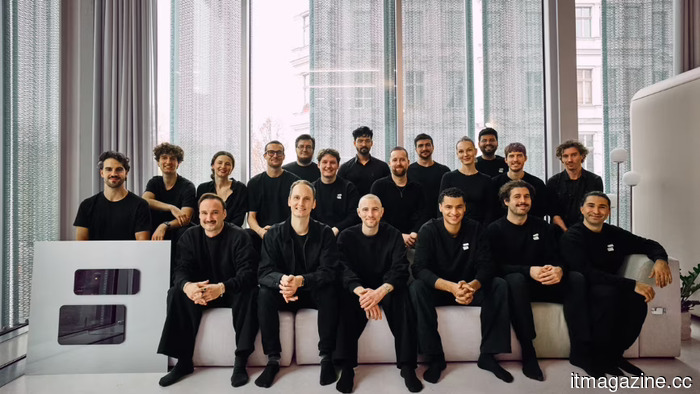 Berlin's Peec AI saw its revenue increase more than twofold to $10 million ARR within six months. Its solution assists brands in appearing in ChatGPT.
The GEO startup secured its Series A funding at a $4M ARR six months back. It is now monitoring $10M, with billboards placed outside competitor offices throughout Berlin.
Berlin's Peec AI saw its revenue increase more than twofold to $10 million ARR within six months. Its solution assists brands in appearing in ChatGPT.
The GEO startup secured its Series A funding at a $4M ARR six months back. It is now monitoring $10M, with billboards placed outside competitor offices throughout Berlin.
 Moz Pro now monitors your brand within ChatGPT and Gemini | TNW Deals
The new AI Visibility feature from Moz Pro monitors your brand's presence in ChatGPT and Gemini responses, as well as your standing against competitors. Experience it for free.
Moz Pro now monitors your brand within ChatGPT and Gemini | TNW Deals
The new AI Visibility feature from Moz Pro monitors your brand's presence in ChatGPT and Gemini responses, as well as your standing against competitors. Experience it for free.
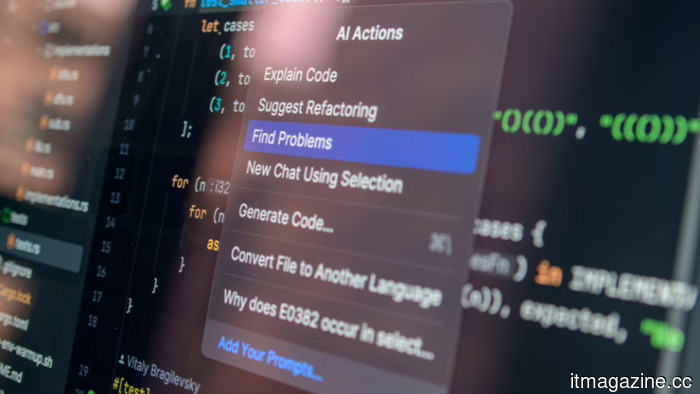 Anthropic's Claude Mythos identified 10,000 critical vulnerabilities within a single month. The patches are unable to keep pace.
The partners of Project Glasswing utilized Claude Mythos to identify 1,094 verified high-severity vulnerabilities in over 1,000 open-source projects. Only 97 of these have been resolved.
Anthropic's Claude Mythos identified 10,000 critical vulnerabilities within a single month. The patches are unable to keep pace.
The partners of Project Glasswing utilized Claude Mythos to identify 1,094 verified high-severity vulnerabilities in over 1,000 open-source projects. Only 97 of these have been resolved.
 The CEO of Xiaomi acknowledged that his SUV was not priced competitively enough to surpass Tesla, so he introduced a new model that is.
The new YU7 Standard Edition is priced at $4,350 less than the Model Y and has a range that exceeds it by 50km. Xiaomi has delivered 600,000 electric vehicles in less than two years.
The CEO of Xiaomi acknowledged that his SUV was not priced competitively enough to surpass Tesla, so he introduced a new model that is.
The new YU7 Standard Edition is priced at $4,350 less than the Model Y and has a range that exceeds it by 50km. Xiaomi has delivered 600,000 electric vehicles in less than two years.
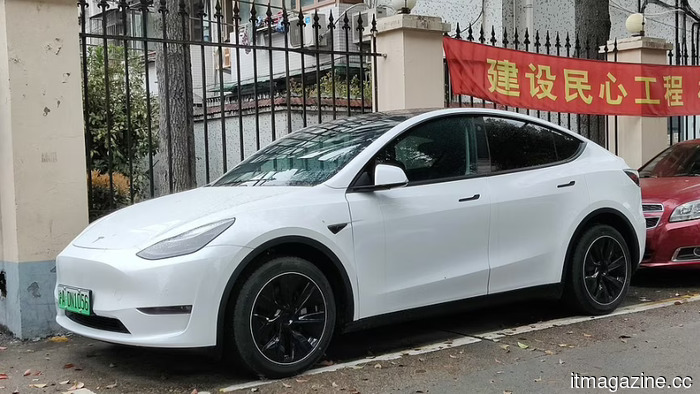 Tesla has finally introduced FSD in China, while its competitors have been offering self-driving vehicles in the country for several years.
Tesla's Full Self-Driving (Supervised) is now available in China, following Musk's visit with Trump to Beijing last week. Meanwhile, Chinese competitors are already providing Level 3 autonomy.
Tesla has finally introduced FSD in China, while its competitors have been offering self-driving vehicles in the country for several years.
Tesla's Full Self-Driving (Supervised) is now available in China, following Musk's visit with Trump to Beijing last week. Meanwhile, Chinese competitors are already providing Level 3 autonomy.
 South Korea's deputy prime minister indicates that the wealth generated by AI should be advantageous to the public, citing the recent Samsung strike as an example.
Deputy Prime Minister Bae cautioned that conflicts in the workforce driven by AI will continue to arise with the emergence of "super-large companies" and emphasized the need for an "AI-inclusive society."
South Korea's deputy prime minister indicates that the wealth generated by AI should be advantageous to the public, citing the recent Samsung strike as an example.
Deputy Prime Minister Bae cautioned that conflicts in the workforce driven by AI will continue to arise with the emergence of "super-large companies" and emphasized the need for an "AI-inclusive society."
SpaceX's IPO submission highlights a contradiction in Musk's clean energy approach, as xAI consumes gas while Tesla offers solar solutions.
xAI invested $2.8 billion in gas turbines, while Tesla offers solar panels. SpaceX's S-1 promotes space-based solar energy as the solution, but the calculations are still not conclusive.