
Corsair has begun to include Chinese DRAM in its DDR5 memory kits. This might lead to a decrease in memory prices.
Corsair DDR5 modules featuring Chinese CXMT chips have been identified as AI demand creates a DRAM shortage for PCs, with potential price drops anticipated in the second half of 2027. Corsair, a well-known brand in PC components, is now shipping DDR5 memory modules utilizing DRAM from ChangXin Memory Technologies, China's largest chipmaker. Hardware enthusiast @wxnod shared screenshots on X showcasing a Corsair Vengeance DDR5-6000 module, identified as part number CMK5X16G3E60C36A2, with both CPU-Z and HWiNFO64 confirming ChangXin Technologies as the DRAM manufacturer instead of Corsair's usual supplier, Micron. This module operates at 6000 MT/s with CL36 timings at 1.35V, supporting Intel XMP and AMD EXPO overclocking profiles, and its specifications are comparable to similar Samsung or SK Hynix kits.
This shift is significant as it indicates that the AI-driven memory crunch has prompted Western brands to look towards Chinese manufacturers for their supply chains. Samsung, SK Hynix, and Micron have mainly allocated their production capabilities to high-bandwidth memory for AI accelerators, resulting in a persistent undersupply in the consumer PC market. Consequently, DDR5 prices have surged throughout 2026. In late April, Samsung and SK Hynix collectively expressed concerns that AI-related memory shortages are likely to continue into 2027 and even beyond, with hyperscalers securing supplies years in advance, thus creating a challenging environment for PC builders.
CXMT is poised to take advantage of this market gap, holding about 7.7% of the global DRAM market and counting major companies like Alibaba, Tencent, and ByteDance among its clients. The company provides DDR5 dies in 16 Gb and 24 Gb configurations, with speeds reaching up to 8,000 MT/s. Its Q1 2026 revenue skyrocketed to 50.8 billion yuan ($7.4 billion), marking a 719% year-on-year increase, and it reported a net profit of 33 billion yuan ($4.4 billion) after experiencing losses the previous year. CXMT is also reportedly preparing for a listing on the Shanghai Stock Exchange later this year.
Kye-hyun Kyung, a former head of Samsung's chip and display division, commented at an engineering forum in Korea that Chinese firms are rapidly increasing their memory production capacity, suggesting some relief may arrive in the second half of 2027. Both CXMT and YMTC, the leading NAND flash manufacturer in China, are expected to nearly double their wafer output through a major expansion initiative. Other Chinese companies, such as Jiahe Jinwei, are also boosting production of DDR5 RDIMMs for data centers and server applications.
The crucial question, highlighted by Tom’s Hardware, is whether lower sourcing costs will lead to reduced retail prices. While Corsair may be acquiring CXMT DRAM at a reduced cost, they might still sell the finished modules at the same elevated prices supported by the shortage. Until Chinese supply scales enough to exert significant downward pressure on the overall market, the benefit to consumers may be limited to enhanced availability rather than lower prices.
There are structural reasons to believe that price reductions will eventually occur, albeit not immediately. According to market research firm Omdia, CXMT’s current monthly wafer production is around 240,000 units, roughly half of SK Hynix's capacity and about a third of Samsung’s, which is insufficient to saturate the market. However, production growth is rapid, and CXMT has a structural edge over the Big Three: it has no commitments to AI contracts. Unlike Samsung and SK Hynix, which must prioritize production lines for HBM4 and LPDDR5X for Nvidia, AMD, and large-scale cloud providers, CXMT can focus on consumer PC memory that is currently less prioritized by others.
Samsung’s labor dispute adds further uncertainty to the supply landscape, with the company’s largest union threatening an 18-day strike starting May 21. South Korea’s prime minister has warned that this could incur losses of up to $668 million per day. If the strike occurs, Samsung's already limited consumer DRAM output would be further strained, likely accelerating the shift towards Chinese alternatives.
The geopolitical context cannot be overlooked. The US has imposed restrictions on the export of advanced chipmaking tools to China, particularly EUV lithography equipment from ASML, limiting CXMT's ability to produce the most advanced memory nodes. However, consumer DDR5 does not require EUV technology. The memory used in gaming PCs or workstations can be produced using older process nodes that CXMT already has and is unaffected by export restrictions. Ironically, US sanctions meant to impede China's semiconductor industry may inadvertently bolster Chinese leadership in the very market segment that remains unimpacted by these restrictions.
The DDR5 price crisis is apparent in consumer hardware. Asus's new flagship gaming mini
Other articles
 You can now submit Codex tasks from your phone even if your Mac is locked.
OpenAI's Codex is now able to operate applications on your Mac remotely from your phone, even if the screen is turned off and the Mac is locked. Here’s how it functions and what you should consider.
You can now submit Codex tasks from your phone even if your Mac is locked.
OpenAI's Codex is now able to operate applications on your Mac remotely from your phone, even if the screen is turned off and the Mac is locked. Here’s how it functions and what you should consider.
 South Korea's deputy prime minister indicates that the wealth generated by AI should be advantageous to the public, citing the recent Samsung strike as an example.
Deputy Prime Minister Bae cautioned that conflicts in the workforce driven by AI will continue to arise with the emergence of "super-large companies" and emphasized the need for an "AI-inclusive society."
South Korea's deputy prime minister indicates that the wealth generated by AI should be advantageous to the public, citing the recent Samsung strike as an example.
Deputy Prime Minister Bae cautioned that conflicts in the workforce driven by AI will continue to arise with the emergence of "super-large companies" and emphasized the need for an "AI-inclusive society."
 You can now listen to Audible's top podcasts directly on Apple Podcasts.
Audible members can now access nearly 700 premium podcast titles on Apple Podcasts, with the subscription available in 135 countries and more titles expected to be added soon.
You can now listen to Audible's top podcasts directly on Apple Podcasts.
Audible members can now access nearly 700 premium podcast titles on Apple Podcasts, with the subscription available in 135 countries and more titles expected to be added soon.
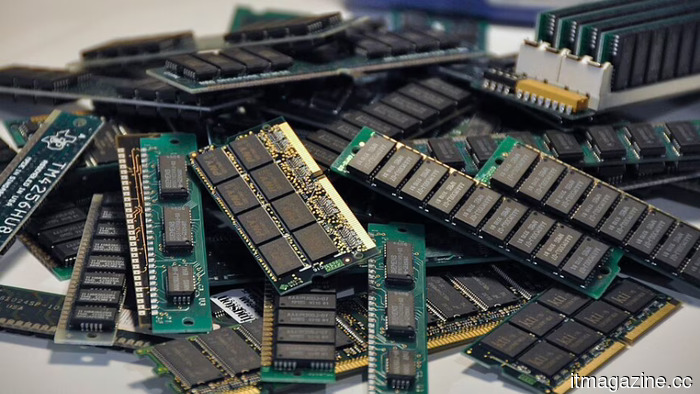 Corsair is now incorporating Chinese DRAM in its DDR5 memory kits. This could potentially lead to a decrease in memory prices.
CXMT chips have been noticed in Corsair Vengeance DDR5 modules, as Samsung, SK Hynix, and Micron focus more on AI memory rather than on consumer PCs.
Corsair is now incorporating Chinese DRAM in its DDR5 memory kits. This could potentially lead to a decrease in memory prices.
CXMT chips have been noticed in Corsair Vengeance DDR5 modules, as Samsung, SK Hynix, and Micron focus more on AI memory rather than on consumer PCs.
 The Moto Edge 70 Pro+ will feature the camera configuration that Motorola previously overlooked.
Although the Moto Edge 70 Pro+ isn't completely fresh, its camera configuration might be the enhancement that Edge 70 Pro purchasers were seeking from the beginning.
The Moto Edge 70 Pro+ will feature the camera configuration that Motorola previously overlooked.
Although the Moto Edge 70 Pro+ isn't completely fresh, its camera configuration might be the enhancement that Edge 70 Pro purchasers were seeking from the beginning.
 This new feature in Raycast 2.0 is driving me crazy.
Raycast 2.0 is an excellent update, but a modification to the clipboard history has disrupted my workflow entirely. Here's the change that occurred and how to resolve it.
This new feature in Raycast 2.0 is driving me crazy.
Raycast 2.0 is an excellent update, but a modification to the clipboard history has disrupted my workflow entirely. Here's the change that occurred and how to resolve it.
Corsair has begun to include Chinese DRAM in its DDR5 memory kits. This might lead to a decrease in memory prices.
CXMT chips have been identified within Corsair Vengeance DDR5 modules, as Samsung, SK Hynix, and Micron focus on AI memory instead of consumer PCs.