
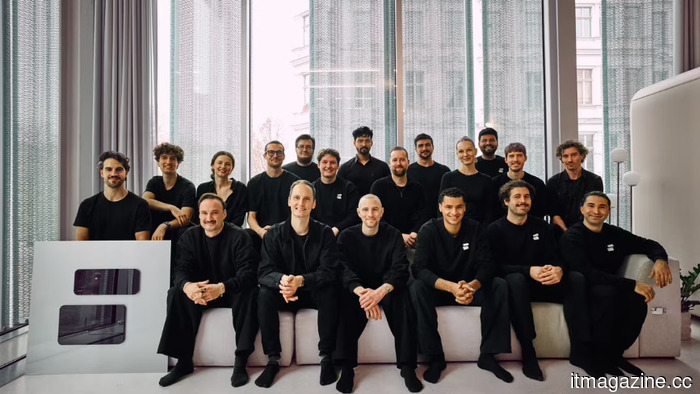
Berlin's Peec AI increased its revenue to $10 million in annual recurring revenue (ARR) in just six months. The company's product assists brands in appearing in ChatGPT.
TL;DR Berlin's Peec AI has reached $10 million in annual recurring revenue just six months after securing a $21 million Series A with a valuation exceeding $100 million, up from around $4 million ARR. The startup assists brands in tracking and enhancing their status in AI-generated search results.
Peec AI, based in Berlin, has surpassed $10 million in annualized revenue, according to verified internal data reviewed by TechCrunch. This achievement comes six months after the company raised $21 million in Series A funding at a valuation over $100 million, when it was operating at just over $4 million ARR. The company’s revenue has more than doubled, with an accelerating growth rate.
Peec operates in a relatively new field known as generative engine optimization (GEO), which emerged only 18 months ago. Unlike traditional SEO tools that monitor a brand’s ranking on Google, Peec’s platform tracks whether a brand appears when users input specific prompts into AI chatbots like ChatGPT, Claude, Gemini, or Perplexity, which are increasingly taking the place of search engines. As users move from clicking on links to posing questions, brands that feature in AI chatbot responses gain the attention previously dominated by search engine results pages. Peec provides marketers with a dashboard to oversee, assess, and enhance their visibility.
CEO Marius Meiners, a former professional esports competitor who ranked among the top 100 League of Legends players worldwide, has fostered a culture of competitive transparency within the company. All employees can see the revenue tracker, a practice Meiners credits to his esports background: the entire team has real-time access to the “score” at all times.
Antler partner Christoph Klink, who has invested in both Peec and the vibe-coding platform Lovable, described Peec as one of his fund's most successful investments. At an event in Berlin, Klink highlighted Peec’s progress as indicative of a fundamental shift within the European startup landscape. "Founders today focus much more on revenue tracking," he noted. Following the 2021 valuation bubble and its subsequent correction, success in European ventures is now about growth rather than valuation. Revenue must be prioritized, and startups that treat ARR as a living metric instead of a quarterly figure are outpacing those that do not.
Peec has adopted a distinctive approach to talent recruitment uncommon among European startups. Similar to companies in the Bay Area, it has utilized physical billboards to recruit engineers while simultaneously marketing to potential clients. According to Klink, these billboards are often strategically positioned in front of other tech firms across the city. This strategy is part of a broader effort to position Peec as an appealing company to leave stable jobs for, particularly significant in the current AI landscape, where the opportunity to create a pioneering product is limited, and competition for engineers is fierce.
The GEO sector is expanding in tandem with the changes in consumer behavior it addresses. Canva’s recent State of Marketing and AI Report revealed that 97% of marketing leaders now use AI on a daily basis. Data from Google indicates that AI Overviews now appear on about 60% of US search queries, fundamentally reshaping which brands are visible and which fall out of sight. For any company reliant on online presence for customer acquisition, adapting from SEO to GEO has become essential. Peec is creating the measurement framework for this evolution.
The competitive landscape includes HubSpot’s new AI search analytics tools, Semrush’s GEO capabilities, and a growing array of niche solutions from startups in the US and Israel. Meiners claims Peec’s advantage lies in its development specifically for GEO rather than adapting an existing SEO platform. The company has recently established an office in New York to cater to US enterprise clients, reflecting the location of the largest marketing budgets and the steepest GEO adoption rate.
Peec’s revenue trajectory aligns it with a select group of European AI startups that are experiencing growth rates previously associated only with US companies. Lovable, another company in Klink’s portfolio, generated $100 million in revenue in a single month in March, employing just 146 people. Mistral, a foundation model company based in Paris, achieved $300 million ARR earlier this year. This trend indicates that the gap between European and American AI startups, historically characterized by slower growth and smaller funding rounds, is closing for companies developing genuinely novel products.
Klink explains why companies like Peec and Lovable openly share revenue achievements despite no obligation to do so: "It’s a way to demonstrate effectiveness and illustrates a growth-focused culture." In a market where investors have faced challenges from companies prioritizing valuation over genuine value, a validated $10 million ARR figure holds more significance than a funding round press release. As AI chatbots start to monetize through advertising, establishing control over brand visibility within these interactions will become increasingly crucial. Peec is banking on the notion that those who can measure this visibility will hold the keys to success.
Other articles
 South Korea's deputy prime minister stated that the wealth generated by AI should serve the public good, highlighting this point through the recent Samsung strike.
Deputy PM Bae cautioned that labor disputes fueled by AI will continue to arise with the emergence of "super-large companies" and urged for the establishment of an "AI-inclusive society."
Waymo's robotaxis continue to enter floodwaters. The software update was ineffective. Five cities are currently on lockdown.
A recall that occurred two weeks ago was intended to address the issue. However, an unmanned Waymo became stranded in a flood in Atlanta on Wednesday. A lasting solution is not available yet.
Corsair has begun to include Chinese DRAM in its DDR5 memory kits. This might lead to a decrease in memory prices.
CXMT chips have been identified within Corsair Vengeance DDR5 modules, as Samsung, SK Hynix, and Micron focus on AI memory instead of consumer PCs.
South Korea's deputy prime minister stated that the wealth generated by AI should serve the public good, highlighting this point through the recent Samsung strike.
Deputy PM Bae cautioned that labor disputes fueled by AI will continue to arise with the emergence of "super-large companies" and urged for the establishment of an "AI-inclusive society."
Waymo's robotaxis continue to enter floodwaters. The software update was ineffective. Five cities are currently on lockdown.
A recall that occurred two weeks ago was intended to address the issue. However, an unmanned Waymo became stranded in a flood in Atlanta on Wednesday. A lasting solution is not available yet.
Corsair has begun to include Chinese DRAM in its DDR5 memory kits. This might lead to a decrease in memory prices.
CXMT chips have been identified within Corsair Vengeance DDR5 modules, as Samsung, SK Hynix, and Micron focus on AI memory instead of consumer PCs.
 Moz Pro now monitors your brand within ChatGPT and Gemini | TNW Deals
The new AI Visibility tool from Moz Pro monitors your brand's presence in ChatGPT and Gemini responses, as well as your standing against competitors. Test it out for free.
Moz Pro now monitors your brand within ChatGPT and Gemini | TNW Deals
The new AI Visibility tool from Moz Pro monitors your brand's presence in ChatGPT and Gemini responses, as well as your standing against competitors. Test it out for free.
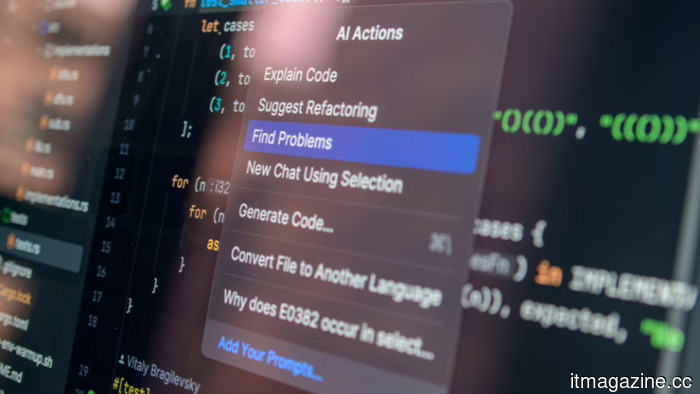 Anthropic's Claude Mythos identified 10,000 critical vulnerabilities within a single month. The patches are unable to keep pace.
The partners of Project Glasswing utilized Claude Mythos to identify 1,094 verified high-severity vulnerabilities in over 1,000 open-source projects. Only 97 of these have been resolved.
Anthropic's Claude Mythos identified 10,000 critical vulnerabilities within a single month. The patches are unable to keep pace.
The partners of Project Glasswing utilized Claude Mythos to identify 1,094 verified high-severity vulnerabilities in over 1,000 open-source projects. Only 97 of these have been resolved.
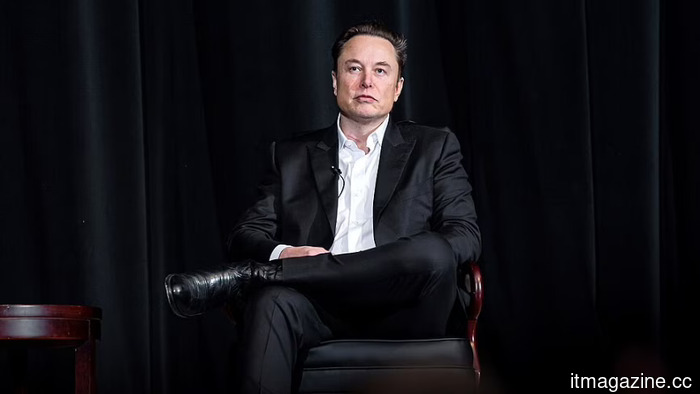 SpaceX's IPO submission highlights a contradiction in Musk's clean energy approach, as xAI consumes gas while Tesla markets solar energy.
xAI invested $2.8 billion in gas turbines, whereas Tesla offers solar panels. SpaceX's S-1 proposes that solar power from space is the solution, but the calculations still don't align.
SpaceX's IPO submission highlights a contradiction in Musk's clean energy approach, as xAI consumes gas while Tesla markets solar energy.
xAI invested $2.8 billion in gas turbines, whereas Tesla offers solar panels. SpaceX's S-1 proposes that solar power from space is the solution, but the calculations still don't align.
Berlin's Peec AI increased its revenue to $10 million in annual recurring revenue (ARR) in just six months. The company's product assists brands in appearing in ChatGPT.
The GEO startup secured its Series A funding at a $4M ARR six months ago. It currently monitors $10M, with billboards placed near competing offices throughout Berlin.