
South Korea's deputy prime minister indicates that the wealth generated by AI should be advantageous to the public, citing the recent Samsung strike as an example.
TL;DR: South Korea's Deputy Prime Minister emphasizes that the wealth generated by AI should benefit the public, referencing Samsung's near-strike and Hyundai's introduction of Atlas robots as signs of upcoming labor challenges. He noted to CNBC that the rising corporate profits from AI raise questions about wealth distribution and inequality, calling it a national policy issue. Bae highlighted the ongoing labor-management conflicts that could emerge as more large companies grow in the age of AI, stressing the need for resolution through dialogue.
The context was clear as Samsung's major labor union had been ready to strike for 18 days, which could have resulted in significant losses, but a tentative agreement was reached after negotiations. Workers sought 15% of Samsung's profit for bonuses, while the company offered 10%. Samsung's operating profit surged, fueled by AI-related high-bandwidth memory chips, and the wealth of the Lee family significantly increased. Stock prices for Samsung and SK Hynix have soared, reflecting the concentrated wealth from the AI boom.
Bae, also South Korea’s science and technology minister, referred to Hyundai’s integration of Atlas robots into its manufacturing, highlighting concerns for workers amid the AI developments. Meanwhile, a suggestion to distribute excess tax revenue from AI and semiconductors directly to citizens stirred market turmoil, though it was later clarified as a personal opinion rather than an official proposal.
Bae aims for an “AI-inclusive society” where the public benefits from the AI era, a sentiment echoed by policymakers worldwide. However, South Korea's economy heavily relies on semiconductor manufacturing, making the AI boom critical. Despite the concentration of gains among Samsung and SK Hynix, Bae argued that a wider ecosystem of suppliers and services benefits as well. South Korea aims to enhance its competitive edge in physical AI, which includes robots and autonomous systems, building on its semiconductor foundation.
Globally, the tension between AI-driven productivity and workforce displacement persists, with major companies scaling back jobs while increasing AI positions. In South Korea, the concentration of AI wealth raises acute questions, as two companies have seen their market value surge significantly in a short period. With workers almost striking due to labor issues, Bae’s assertion that AI benefits should extend to the public highlights that market forces alone won't resolve distribution challenges. The effectiveness of South Korea's policy responses will be tested in upcoming labor negotiations and further advancements in automation.
Other articles
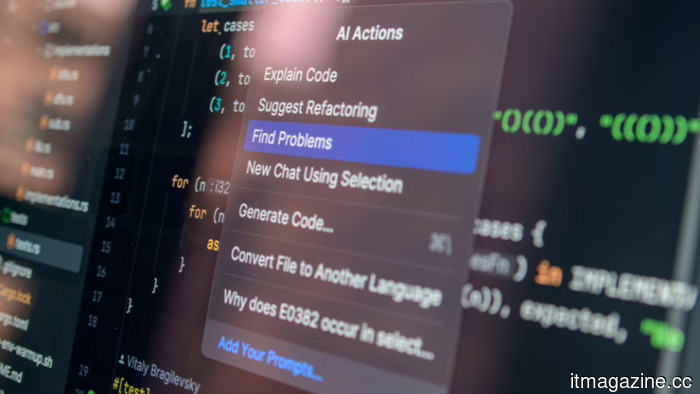 Anthropic's Claude Mythos identified 10,000 critical vulnerabilities within a single month. The patches are unable to keep pace.
The partners of Project Glasswing utilized Claude Mythos to identify 1,094 verified high-severity vulnerabilities in over 1,000 open-source projects. Only 97 of these have been resolved.
Anthropic's Claude Mythos identified 10,000 critical vulnerabilities within a single month. The patches are unable to keep pace.
The partners of Project Glasswing utilized Claude Mythos to identify 1,094 verified high-severity vulnerabilities in over 1,000 open-source projects. Only 97 of these have been resolved.
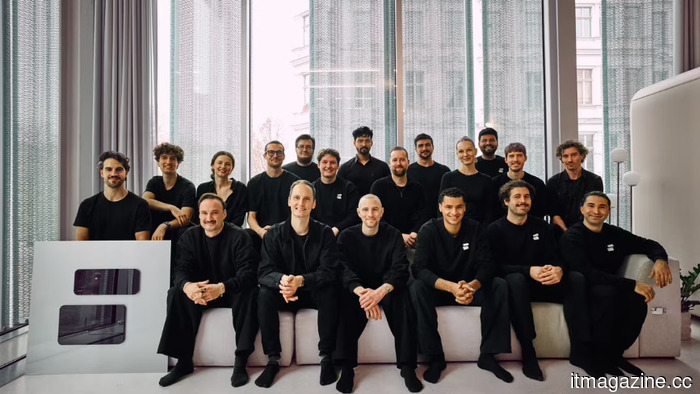 Berlin's Peec AI increased its revenue to $10 million in annual recurring revenue (ARR) in just six months. The company's product assists brands in appearing in ChatGPT.
The GEO startup secured its Series A funding at a $4M ARR six months ago. It currently monitors $10M, with billboards placed near competing offices throughout Berlin.
Berlin's Peec AI increased its revenue to $10 million in annual recurring revenue (ARR) in just six months. The company's product assists brands in appearing in ChatGPT.
The GEO startup secured its Series A funding at a $4M ARR six months ago. It currently monitors $10M, with billboards placed near competing offices throughout Berlin.
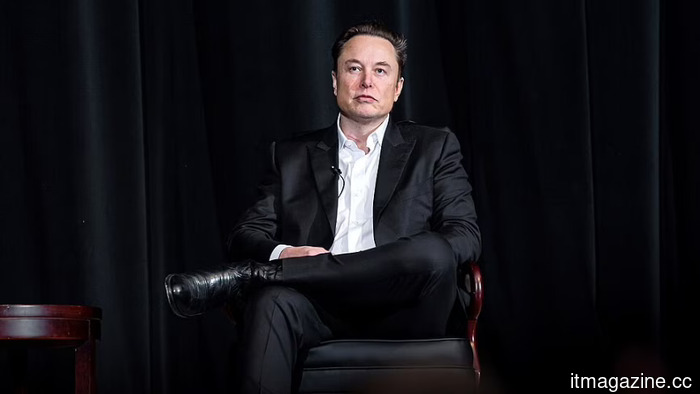 SpaceX's IPO submission highlights a contradiction in Musk's clean energy approach, as xAI consumes gas while Tesla markets solar energy.
xAI invested $2.8 billion in gas turbines, whereas Tesla offers solar panels. SpaceX's S-1 proposes that solar power from space is the solution, but the calculations still don't align.
SpaceX's IPO submission highlights a contradiction in Musk's clean energy approach, as xAI consumes gas while Tesla markets solar energy.
xAI invested $2.8 billion in gas turbines, whereas Tesla offers solar panels. SpaceX's S-1 proposes that solar power from space is the solution, but the calculations still don't align.
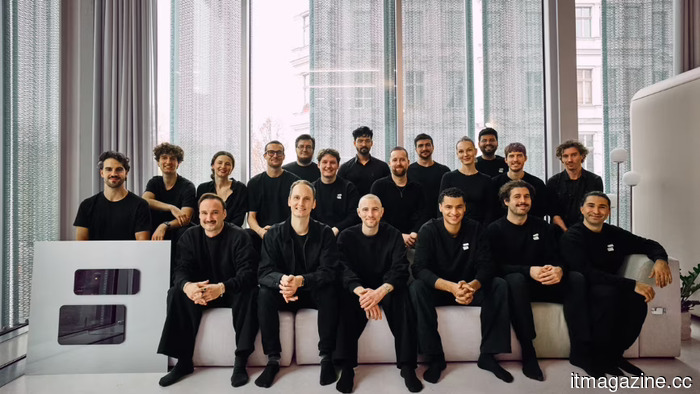 Berlin's Peec AI saw its revenue increase more than twofold to $10 million ARR within six months. Its solution assists brands in appearing in ChatGPT.
The GEO startup secured its Series A funding at a $4M ARR six months back. It is now monitoring $10M, with billboards placed outside competitor offices throughout Berlin.
Berlin's Peec AI saw its revenue increase more than twofold to $10 million ARR within six months. Its solution assists brands in appearing in ChatGPT.
The GEO startup secured its Series A funding at a $4M ARR six months back. It is now monitoring $10M, with billboards placed outside competitor offices throughout Berlin.
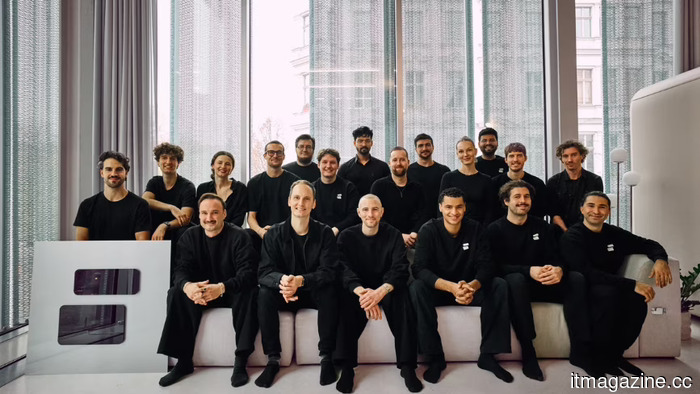 Berlin's Peec AI increased its revenue by more than twofold to reach $10 million in annual recurring revenue (ARR) over the course of six months. The company's product assists brands in appearing in ChatGPT.
The GEO startup secured its Series A funding with a $4M ARR six months prior. It now reports a $10M ARR, having placed billboards near competing offices throughout Berlin.
Berlin's Peec AI increased its revenue by more than twofold to reach $10 million in annual recurring revenue (ARR) over the course of six months. The company's product assists brands in appearing in ChatGPT.
The GEO startup secured its Series A funding with a $4M ARR six months prior. It now reports a $10M ARR, having placed billboards near competing offices throughout Berlin.
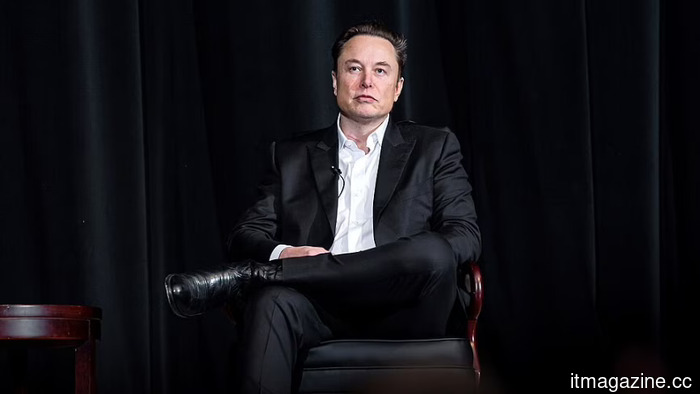 SpaceX's IPO documentation uncovers a contradiction in Musk's clean energy stance, as xAI consumes gas while Tesla markets solar energy.
xAI invested $2.8 billion in gas turbines, whereas Tesla markets solar panels. SpaceX's S-1 proposes space-based solar as a solution, but the calculations don’t seem to align just yet.
SpaceX's IPO documentation uncovers a contradiction in Musk's clean energy stance, as xAI consumes gas while Tesla markets solar energy.
xAI invested $2.8 billion in gas turbines, whereas Tesla markets solar panels. SpaceX's S-1 proposes space-based solar as a solution, but the calculations don’t seem to align just yet.
South Korea's deputy prime minister indicates that the wealth generated by AI should be advantageous to the public, citing the recent Samsung strike as an example.
Deputy Prime Minister Bae cautioned that conflicts in the workforce driven by AI will continue to arise with the emergence of "super-large companies" and emphasized the need for an "AI-inclusive society."