
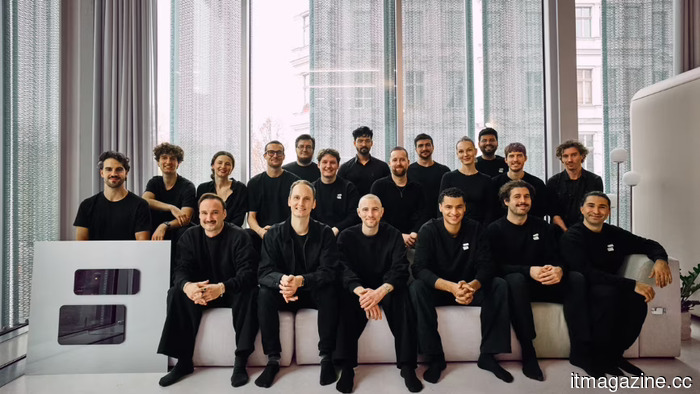
Berlin's Peec AI saw its revenue increase more than twofold to $10 million ARR within six months. Its solution assists brands in appearing in ChatGPT.
**TL;DR** Peec AI from Berlin has achieved $10 million in annual recurring revenue just six months after raising $21 million in a Series A round at a valuation exceeding $100 million, when its revenue was slightly over $4 million. The startup assists brands in enhancing their visibility in searches conducted by AI.
Peec AI, a Berlin-based startup, specializes in helping brands manage and boost their presence in AI-generated search results, and it has recently surpassed $10 million in annualized revenue, according to verified internal dashboard data shared with TechCrunch. This achievement follows a $21 million Series A funding round raised six months ago at a valuation over $100 million, at which point the company had just over $4 million in annual recurring revenue (ARR). The revenue has more than doubled, with an accelerating growth rate.
The product targets a niche that barely existed 18 months ago known as generative engine optimization (GEO). While traditional SEO dashboards monitor a brand’s ranking on Google, Peec’s platform illustrates whether a brand appears when users input specific prompts into AI chatbots like ChatGPT, Claude, Gemini, or Perplexity, which are increasingly substituting traditional search bars. As consumers move from clicking links to posing questions, brands that appear in AI chat responses capture attention that was once dominated by search engine results pages. Peec provides marketers with a dashboard for tracking, measuring, and influencing their visibility.
Marius Meiners, the CEO and a former professional esports athlete who ranked among the top 100 League of Legends players globally, has fostered a culture of competitive transparency within the company. All employees can see the revenue tracker, a practice Meiners credits to his gaming background: the entire team is aware of the score in real-time at all times.
Christoph Klink, an Antler partner whose portfolio includes Peec and the vibe-coding platform Lovable, described Peec as one of his fund's most successful investments. During an event in Berlin, Klink highlighted Peec’s trajectory as indicative of a significant change in the European startup landscape. "Founders today pay much closer attention to revenue," he stated. Following the valuation bubble of 2021 and its subsequent correction, success in European venture capital is now measured by growth rather than valuation. Treating ARR as a real-time metric, rather than a quarterly one, is placing certain startups ahead of others.
Peec is taking a distinctive approach to talent acquisition uncommon among European startups. Similar to Bay Area firms but rare among Berlin companies, Peec has invested in physical billboards for recruiting engineers and attracting potential clients simultaneously. According to Klink, these billboards were often strategically positioned in front of other tech companies throughout the city. This strategy is part of a broader initiative to position Peec as a company worth leaving a comfortable job for, especially critical in the current AI boom, where the opportunity to create a category-defining product is fleeting and competition for engineers is fierce.
The GEO sector is also expanding alongside consumers' shifting behavior. Canva’s recent State of Marketing and AI Report revealed that 97% of marketing leaders now utilize AI daily. Google's data indicates that AI-generated overviews appear on nearly 60% of US search queries, fundamentally altering which brands gain visibility. For any business reliant on online discovery, transitioning from SEO to GEO is essential. Peec is establishing the measurement framework for this evolution.
The competitive landscape features HubSpot’s newly launched AI search analytics tools, Semrush’s GEO functionalities, and an increasing number of niche solutions from startups in the US and Israel. According to Meiners, Peec's advantage stems from being designed specifically for GEO rather than retrofitted onto an existing SEO platform. The company has recently opened an office in New York to cater to US enterprise clients, reflecting where the largest marketing budgets are located and where the adoption of GEO is most rapid.
Peec’s revenue growth positions it alongside a select group of European AI startups that are growing at rates typically seen only in US companies. Lovable, also in Klink’s portfolio, reported an additional $100 million in revenue in a single month in March with just 146 employees. Mistral, a foundation model company based in Paris, reached $300 million ARR earlier this year. This trend suggests that the disparity between European and American AI startups, previously marked by slower growth and smaller funding rounds, is diminishing for firms creating genuinely new demand rather than incremental updates.
Klink noted that companies like Peec and Lovable publicly share revenue milestones despite no obligation to do so, as it serves as proof of their effectiveness. "It also indicates a growth-focused culture," he explained. In a market where investors have been disappointed by companies focused more on valuation than on real value, a $10 million ARR figure verified by a journalist holds more significance than a press release announcing a funding round. With AI chatbots starting to monetize through advertising, controlling brand visibility within these interactions will become increasingly important, and
Other articles
 South Korea's deputy prime minister stated that the wealth generated by AI should serve the public good, highlighting this point through the recent Samsung strike.
Deputy PM Bae cautioned that labor disputes fueled by AI will continue to arise with the emergence of "super-large companies" and urged for the establishment of an "AI-inclusive society."
South Korea's deputy prime minister stated that the wealth generated by AI should serve the public good, highlighting this point through the recent Samsung strike.
Deputy PM Bae cautioned that labor disputes fueled by AI will continue to arise with the emergence of "super-large companies" and urged for the establishment of an "AI-inclusive society."
 Moz Pro now monitors your brand within ChatGPT and Gemini | TNW Deals
The new AI Visibility tool from Moz Pro monitors your brand's presence in ChatGPT and Gemini responses, as well as your standing against competitors. Test it out for free.
Waymo's robotaxis continue to enter floodwaters. The software update was ineffective. Five cities are currently on lockdown.
A recall that occurred two weeks ago was intended to address the issue. However, an unmanned Waymo became stranded in a flood in Atlanta on Wednesday. A lasting solution is not available yet.
Moz Pro now monitors your brand within ChatGPT and Gemini | TNW Deals
The new AI Visibility tool from Moz Pro monitors your brand's presence in ChatGPT and Gemini responses, as well as your standing against competitors. Test it out for free.
Waymo's robotaxis continue to enter floodwaters. The software update was ineffective. Five cities are currently on lockdown.
A recall that occurred two weeks ago was intended to address the issue. However, an unmanned Waymo became stranded in a flood in Atlanta on Wednesday. A lasting solution is not available yet.
 SpaceX's IPO documentation uncovers a contradiction in Musk's clean energy stance, as xAI consumes gas while Tesla markets solar energy.
xAI invested $2.8 billion in gas turbines, whereas Tesla markets solar panels. SpaceX's S-1 proposes space-based solar as a solution, but the calculations don’t seem to align just yet.
SpaceX's IPO documentation uncovers a contradiction in Musk's clean energy stance, as xAI consumes gas while Tesla markets solar energy.
xAI invested $2.8 billion in gas turbines, whereas Tesla markets solar panels. SpaceX's S-1 proposes space-based solar as a solution, but the calculations don’t seem to align just yet.
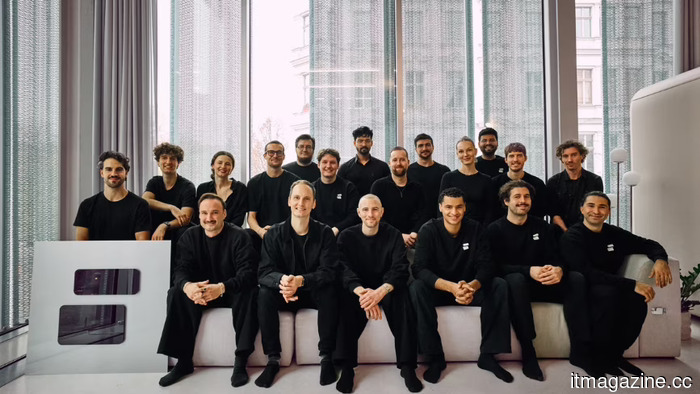 Berlin's Peec AI increased its revenue by more than twofold to reach $10 million in annual recurring revenue (ARR) over the course of six months. The company's product assists brands in appearing in ChatGPT.
The GEO startup secured its Series A funding with a $4M ARR six months prior. It now reports a $10M ARR, having placed billboards near competing offices throughout Berlin.
Berlin's Peec AI increased its revenue by more than twofold to reach $10 million in annual recurring revenue (ARR) over the course of six months. The company's product assists brands in appearing in ChatGPT.
The GEO startup secured its Series A funding with a $4M ARR six months prior. It now reports a $10M ARR, having placed billboards near competing offices throughout Berlin.
 Moz Pro now monitors your brand within ChatGPT and Gemini | TNW Deals
The new AI Visibility feature from Moz Pro monitors your brand's presence in ChatGPT and Gemini responses, as well as your standing against competitors. Experience it for free.
Moz Pro now monitors your brand within ChatGPT and Gemini | TNW Deals
The new AI Visibility feature from Moz Pro monitors your brand's presence in ChatGPT and Gemini responses, as well as your standing against competitors. Experience it for free.
Berlin's Peec AI saw its revenue increase more than twofold to $10 million ARR within six months. Its solution assists brands in appearing in ChatGPT.
The GEO startup secured its Series A funding at a $4M ARR six months back. It is now monitoring $10M, with billboards placed outside competitor offices throughout Berlin.