
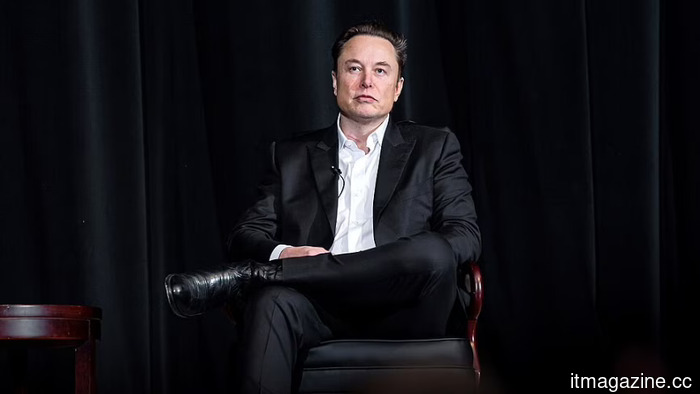
SpaceX's IPO submission highlights a contradiction in Musk's clean energy approach, as xAI consumes gas while Tesla markets solar energy.
In summary, xAI utilizes unregulated gas turbines for its data centers, while SpaceX's IPO anticipates space-based solar power, leaving Tesla's solar initiatives overlooked. The SpaceX IPO prospectus, submitted on Wednesday, outlines plans for terawatt-scale solar energy in space. It also indirectly indicates that Elon Musk's AI company xAI is relying on unregulated natural gas turbines for its data centers, with intentions to purchase an additional $2.8 billion worth. Tesla, which Musk established to promote the end of fossil fuels, is scarcely recognized as an energy supplier in this context, highlighting a significant contradiction now documented by the SEC.
Over the years, Tesla has published four Master Plans focused on the electrification of the economy. In 2006, Musk defined Tesla's main objective as accelerating the transition from a hydrocarbon-based economy to a solar electric economy. Just three years ago, Tesla's Master Plan Part 3 provided a comprehensive strategy to eliminate fossil fuels entirely, showcasing terrestrial solar, battery storage, and electric transport as essential to achieving global decarbonization.
However, the arrival of xAI represents a shift. Merged with SpaceX in February at a combined valuation of $1.25 trillion, xAI has adopted a reliance on the hydrocarbon economy that Tesla aimed to move away from. Its data centers in Memphis, Tennessee, are powered by numerous unregulated natural gas turbines, with the additional $2.8 billion gas turbine investment signifying a long-term commitment to fossil fuel infrastructure.
Musk’s companies have a history of inter-purchasing. SpaceX invested $131 million in Cybertrucks, and xAI has spent $697 million over the past two years on Tesla Megapacks, the large-scale battery storage systems for energy management at its data centers. Yet, xAI has not purchased a significant number of solar panels from Tesla Energy, which is dedicated to advancing the solar technology Musk previously heralded as the backbone of a sustainable economy.
SpaceX’s filing refers to solar power only in relation to space. The company claims that space-based solar arrays can produce "more than five times the energy” compared to ground installations due to continuous sunlight. Faced with opposition for AI data centers on Earth from communities, regulators, and grid operators, Musk and other leaders have proposed the concept of operating server racks in orbit, utilizing constant sunlight. The Starship program by SpaceX, which has already cost over $15 billion, is positioned as the launch vehicle that could make this economically feasible.
However, the economic viability is complex at best. Power costs for Starlink satellites are significantly higher than what conventional data centers spend. Challenges such as radiation protection, thermal cycling, and micrometeorite exposure in space also add costs absent on the ground. Additionally, it remains uncertain whether AI workloads can be distributed across multiple satellites, limiting the most intensive AI tasks to Earth, regardless of launch prices. Transporting solar panels on trucks is less energy-intensive than sending them to space.
The prospectus includes a striking statement. SpaceX contends that "third-party estimates on data center demand are constrained by existing terrestrial supply limitations, and the actual power shortage may be much greater than research suggests.” The mention of “terawatt-scale annual AI compute growth” implies a drastic rise in global energy consumption, as humanity currently uses around 4 terawatts at a steady rate, while all global data centers collectively consume about 40 gigawatts. Musk envisions that AI alone could demand additional power in terawatts annually.
The anticipated SpaceX IPO aims to raise $75 billion next month, with part of its valuation hinging on this vision. Investors are being encouraged to buy into a future where current energy infrastructure is inadequate for AI needs, and SpaceX is positioned as the solution from space. While this narrative is compelling, it conveniently overlooks the reality that Musk's AI venture is presently consuming natural gas rather than implementing the solar solutions developed by Tesla.
The energy demand for AI data centers is genuine. OpenAI halted its Stargate UK project due to high electricity costs, exceeding four times those in the US. Global power usage by data centers is projected to hit 150 GW by 2030. The pressing issue is not whether AI will require more energy, but whether the answer lies in expanding terrestrial solar—whose costs have plummeted by 90% in the last decade and which can be deployed today—or waiting for a technology that necessitates launching equipment into orbit on rockets that are still struggling with reliable booster landings.
Tesla’s solar and energy storage division achieved $2.8 billion in revenue in Q1 2026 alone. Its Megapack facility in Lathrop, California, supplies grid-scale batteries to utility companies and industrial clients worldwide. Tesla Energy is indisputably one of the most successful clean energy firms globally. Yet, Musk's latest enterprise opted for gas turbines instead.
Investment in enterprise AI is rapidly accelerating. Salesforce forecasts
Other articles
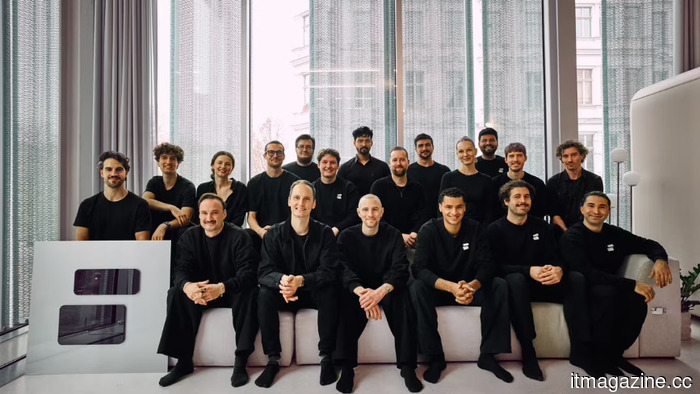 Berlin's Peec AI increased its revenue to $10 million in annual recurring revenue (ARR) in just six months. The company's product assists brands in appearing in ChatGPT.
The GEO startup secured its Series A funding at a $4M ARR six months ago. It currently monitors $10M, with billboards placed near competing offices throughout Berlin.
Waymo's robotaxis continue to navigate into floodwaters. The software update was ineffective. Five cities are currently in lockdown.
A recall that took place two weeks ago was intended to resolve the issue. An unmanned Waymo became trapped in a flood in Atlanta on Wednesday. There is still no permanent solution available.
Berlin's Peec AI increased its revenue to $10 million in annual recurring revenue (ARR) in just six months. The company's product assists brands in appearing in ChatGPT.
The GEO startup secured its Series A funding at a $4M ARR six months ago. It currently monitors $10M, with billboards placed near competing offices throughout Berlin.
Waymo's robotaxis continue to navigate into floodwaters. The software update was ineffective. Five cities are currently in lockdown.
A recall that took place two weeks ago was intended to resolve the issue. An unmanned Waymo became trapped in a flood in Atlanta on Wednesday. There is still no permanent solution available.
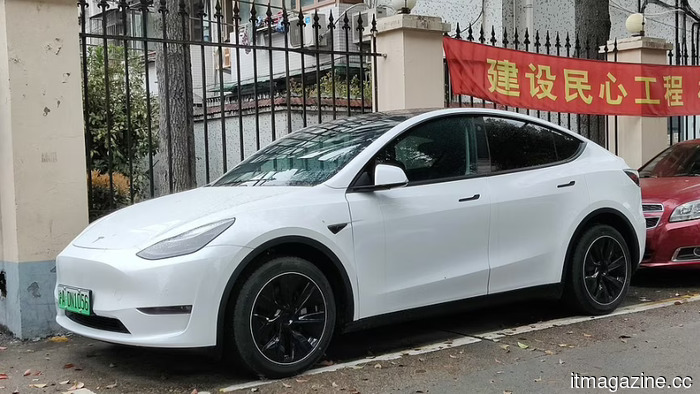 Tesla has finally introduced FSD in China, while its competitors have been offering self-driving vehicles in the country for several years.
Tesla's Full Self-Driving (Supervised) is now available in China, following Musk's visit with Trump to Beijing last week. Meanwhile, Chinese competitors are already providing Level 3 autonomy.
Tesla has finally introduced FSD in China, while its competitors have been offering self-driving vehicles in the country for several years.
Tesla's Full Self-Driving (Supervised) is now available in China, following Musk's visit with Trump to Beijing last week. Meanwhile, Chinese competitors are already providing Level 3 autonomy.
 You can now listen to Audible's top podcasts directly on Apple Podcasts.
Audible members can now access nearly 700 premium podcast titles on Apple Podcasts, with the subscription available in 135 countries and more titles expected to be added soon.
You can now listen to Audible's top podcasts directly on Apple Podcasts.
Audible members can now access nearly 700 premium podcast titles on Apple Podcasts, with the subscription available in 135 countries and more titles expected to be added soon.
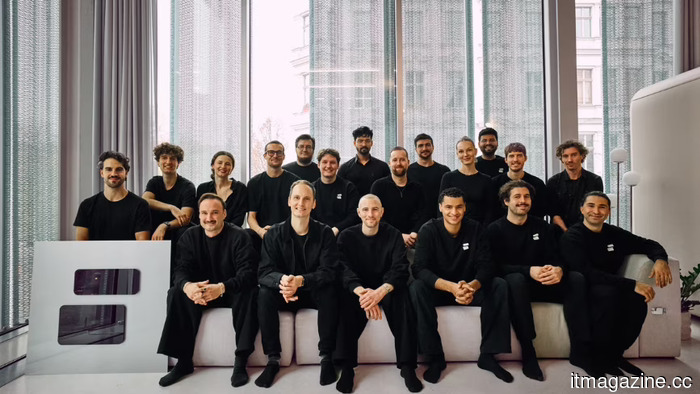 Berlin's Peec AI increased its revenue by more than twofold to reach $10 million in annual recurring revenue (ARR) over the course of six months. The company's product assists brands in appearing in ChatGPT.
The GEO startup secured its Series A funding with a $4M ARR six months prior. It now reports a $10M ARR, having placed billboards near competing offices throughout Berlin.
Berlin's Peec AI increased its revenue by more than twofold to reach $10 million in annual recurring revenue (ARR) over the course of six months. The company's product assists brands in appearing in ChatGPT.
The GEO startup secured its Series A funding with a $4M ARR six months prior. It now reports a $10M ARR, having placed billboards near competing offices throughout Berlin.
 The CEO of Xiaomi acknowledged that his SUV was not priced competitively enough to surpass Tesla, so he introduced a new model that is.
The new YU7 Standard Edition is priced at $4,350 less than the Model Y and has a range that exceeds it by 50km. Xiaomi has delivered 600,000 electric vehicles in less than two years.
The CEO of Xiaomi acknowledged that his SUV was not priced competitively enough to surpass Tesla, so he introduced a new model that is.
The new YU7 Standard Edition is priced at $4,350 less than the Model Y and has a range that exceeds it by 50km. Xiaomi has delivered 600,000 electric vehicles in less than two years.
SpaceX's IPO submission highlights a contradiction in Musk's clean energy approach, as xAI consumes gas while Tesla markets solar energy.
xAI invested $2.8 billion in gas turbines, whereas Tesla offers solar panels. SpaceX's S-1 proposes that solar power from space is the solution, but the calculations still don't align.