

Starbucks withdraws its AI inventory tool after nine months due to ongoing issues with misidentifying the milks.
The chain is returning to manual inventory counts throughout North America, marking the end of one of CEO Brian Niccol’s more prominent technology initiatives and adding to the list of “enterprise AI pilots that didn’t succeed in real-store settings.” Starbucks has discontinued the AI-driven inventory tool that was introduced in its North American outlets last September, as reported in an internal newsletter seen by Reuters and confirmed by the company.
“Effective today, Automated Counting will be discontinued,” stated the memo released on Monday. “Beverage components and milk will now be counted in the same manner as other inventory categories in your coffeehouse.” In simpler terms, by hand.
This tool, developed by Seattle's NomadGo, employed cameras mounted on tablets and LiDAR technology to scan shelves of syrups, milks, and other beverage ingredients, providing automated counts and replacing manual stock-taking for some categories. After several years of development, it was rolled out nationwide following Brian Niccol’s appointment as CEO in September 2024 as part of his “Back to Starbucks” revitalization plan.
According to reporting from Reuters in February and the company’s internal documents, the primary issue was the tool's difficulty in distinguishing between similar white liquids. The application frequently miscounted or mislabeled items, especially products that looked alike, such as oat milk and dairy. A promotional video released by Starbucks during the launch showcased the system failing to recognize a bottle of peppermint syrup on the shelf while counting adjacent bottles, highlighting a scenario that often appears worse in retrospect.
In a statement to Reuters on Thursday, Starbucks framed the change as a move towards standardization rather than a setback. The company explained that the decision stemmed from “a desire to standardize inventory counting across coffeehouses as we continue to prioritize consistency and execution at scale,” also noting a shift toward more frequent daily restocking and ongoing supply chain enhancements. An internal message from the company included a note from an employee expressing gratitude for terminating the program: “The idea was great, but the execution was proving challenging.”
This decision is significant because inventory management was expected to be straightforward. Four different Starbucks CEOs over five years have attributed lost sales to the company's difficulties in consistently keeping stores stocked. In early 2024, the company acknowledged that less than a third of deliveries to its distribution centers arrived on time and in full.
Automated Counting was designed to provide the chain with the real-time store-level visibility it lacked, and it was a key operational adjustment proposed by Niccol. Additionally, this development coincides with a broader trend where the outcomes of enterprise AI initiatives appear less favorable than initially presented. MIT’s NANDA initiative reported last year that 95% of enterprise generative-AI pilots yielded no measurable impact on profits and losses despite an expenditure of about $30 to $40 billion, with only 5% successfully moving into production.
While the Starbucks tool was not generative AI, the nature of its failure is familiar: automating a complex, store-level process proved more challenging than the demonstrations indicated.
The financial situation is mixed enough that this decision can be interpreted in different ways. Starbucks experienced its strongest quarterly sales growth in two and a half years last month, and its stock has increased by 24% thus far in 2026, yet operating margins in its core North American market have dropped to 9.9% from 18% two years prior.
Niccol has continued to invest in other technological ventures, including AI tools for order sequencing and assistance for baristas during peak times. NomadGo, for its part, stated to Reuters that it is “constantly learning from customer and user feedback” to enhance its products. The next test will be whether daily replenishments and manual counts can achieve what the algorithm could not, namely keeping peppermint syrup readily available on the shelf.
Other articles
 The excitement surrounding Salesforce's Agentforce exceeds what it has actually delivered.
Salesforce finalized 29,000 Agentforce agreements, but its stock has declined by 30% in 2026, and demonstration showcases continue to reveal themselves as ongoing projects.
The excitement surrounding Salesforce's Agentforce exceeds what it has actually delivered.
Salesforce finalized 29,000 Agentforce agreements, but its stock has declined by 30% in 2026, and demonstration showcases continue to reveal themselves as ongoing projects.
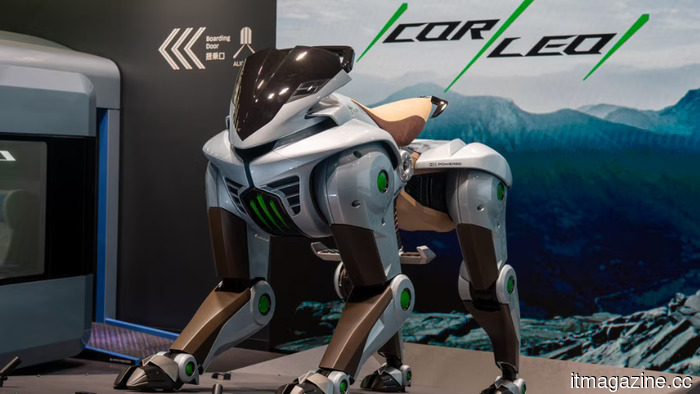 Kawasaki Heavy partners with Nvidia for physical AI, while the rideable robotic horse receives a foundational model.
Kawasaki Heavy Industries surged 12% following the announcement of a physical-AI collaboration with Nvidia, Microsoft, Fujitsu, and Analog Devices, featuring its CORLEO robot as the highlight of the presentation.
Kawasaki Heavy partners with Nvidia for physical AI, while the rideable robotic horse receives a foundational model.
Kawasaki Heavy Industries surged 12% following the announcement of a physical-AI collaboration with Nvidia, Microsoft, Fujitsu, and Analog Devices, featuring its CORLEO robot as the highlight of the presentation.
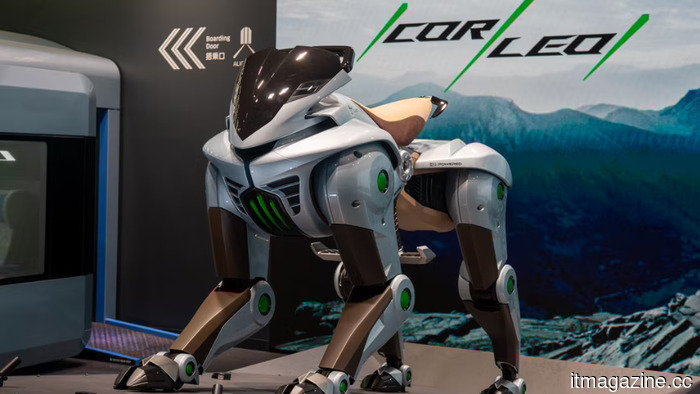 Kawasaki Heavy partners with Nvidia on physical AI, while the rideable robot horse is equipped with a foundation model.
Kawasaki Heavy Industries surged 12% following the announcement of a partnership in physical-AI with Nvidia, Microsoft, Fujitsu, and Analog Devices, featuring its CORLEO robot as the highlight of the presentation.
Kawasaki Heavy partners with Nvidia on physical AI, while the rideable robot horse is equipped with a foundation model.
Kawasaki Heavy Industries surged 12% following the announcement of a partnership in physical-AI with Nvidia, Microsoft, Fujitsu, and Analog Devices, featuring its CORLEO robot as the highlight of the presentation.
 The AI era didn’t eliminate trust in marketing; instead, it set a higher standard for achieving it.
Consumers have moved from looking for information to desiring certainty. An experienced marketer discusses why brands that fail to withstand the verification moment will be outperformed by those that succeed.
The AI era didn’t eliminate trust in marketing; instead, it set a higher standard for achieving it.
Consumers have moved from looking for information to desiring certainty. An experienced marketer discusses why brands that fail to withstand the verification moment will be outperformed by those that succeed.
 Starbucks withdraws its AI inventory tool after nine months due to ongoing confusion over the types of milk.
Starbucks has discontinued its AI inventory tool in North American stores nine months after its introduction, mentioning reliability concerns and returning to manual counting methods.
Starbucks withdraws its AI inventory tool after nine months due to ongoing confusion over the types of milk.
Starbucks has discontinued its AI inventory tool in North American stores nine months after its introduction, mentioning reliability concerns and returning to manual counting methods.
 Starbucks withdraws its AI inventory system nine months later due to persistent issues with misidentifying the various types of milk.
Starbucks has discontinued its AI inventory tool in North American locations nine months after its introduction, citing reliability problems and returning to manual inventory counts.
Starbucks withdraws its AI inventory system nine months later due to persistent issues with misidentifying the various types of milk.
Starbucks has discontinued its AI inventory tool in North American locations nine months after its introduction, citing reliability problems and returning to manual inventory counts.
Starbucks withdraws its AI inventory tool after nine months due to ongoing issues with misidentifying the milks.
Starbucks has discontinued its AI inventory tool in North American stores nine months after its introduction, citing concerns over reliability and returning to manual counting methods.