

The AI era didn’t eliminate trust in marketing; instead, it set a higher standard for achieving it.
Over the past thirty years, I have observed the transformation of consumer behavior through television, search engines, and social media. Although tactics have adapted with each transition, the essential logic of decision-making has remained unchanged. However, what I am currently witnessing is different. I'm not alone in this observation. Every experienced marketing expert I talk to, regardless of whether they started their careers in traditional media or digital platforms, expresses a similar sentiment: a fundamental change has occurred, rendering the old strategies less effective than before.
This transformation goes beyond mere platform shifts; it is psychological. For the first time in my career, I see users transitioning from seeking information to pursuing certainty, and this distinction is pivotal.
When Behavior Was Predictable
I recall a time when a celebrity's image on television almost guaranteed success. Brand loyalty closely aligned with fan loyalty; if your brand ambassador was well-loved, their fans would likely gravitate toward your product. It was a straightforward and reliable formula: attention led to association, and association led to purchase. This approach worked consistently for many years.
The arrival of the internet digitized that predictability instead of dismantling it. Search engines like Google and Yahoo structured discovery using keywords. Users would search, engines would return ranked results, and businesses that ranked high were rewarded with customers. For nearly a decade, amidst algorithm updates, the rise of paid search, and the SEO arms race, the fundamental principle persisted: if you’re visible, you will be chosen.
Both time periods prioritized the same objective: reach. The focus was on who could connect with the most individuals, most frequently. This question influenced marketing strategies for almost thirty years.
What Has Actually Changed
The change I am observing is not about which platform prevails or falters; it delves deeper into decision-making processes. The credibility of celebrities has diminished in a way not seen before. It's not so much that people distrust celebrities; rather, modern consumers are aware of the commercial landscape surrounding them. They recognize that endorsements are transactional, and with access to vast information online, they realize that a single endorsement is inadequate justification for a purchase.
Younger consumers, particularly Gen Z and late millennials, have largely shifted towards relying on personal experiences. They prefer insights from their own lives or from people within their immediate social circles, rather than famous individuals. They seek relatability and still engage in verification.
The distinction between online and offline interactions has become increasingly blurred. A consumer who spots a product in a store will often check their phone before deciding to buy it. Someone who hears a recommendation from a friend will verify it before taking action. Previously isolated behaviors, such as browsing a physical aisle, reading an online review, or seeking peer advice, now occur fluidly in tandem.
What the Research Showed Me
To validate my observations against broader behavioral trends, I conducted an in-person survey in mid-2025, sampling nearly 500 individuals. Although it wasn’t a formal academic study, I ensured diverse representation: college students, professionals, homemakers, and retirees from different age groups and economic backgrounds. The results confirmed the emerging patterns.
Among respondents aged 16 to 20, 87% indicated they primarily trust friends, parents, or teachers for purchase decisions—individuals within their close circles. In the 21 to 30 age bracket, 73% combined peer input with social media influences from select individuals they follow; however, 96% of this group stated they cross-verify suggestions before acting on them—nearly all of them. Among those aged 31 to 40, 65% exhibited similar verification behaviors. Even within the 41-and-older demographic, 44% are adopting this pattern—though at a slower pace, the trend is towards the same conclusion.
A common thread across all age groups is clear: trust is no longer simply accepted; it must be earned and verified. Consumers of all generations have become active validators rather than passive recipients.
Are LLMs an Innovation or a Response to Market Pressure?
Looking at technology's history, a pattern emerges approximately every ten to fifteen years: radio transitioned to television, which then moved to the internet, followed by search engines, and later social media. Each evolution not only introduced a new platform but also fundamentally altered buyer behavior. Hence, for marketers trying to navigate the AI era, the key question shifts from “how do I optimize for this platform?” to “how has buyer behavior changed, and why?”
The emergence of large language models—such as ChatGPT, Gemini, Perplexity, and others—serves as a direct response to the psychological transformation I've been noting. These tools did not create the verification instinct in modern consumers; they responded to it.
Traditional search engines provided a list of options, leaving users to discern between competing claims. Conversely, LLMs synthesize information. They compile data from various sources and return structured answers. For consumers inclined to verify, cross-check, and achieve certainty before making decisions,
Other articles
 The excitement surrounding Salesforce's Agentforce exceeds what it has actually delivered.
Salesforce finalized 29,000 Agentforce agreements, but its stock has declined by 30% in 2026, and demonstration showcases continue to reveal themselves as ongoing projects.
The excitement surrounding Salesforce's Agentforce exceeds what it has actually delivered.
Salesforce finalized 29,000 Agentforce agreements, but its stock has declined by 30% in 2026, and demonstration showcases continue to reveal themselves as ongoing projects.
 The excitement surrounding Salesforce's Agentforce exceeds its actual delivery.
Salesforce secured 29,000 Agentforce agreements, yet its stock has decreased by 30% in 2026, and demonstration showcases continue to be unfinished projects.
Forum is Meta's new app for Facebook Groups, and it resembles Reddit quite closely.
Meta has quietly launched Forum, a standalone app similar to Reddit that is based on Facebook Groups, featuring an AI "Ask" tab and an administrative assistant.
The excitement surrounding Salesforce's Agentforce exceeds its actual delivery.
Salesforce secured 29,000 Agentforce agreements, yet its stock has decreased by 30% in 2026, and demonstration showcases continue to be unfinished projects.
Forum is Meta's new app for Facebook Groups, and it resembles Reddit quite closely.
Meta has quietly launched Forum, a standalone app similar to Reddit that is based on Facebook Groups, featuring an AI "Ask" tab and an administrative assistant.
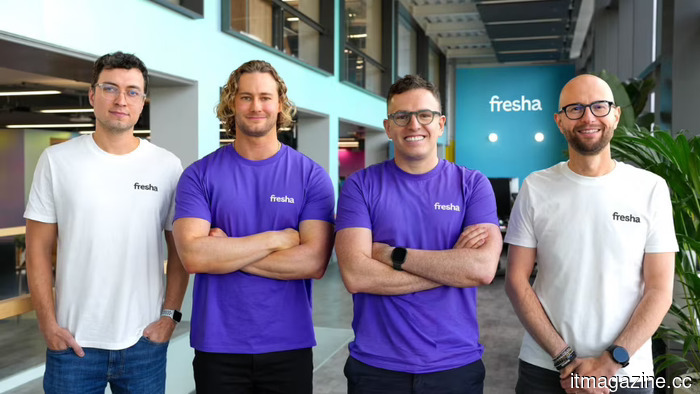 Fresha in London achieves unicorn status with an $80M funding round led by KKR.
Fresha, a beauty and wellness booking platform based in London, has secured $80 million from KKR, achieving a valuation exceeding $1 billion and entering the UK unicorn club.
Fresha in London achieves unicorn status with an $80M funding round led by KKR.
Fresha, a beauty and wellness booking platform based in London, has secured $80 million from KKR, achieving a valuation exceeding $1 billion and entering the UK unicorn club.
 Starbucks withdraws its AI inventory system nine months later due to persistent issues with misidentifying the various types of milk.
Starbucks has discontinued its AI inventory tool in North American locations nine months after its introduction, citing reliability problems and returning to manual inventory counts.
Starbucks withdraws its AI inventory system nine months later due to persistent issues with misidentifying the various types of milk.
Starbucks has discontinued its AI inventory tool in North American locations nine months after its introduction, citing reliability problems and returning to manual inventory counts.
The AI era didn’t eliminate trust in marketing; instead, it set a higher standard for achieving it.
Consumers have moved from looking for information to desiring certainty. An experienced marketer discusses why brands that fail to withstand the verification moment will be outperformed by those that succeed.