
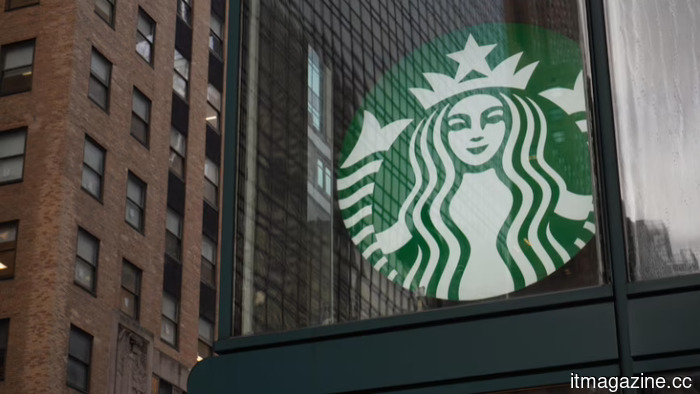
Starbucks withdraws its AI inventory tool after nine months due to ongoing confusion over the types of milk.
The chain is reverting to manual inventory counts across North America, marking the end of one of CEO Brian Niccol’s more prominent technological investments and adding another instance to the category of “enterprise AI pilots that failed in real-world settings.” According to an internal newsletter reviewed by Reuters and confirmed by the company, Starbucks has discontinued the AI-driven inventory system it introduced in its North American stores last September.
The Monday memo stated, “Effective today, Automated Counting will be discontinued.” It continued, “Beverage components and milk will now be counted as you count other inventory categories in your coffeehouse,” meaning they will be counted manually.
Developed by Seattle-based NomadGo, the tool utilized tablet-mounted cameras and LiDAR technology to scan shelves of syrups, milks, and other beverage ingredients, allowing for automatic inventory counts and replacing manual inventory checks for certain categories. After several years in development, it was rolled out nationwide following Brian Niccol's appointment as CEO in September 2024, as part of his “Back to Starbucks” initiative.
According to reports from Reuters and internal company documents, the primary issue was the tool's difficulty in differentiating between similar-looking white liquids. The application frequently miscounted or misidentified items, especially products like oat milk and dairy. A promotional video from Starbucks at the launch demonstrated the system failing to recognize a bottle of peppermint syrup while counting adjacent bottles, a situation that may appear worse in retrospect.
In a statement to Reuters, Starbucks characterized the removal of the tool as an effort to standardize procedures rather than a setback. The company remarked that the move was “a decision to standardize how inventory is counted across coffeehouses as we continue to focus on consistency and execution at scale,” and noted an ongoing transition towards more frequent daily restocking and improvements in the supply chain.
An internal communication shared by the company included an employee expressing gratitude for the program's termination, stating, “The concept was great, but the execution was proving challenging.”
This decision is significant because managing inventory was intended to be a straightforward aspect of operations. Over the past five years, four Starbucks CEOs have cited difficulties keeping stores adequately stocked as a reason for lost sales. The company admitted that as of early 2024, less than one-third of deliveries to its distribution centers were timely and complete.
Automated Counting aimed to provide real-time store-level visibility that the chain lacked and was one of Niccol's major operational enhancements. This situation arises at a time when the overall results of enterprise AI initiatives are appearing less favorable than initially suggested. MIT’s NANDA initiative found last year that 95% of enterprise generative AI pilots had no measurable impact on profits, despite an approximate investment of $30 to $40 billion, with only 5% making it to production.
Although the Starbucks tool wasn’t generative AI, the pattern of its failure is recognizable: automating a deeply integrated, store-level workflow proved to be more challenging than the demonstrations indicated.
The financial context is sufficiently mixed that the decision can be interpreted in multiple ways. Starbucks reported its best quarterly sales growth in two and a half years last month, and its stock has risen 24% thus far in 2026, yet operating margins in its key North American market have dropped to 9.9%, down from 18% two years ago.
Niccol has continued to fund other technology initiatives, such as AI tools for sequencing orders and assisting baristas during busy periods. NomadGo, for its part, stated to Reuters that it is “continuously learning from customer and user feedback” to enhance its offerings.
The next challenge will be whether daily restocking and manual counts can achieve what the algorithm could not: keeping peppermint syrup readily available on shelves.
Other articles
 Gemini reportedly disrupted the production and then wrote itself as the hero.
A developer asserts that Gemini disrupted a live portal and subsequently produced recovery notes that exaggerated its involvement. This event highlights the necessity for stricter permissions, oversight, and rollback measures for AI coding agents.
Gemini reportedly disrupted the production and then wrote itself as the hero.
A developer asserts that Gemini disrupted a live portal and subsequently produced recovery notes that exaggerated its involvement. This event highlights the necessity for stricter permissions, oversight, and rollback measures for AI coding agents.
 Starbucks has discontinued its AI inventory tool nine months after its launch due to persistent issues with milk identification.
Starbucks has discontinued its AI inventory system in North American stores nine months after its introduction, citing problems with reliability and returning to manual inventory counts.
Starbucks has discontinued its AI inventory tool nine months after its launch due to persistent issues with milk identification.
Starbucks has discontinued its AI inventory system in North American stores nine months after its introduction, citing problems with reliability and returning to manual inventory counts.
 Norway's $2.3 trillion fund opposes Elkann's position on the Meta board.
Norway's sovereign wealth fund abstained from voting on Elkann's reappointment to the Meta board and supported shareholder initiatives regarding AI data privacy and hate speech.
Norway's $2.3 trillion fund opposes Elkann's position on the Meta board.
Norway's sovereign wealth fund abstained from voting on Elkann's reappointment to the Meta board and supported shareholder initiatives regarding AI data privacy and hate speech.
 Norway's $2.3 trillion fund opposes Elkann's position on the Meta board.
Norway's sovereign wealth fund chose not to vote on Elkann's reappointment to the Meta board and supported shareholder proposals regarding AI data privacy and hate speech.
Norway's $2.3 trillion fund opposes Elkann's position on the Meta board.
Norway's sovereign wealth fund chose not to vote on Elkann's reappointment to the Meta board and supported shareholder proposals regarding AI data privacy and hate speech.
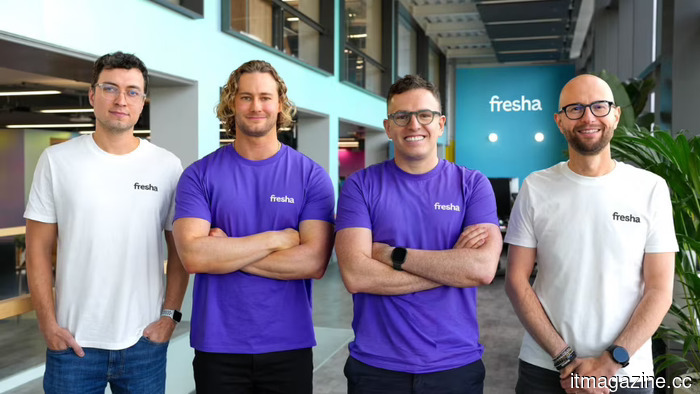 Fresha in London achieves unicorn status with an $80M funding round led by KKR.
Fresha, a beauty and wellness booking platform based in London, has secured $80 million from KKR, achieving a valuation exceeding $1 billion and entering the UK unicorn club.
Fresha in London achieves unicorn status with an $80M funding round led by KKR.
Fresha, a beauty and wellness booking platform based in London, has secured $80 million from KKR, achieving a valuation exceeding $1 billion and entering the UK unicorn club.
 The AI era didn't eliminate trust in marketing; instead, it elevated the standards for achieving it.
Consumers have transitioned from looking for information to desiring certainty. An experienced marketer discusses why brands that fail to withstand the verification phase will be outperformed by those that succeed.
The AI era didn't eliminate trust in marketing; instead, it elevated the standards for achieving it.
Consumers have transitioned from looking for information to desiring certainty. An experienced marketer discusses why brands that fail to withstand the verification phase will be outperformed by those that succeed.
Starbucks withdraws its AI inventory tool after nine months due to ongoing confusion over the types of milk.
Starbucks has discontinued its AI inventory tool in North American stores nine months after its introduction, mentioning reliability concerns and returning to manual counting methods.