

ByteDance's Seedance 2.0 debuts at Cannes with a 95-minute AI film titled Hell Grind.
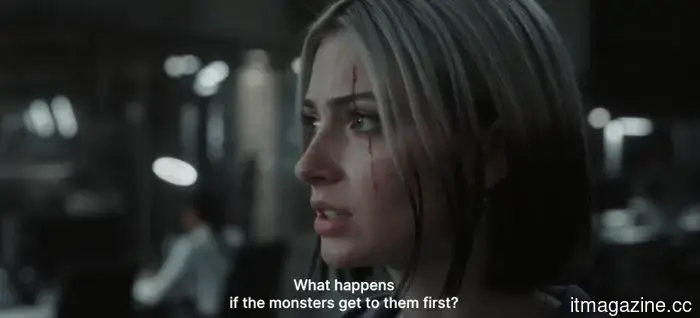
At the 79th Cannes Film Festival, renowned for its abundance of cinematic storytelling, one of the year's most unexpected developments emerged from the realm of AI. On Thursday, ByteDance’s cloud service, Volcengine, unveiled its Seedance 2.0 model at Cannes by hosting a showcase of AI films and premiering Hell Grind, a 95-minute AI-generated feature film touted as the world's first full-length AI movie. The team responsible for this film is from Higgsfield, a US-based AI company, while the primary video generation model is Seedance 2.0, created by ByteDance.
This was not merely a 15-second AI clip or a proof-of-concept demonstration. Hell Grind presented itself as a fully realized, theater-scale narrative feature, demonstrating the rapid transition of generative AI from experimental content creation to long-form cinematic storytelling.
What distinguishes this development is that generating long-form videos has been a significant technical challenge in AI filmmaking. Currently, most mainstream AI video tools can only produce clips ranging from 15 to 30 seconds. Crafting a feature-length film usually entails piecing together tens of thousands of fragmented shots, which frequently results in inconsistent faces, unstable scenes, and disrupted visual continuity, making such output challenging to utilize in professional production pipelines.
Seedance 2.0 seems to have overcome many of these obstacles. The film tells the story of four street children named Roko, Jaxx, Lulu, and Rein, who discover a mysterious artifact while exploring a museum. This discovery awakens a dark force and grants them superpowers, compelling them to unite against the emergent evil and fight for survival in a reality that blurs into illusion.
After viewing an early version of the film, Chuck Russell reportedly expressed that the project evoked genuine empathy for the characters, which he noted as uncommon in AI-generated cinema.
The production details are equally impressive: the film was completed by a 15-member team in just 14 days and was produced on a budget of less than $500,000. In contrast, a traditionally made film of similar scope could easily cost tens of millions.
During the summit, Alex Mashrabov, co-founder of Higgsfield, claimed that the technical foundation for AI-native filmmaking is now sufficiently advanced to realize ambitious cinematic concepts at a fraction of the cost of conventional production.
Luc Besson’s SEEN studio is reportedly preparing to use Volcengine’s Seedance 2.0 to create an AI animated film titled The Furious Five, with Besson attached to direct. This project is said to merge live-action performances with AI generation, eliminating the need for motion-capture studios and green screens, thereby allowing everyday shooting setups to directly contribute to animation production.
If this holds true, the implications extend beyond mere production efficiency. A 95-minute AI-generated feature film indicates that constraints in narrative-scale generation may no longer be the foremost challenge in filmmaking, shifting the focus toward creative direction rather than budget or team size. This development could significantly reduce entry barriers for independent creators, increasing access to feature-length storytelling.
However, this transition brings about structural challenges for the film industry. If a feature film can be produced in approximately two weeks at a fraction of traditional costs, segments of the mid- and low-tier production workforce could feel pressure from displacement. There is also an emerging debate concerning authorship: whether the emotional resonance of AI-generated content reflects authentic artistic intention or merely optimized responses to human patterns.
As generative systems become more adept at crafting coherent and emotionally impactful narratives, the role of human creators may continue to evolve towards defining intent, taste, and meaning, even as the tools increasingly influence what is regarded as effective storytelling.
Jessie Wu is a tech reporter based in Shanghai, covering consumer electronics, semiconductors, and the gaming industry for TechNode. You can reach her by email at jessie.wu@technode.com.




Other articles
 ByteDance's Seedance 2.0 debuts in Cannes with a 95-minute AI film titled Hell Grind.
During the 79th Cannes Film Festival, renowned for its abundance of cinematic storytelling, one of the most unexpected highlights this year stemmed from AI. On
ByteDance's Seedance 2.0 debuts in Cannes with a 95-minute AI film titled Hell Grind.
During the 79th Cannes Film Festival, renowned for its abundance of cinematic storytelling, one of the most unexpected highlights this year stemmed from AI. On
 Ubisoft aims for a resurgence with Assassin’s Creed, Far Cry, Ghost Recon, and an AI experiment that has players concerned.
Ubisoft's plan for a comeback features new titles in the Assassin's Creed, Far Cry, and Ghost Recon franchises, along with a playable generative AI project named Teammates.
Ubisoft aims for a resurgence with Assassin’s Creed, Far Cry, Ghost Recon, and an AI experiment that has players concerned.
Ubisoft's plan for a comeback features new titles in the Assassin's Creed, Far Cry, and Ghost Recon franchises, along with a playable generative AI project named Teammates.
 Ubisoft aims for a resurgence with Assassin’s Creed, Far Cry, Ghost Recon, along with an AI project that has players concerned.
Ubisoft's plan for a comeback features new titles in the Assassin’s Creed, Far Cry, and Ghost Recon franchises, along with a playable generative AI initiative named Teammates.
Ubisoft aims for a resurgence with Assassin’s Creed, Far Cry, Ghost Recon, along with an AI project that has players concerned.
Ubisoft's plan for a comeback features new titles in the Assassin’s Creed, Far Cry, and Ghost Recon franchises, along with a playable generative AI initiative named Teammates.
 PDF Primetime: The Shift of Document Workflow to the Web
How simplicity and accessibility are transforming the way users manage daily digital activities. The contemporary workplace has undergone significant changes in the past ten years, now defined by remote access and geographically dispersed teams. However, many administrative processes continue to be surprisingly cumbersome. You can now work on a group project with individuals from around the globe, […]
PDF Primetime: The Shift of Document Workflow to the Web
How simplicity and accessibility are transforming the way users manage daily digital activities. The contemporary workplace has undergone significant changes in the past ten years, now defined by remote access and geographically dispersed teams. However, many administrative processes continue to be surprisingly cumbersome. You can now work on a group project with individuals from around the globe, […]
 Research indicates that poor screen habits significantly contribute to the poor sleep and mental health of young people.
Recent studies demonstrate how screen usage, inadequate sleep, feelings of loneliness, and depression create self-perpetuating cycles among young adults between the ages of 18 and 40.
Research indicates that poor screen habits significantly contribute to the poor sleep and mental health of young people.
Recent studies demonstrate how screen usage, inadequate sleep, feelings of loneliness, and depression create self-perpetuating cycles among young adults between the ages of 18 and 40.
 The Firefox Project Nova redesign features a compact mode and an updated appearance.
Mozilla's Project Nova is set to introduce softer tabs for Firefox, a color scheme inspired by fire, a compact mode, and more transparent privacy settings. The rollout is anticipated to occur later this year.
The Firefox Project Nova redesign features a compact mode and an updated appearance.
Mozilla's Project Nova is set to introduce softer tabs for Firefox, a color scheme inspired by fire, a compact mode, and more transparent privacy settings. The rollout is anticipated to occur later this year.
ByteDance's Seedance 2.0 debuts at Cannes with a 95-minute AI film titled Hell Grind.
At the 79th Cannes Film Festival, renowned for its abundance of cinematic storytelling, one of the most unexpected highlights of this year stemmed from AI.