
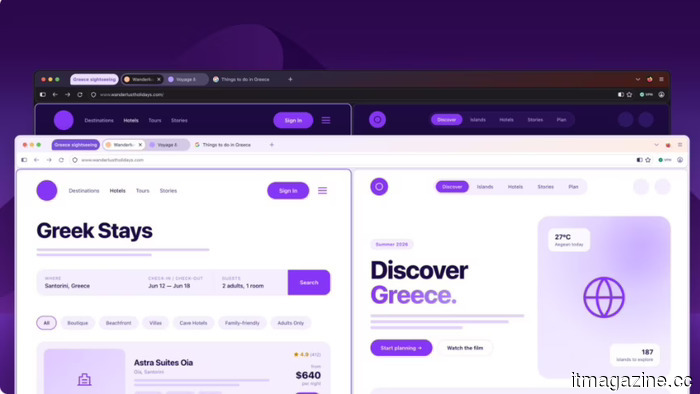
The Firefox Project Nova redesign features a compact mode and an updated appearance.
TL;DR Mozilla has introduced Project Nova, the most significant redesign of Firefox in six years. This update features softer tabs, a fire-inspired color scheme, a compact mode, and enhanced privacy controls. The rollout is anticipated later this year.
Mozilla has officially launched Project Nova, representing the largest visual update of Firefox since 2020. The redesign affects tabs, icons, spacing, color scheme, and settings, aiming to create a warmer and quicker browsing experience while maintaining its identity as the only major browser not based on Chromium.
The updates begin with the tabs, which now feature a softer, more rounded design and a subtle gradient that enhances the active tab's visual prominence. The overall interface reflects this approach, with consistent curves and spacing in panels, menus, and browser controls. Icons have been redesigned for better balance between light and dark themes.
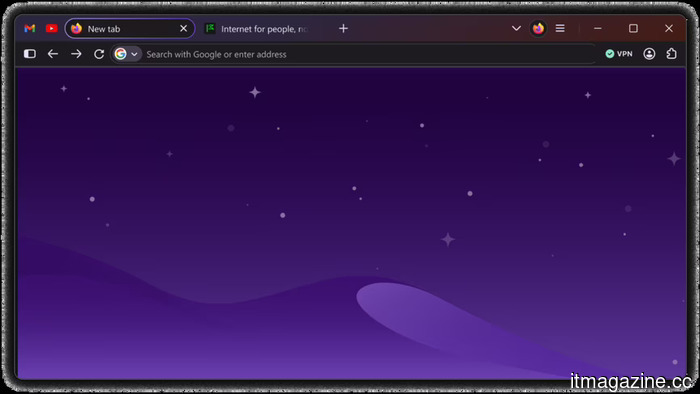
The color palette has also been refreshed, described by Mozilla as inspired by fire, featuring rich smoky purples and lighter warm tones that replace the current flatter colors. The active tab incorporates a glow effect that unifies the interface.
Compact mode is back after being removed years ago; users have consistently requested its return. The reinstated mode condenses browser controls, freeing up vertical screen space, making it a straightforward concession to the power users who comprise a significant portion of Firefox’s audience.
In addition to aesthetics, Nova enhances the visibility of privacy tools. The built-in VPN, launched by Mozilla as a free feature with 50GB of monthly data, is now more prominently displayed. Settings are being rewritten in simpler language, providing clearer controls for Enhanced Tracking Protection and an option to disable AI features entirely.
Mozilla claims that Firefox has improved load times for essential page content by 9 percent over the past year, partly due to tracker blocking, which minimizes the amount of third-party code that needs to load. The browser now prioritizes key page elements before loading less crucial content.
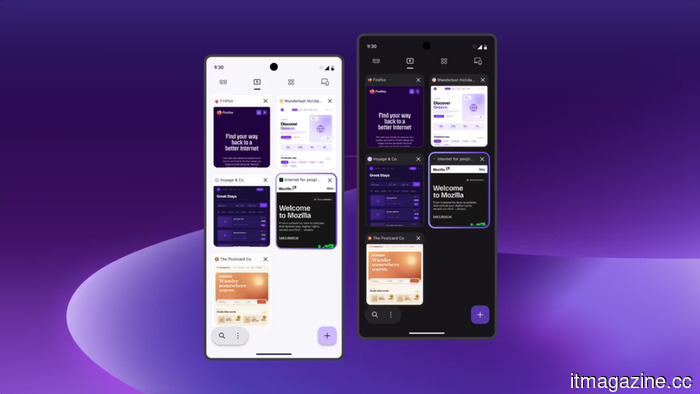
The redesign also applies to mobile versions of Firefox. Shared colors, icons, and design tokens are intended to create a consistent experience between desktop and mobile. Mozilla is introducing new themes and wallpapers, with plans to allow users to customize the shapes of interface elements such as tabs over time.
On a technical level, Nova establishes a shared design system built on reusable tokens and components. This approach aims for future features to blend seamlessly into a cohesive visual language, rather than appearing as separate additions. While this type of infrastructure work may not excite users, it plays a crucial role in the browser's ability to evolve quickly.
The timing of this update is significant. Firefox currently holds about 2.3 percent of the global browser market, down from double digits a decade ago. Google is transforming Chrome into an AI-driven workplace platform amidst criticism regarding its tracking practices, while Apple's Safari commands second place with approximately 15 percent. Firefox’s message of being developed for users, not platforms, requires a modern interface to resonate.
Additionally, Mozilla has been investing in AI on its own terms. Firefox 150 included 271 vulnerability fixes identified by Anthropic's Claude, and the browser now offers optional AI features with a kill switch for users opting out. This approach—making AI a choice rather than a default—complements the broader Nova philosophy.
Project Nova is currently available for testing in Firefox Nightly builds, with a full rollout anticipated later this year. Mozilla is gathering feedback via its Connect forum, adhering to its open-source tradition of public development.

Other articles
 Ubisoft aims for a resurgence with Assassin’s Creed, Far Cry, Ghost Recon, and an AI experiment that has players concerned.
Ubisoft's plan for a comeback features new titles in the Assassin's Creed, Far Cry, and Ghost Recon franchises, along with a playable generative AI project named Teammates.
Ubisoft aims for a resurgence with Assassin’s Creed, Far Cry, Ghost Recon, and an AI experiment that has players concerned.
Ubisoft's plan for a comeback features new titles in the Assassin's Creed, Far Cry, and Ghost Recon franchises, along with a playable generative AI project named Teammates.
 ClickUp reduces its workforce by 22% while providing $1 million salaries amid its AI restructuring efforts.
ClickUp's CEO Zeb Evans reduced the workforce by 22% and established $1 million salary bands for a "100x organization" where AI agents exceed the number of employees by three to one.
ClickUp reduces its workforce by 22% while providing $1 million salaries amid its AI restructuring efforts.
ClickUp's CEO Zeb Evans reduced the workforce by 22% and established $1 million salary bands for a "100x organization" where AI agents exceed the number of employees by three to one.
 ByteDance's Seedance 2.0 makes its debut at Cannes with the 95-minute AI film Hell Grind.
During the 79th Cannes Film Festival, renowned for its abundance of cinematic narratives, one of the most unexpected highlights of this year stemmed from AI. On
ByteDance's Seedance 2.0 makes its debut at Cannes with the 95-minute AI film Hell Grind.
During the 79th Cannes Film Festival, renowned for its abundance of cinematic narratives, one of the most unexpected highlights of this year stemmed from AI. On
 PDF Primetime: The Shift of Document Workflow to the Web
How simplicity and accessibility are transforming the way users manage daily digital activities. The contemporary workplace has undergone significant changes in the past ten years, now defined by remote access and geographically dispersed teams. However, many administrative processes continue to be surprisingly cumbersome. You can now work on a group project with individuals from around the globe, […]
PDF Primetime: The Shift of Document Workflow to the Web
How simplicity and accessibility are transforming the way users manage daily digital activities. The contemporary workplace has undergone significant changes in the past ten years, now defined by remote access and geographically dispersed teams. However, many administrative processes continue to be surprisingly cumbersome. You can now work on a group project with individuals from around the globe, […]
 SpaceX's bridge loan reduces Musk's debt expenses by 50% in preparation for the IPO.
SpaceX's IPO filing discloses a $20 billion bridge loan at a 4.58% interest rate, which has replaced high-interest junk debt from X and xAI, resulting in savings of nearly $1 billion annually.
GitLab 19.0 aims to bridge the divide between coding and delivery.
GitLab 19.0 enhances agentic AI throughout the entire development lifecycle by incorporating SBOM dependency scanning, support for Claude Opus 4.7, and a credit-based pricing model for agents.
SpaceX's bridge loan reduces Musk's debt expenses by 50% in preparation for the IPO.
SpaceX's IPO filing discloses a $20 billion bridge loan at a 4.58% interest rate, which has replaced high-interest junk debt from X and xAI, resulting in savings of nearly $1 billion annually.
GitLab 19.0 aims to bridge the divide between coding and delivery.
GitLab 19.0 enhances agentic AI throughout the entire development lifecycle by incorporating SBOM dependency scanning, support for Claude Opus 4.7, and a credit-based pricing model for agents.
The Firefox Project Nova redesign features a compact mode and an updated appearance.
Mozilla's Project Nova is set to introduce softer tabs for Firefox, a color scheme inspired by fire, a compact mode, and more transparent privacy settings. The rollout is anticipated to occur later this year.