
Spotify and Universal have reached an agreement for licensing AI-generated covers and remixes.
Premium subscribers will have the opportunity to create AI versions of songs from participating UMG artists. The financial details have not been revealed.
On Thursday, Spotify and Universal Music Group announced licensing agreements that will enable premium subscribers to create AI covers and remixes of tracks by participating UMG artists. This marks the first instance where the streaming service has officially licensed generative AI along with its catalog and represents the most definitive indication from the major-label system on how to compensate for AI-generated music.
The companies described the upcoming product as a paid add-on for premium users, though no public launch date has been provided. UMG and Spotify mentioned that the model is centered on “consent, credit, and compensation,” allowing artists and songwriters to opt in and receive a share of the revenue generated from the AI-created versions of their work.
It was not disclosed which UMG artists have agreed to participate; however, UMG's roster features names like Taylor Swift, Ariana Grande, Drake, and Billie Eilish, although this does not necessarily mean any of them have committed to participation.
The market perceived the deal as significant, with Spotify's shares rising approximately 14-16% on this news, suggesting that AI-generated remixes could offer the company a new revenue stream at a time when its core subscription service is reaching maturity.
The financial specifics, including the revenue distribution among Spotify, UMG, and individual artists, remain undisclosed.
This licensing model is important as it seeks to address ongoing challenges. For the past two years, AI music tools have largely operated in a gray area, with companies like Suno and Udio facing lawsuits from major labels for using copyrighted materials without permission.
By acquiring rights at the platform level and allowing users to generate music within Spotify instead of uploading AI tracks, both companies are outlining a framework that enables the label, artists, songwriters, and platform to benefit from the same generated content.
Spotify must manage risks that it has previously been criticized for not adequately addressing. The platform has faced allegations of allowing AI-generated tracks to clutter the catalogs of deceased artists without the consent of their estates, as well as making slow progress in labeling or identifying AI music, a disparity that TNW reported on extensively last year.
A licensed creator tool with rights secured in advance offers a more favorable narrative to present to investors and regulators compared to a system that tries to monitor uploads after they occur.
Whether this creates a more favorable situation for artists is contingent on terms that have yet to be released. Historically, songwriters have received a minimal portion of streaming revenue, and it remains to be seen whether this new licensing structure rectifies that issue or simply introduces another revenue category on top of an existing imbalance.
Additionally, this announcement coincides with the admission from Spotify that much of its catalog of AI-generated content remains unlabelled. When the remix product is finally launched, it will represent the first AI music on the platform with the necessary documentation. However, the broader catalog continues to pose a more complex challenge.
Other articles
 IBM secures $1 billion as the US supports nine quantum companies with a total of $2 billion.
The US Department of Commerce has finalized nine letters of intent under the CHIPS Act, totaling $2 billion, which involves equity investments in companies such as IBM, D-Wave, Rigetti, and others.
IBM secures $1 billion as the US supports nine quantum companies with a total of $2 billion.
The US Department of Commerce has finalized nine letters of intent under the CHIPS Act, totaling $2 billion, which involves equity investments in companies such as IBM, D-Wave, Rigetti, and others.
 Chinese researchers assert that a solid-state electric vehicle battery can be charged in just a few minutes.
Chinese researchers assert that a newly developed solid-state battery can withstand ultra-fast charging while offering significantly higher energy density, which could transform the future of electric vehicles. Scientists at the Chinese Academy of Sciences report the creation of a solid-state lithium-metal battery that can provide exceptionally high energy density while enduring ultra-fast charging conditions – an impressive combination […]
Chinese researchers assert that a solid-state electric vehicle battery can be charged in just a few minutes.
Chinese researchers assert that a newly developed solid-state battery can withstand ultra-fast charging while offering significantly higher energy density, which could transform the future of electric vehicles. Scientists at the Chinese Academy of Sciences report the creation of a solid-state lithium-metal battery that can provide exceptionally high energy density while enduring ultra-fast charging conditions – an impressive combination […]
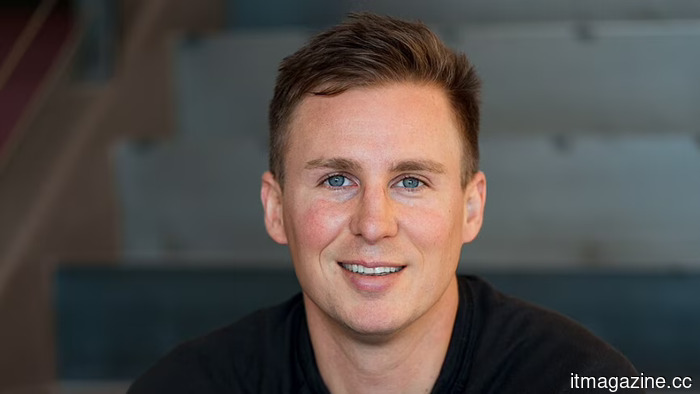 Hark, the AI hardware startup founded by Brett Adcock, has secured $700 million in funding, achieving a valuation of $6 billion.
Hark, established by serial entrepreneur Brett Adcock, has secured $700 million at a valuation of $6 billion. Notable investors include Nvidia, AMD, and Intel.
Hark, the AI hardware startup founded by Brett Adcock, has secured $700 million in funding, achieving a valuation of $6 billion.
Hark, established by serial entrepreneur Brett Adcock, has secured $700 million at a valuation of $6 billion. Notable investors include Nvidia, AMD, and Intel.
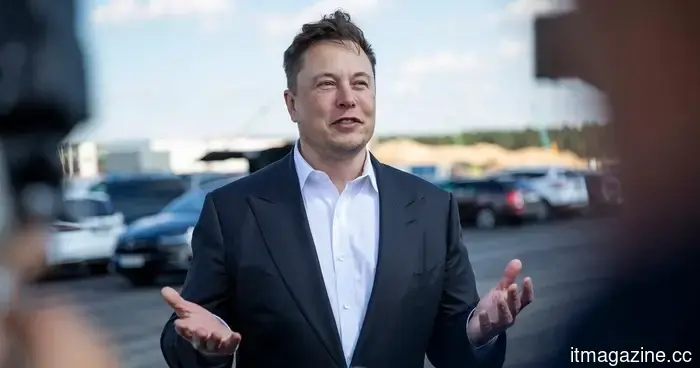 Elon Musk will receive a significant payday if he establishes a colony of one million people on Mars.
Elon Musk's SpaceX compensation scheme could result in a significant stock grant if the company achieves a substantial valuation and establishes a colony of one million people on Mars.
Elon Musk will receive a significant payday if he establishes a colony of one million people on Mars.
Elon Musk's SpaceX compensation scheme could result in a significant stock grant if the company achieves a substantial valuation and establishes a colony of one million people on Mars.
Spotify and Universal have reached an agreement for licensing AI-generated covers and remixes.
Spotify Premium subscribers will have the ability to create AI-generated covers and remixes of UMG songs as part of a new licensing agreement. The financial details of the deal have not been revealed.