
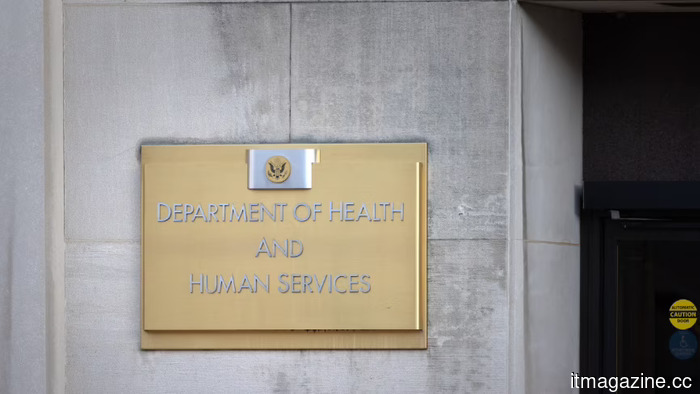
HHS initiates an AI project aimed at identifying fraud and waste in federal health programs.
The Department of Health and Human Services is transitioning from a “pay and chase” approach to real-time AI screening within Medicare, Medicaid, CHIP, and the Marketplace. The U.S. Department of Health and Human Services has initiated an artificial intelligence project aimed at identifying fraud and waste in federal health programs, building on a strategy first announced in February, which aims to replace the existing federal “pay and chase” model with real-time claims screening prior to payment. Reuters reported on the development on Wednesday.
This program encompasses Medicare, Medicaid, the Children’s Health Insurance Program, and the Health Insurance Marketplace, as stated in the joint HHS announcement from earlier this year.
During the February rollout, HHS Secretary Robert F. Kennedy Jr., Vice President JD Vance, and CMS Administrator Mehmet Oz characterized the transition as a move away from the long-standing practice of paying claims initially and investigating later, toward what the agency describes as a “detect and deploy” methodology, utilizing AI tools to identify suspicious claims at the point of adjudication.
The scale of the problem justifies the urgency of this initiative. According to a CMS fact sheet, Medicare’s fee-for-service program alone incurred an estimated $28.83 billion in improper payments in fiscal 2025, in addition to another $23.67 billion from Medicare Part C.
A separate report from the Government Accountability Office in April estimated government-wide improper payments at around $186 billion for the year, with most occurring in five programs, including Medicare and Medicaid.
The regulatory foundation for this initiative is a formal Request for Information (RFI) that HHS and CMS issued in late February, seeking input from the industry on analytics methodologies, AI tools, and data-sharing techniques. The RFI concluded on March 30 and will contribute to a proposed rule currently referred to by CMS as CRUSH, which stands for “Comprehensive Regulations to Uncover Suspicious Healthcare.”
The May initiative seems to be the practical follow-up to that consultation, although neither HHS nor CMS has yet made the complete vendor list or technical framework public.
Simultaneously, pilots have been underway; the HHS Office of Inspector General has explored a machine-learning model to assess providers based on billing behavior statistically linked to fraud and abuse. CMS reported a 59% increase in total Medicare program-integrity savings in fiscal 2025, climbing from $26.3 billion the previous year to $41.9 billion.
The agency attributes part of this increase to improved screening of new enrollees, which includes a nationwide six-month moratorium on new home health and hospice enrollments that began on May 13.
The significant risk in shifting from post-payment review to pre-payment AI screening lies in the impact of false positives on providers. A flagged claim that delays payment to a legitimate practice, especially a small one, can create a substantial liquidity problem. Industry groups have already urged CMS, through the RFI process, to establish clear appeal rights and human review thresholds before any AI-flagged denials are finalized. None of these safeguards have been incorporated into regulations yet.
What HHS has not revealed includes which model vendors are being utilized, whether the system will use de-identified or fully identifiable claims data, and how the agency plans to audit the models for error rates.
The CRUSH rulemaking will ultimately contain those answers. For now, the initiative is launching against a backdrop of notably high improper-payment figures and a federal interest in AI for compliance that is unusually strong by recent standards.
Other articles
 Elon Musk will receive a record-breaking salary if he establishes a colony of one million people on Mars.
Elon Musk’s compensation plan for SpaceX could lead to a substantial stock grant if the company achieves a significant valuation and establishes a colony on Mars with one million inhabitants.
Elon Musk will receive a record-breaking salary if he establishes a colony of one million people on Mars.
Elon Musk’s compensation plan for SpaceX could lead to a substantial stock grant if the company achieves a significant valuation and establishes a colony on Mars with one million inhabitants.
 Microsoft is addressing a Windows 11 search problem that has likely caused you frustration numerous times.
Windows 11 Search might soon cease directing you to Bing when you are merely trying to locate files on your computer. Microsoft is currently testing a solution that will prioritize local results more effectively.
Farewell to the home screen: How NEED is transforming Telegram into a digital marketplace.
NEED creates a chat-driven marketplace within Telegram, allowing users to purchase eSIMs, gift cards, and VPNs without the need to download an app. This initiative is part of a larger trend moving from traditional app stores to mini-app ecosystems.
Microsoft is addressing a Windows 11 search problem that has likely caused you frustration numerous times.
Windows 11 Search might soon cease directing you to Bing when you are merely trying to locate files on your computer. Microsoft is currently testing a solution that will prioritize local results more effectively.
Farewell to the home screen: How NEED is transforming Telegram into a digital marketplace.
NEED creates a chat-driven marketplace within Telegram, allowing users to purchase eSIMs, gift cards, and VPNs without the need to download an app. This initiative is part of a larger trend moving from traditional app stores to mini-app ecosystems.
 Chinese researchers assert that a solid-state electric vehicle battery can be charged in just a few minutes.
Chinese researchers assert that a newly developed solid-state battery can withstand ultra-fast charging while offering significantly higher energy density, which could transform the future of electric vehicles. Scientists at the Chinese Academy of Sciences report the creation of a solid-state lithium-metal battery that can provide exceptionally high energy density while enduring ultra-fast charging conditions – an impressive combination […]
Chinese researchers assert that a solid-state electric vehicle battery can be charged in just a few minutes.
Chinese researchers assert that a newly developed solid-state battery can withstand ultra-fast charging while offering significantly higher energy density, which could transform the future of electric vehicles. Scientists at the Chinese Academy of Sciences report the creation of a solid-state lithium-metal battery that can provide exceptionally high energy density while enduring ultra-fast charging conditions – an impressive combination […]
 A UN draft protocol aims to broaden countries' authority to impose taxes on technology giants.
A UN draft protocol from May 5 would allow countries to impose taxes on digital giants based on the location of their users. The document is set for negotiation in New York this August.
A UN draft protocol aims to broaden countries' authority to impose taxes on technology giants.
A UN draft protocol from May 5 would allow countries to impose taxes on digital giants based on the location of their users. The document is set for negotiation in New York this August.
HHS initiates an AI project aimed at identifying fraud and waste in federal health programs.
HHS has introduced an AI initiative to conduct real-time screenings of Medicare, Medicaid, CHIP, and Marketplace claims for fraud, moving away from the previous "pay and chase" approach.