
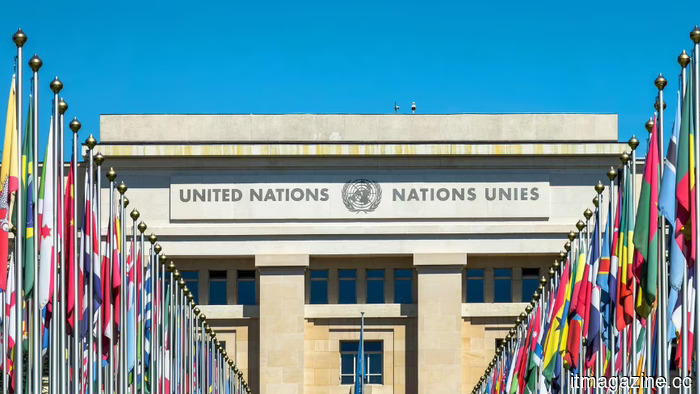
A UN draft protocol aims to broaden countries' authority to impose taxes on technology giants.
A draft dated May 5, scheduled for discussion in New York in August, focuses on determining where digital revenue is taxed and by whom. A new protocol being circulated within the United Nations tax framework would allow countries to tax firms like Google, Amazon, and Meta based on the location of their users, rather than their country of incorporation. This text, first reported by Bloomberg Tax, represents the most definitive effort to transform years of discussions on digital taxation into enforceable international law.
The draft encompasses a wide range of digital activities, including online advertising, search engines, social media platforms, online gaming, cloud computing, and user data provision. It also covers online mediation platforms and digital content services, which collectively represent most of the business models employed by major U.S. companies.
This protocol is part of the UN Framework Convention on International Tax Cooperation, for which member states approved terms of reference in late 2024. In early 2025, the convention’s Intergovernmental Negotiating Committee (INC) agreed to work on two initial protocols alongside the main convention: one concerning cross-border services, which is the document that has been leaked, and another focused on dispute prevention. The INC aims to complete the convention and both protocols by 2027.
The May draft will be negotiated in New York in August during the next substantial session of the INC. Member states will approach the negotiations with vastly different viewpoints. Countries like India, Brazil, and many African and Asian nations have advocated strongly for source-based digital taxation, arguing that current regulations allow highly profitable platforms to pay taxes almost exclusively in their home countries.
Historically, the United States has opposed both unilateral and multilateral digital taxes, and the stance of the Trump administration’s Treasury is unlikely to change; prior European digital services taxes have prompted threats of retaliatory tariffs from Washington.
The timing of this text coincides with the parallel OECD process, which has spent years attempting to finalize Pillar One as its own solution to the issue at hand. However, progress on Pillar One has stalled, partly due to the lack of U.S. ratification. The UN protocol indicates that a significant portion of the global community is no longer willing to wait for the OECD process to advance.
What remains unresolved in the draft is the specifics of implementation. While the text proposes significant alterations to the taxation amounts and their locations, the exact allocation formulas, withholding rates, and dispute resolution methods are still undetermined. These details often determine the success or failure of multilateral tax agreements. The August session will provide the first indication of how far negotiators are willing to compromise and what the U.S. delegation, if fully present, is prepared to accept.
Any final agreement will not become law immediately. Even if a protocol is adopted in 2027, the process of securing ratification from enough states to make it effective will take additional time. Nonetheless, the trajectory indicated by the May draft is clear.
Get the TNW newsletter to receive key technology news in your inbox each week.
Other articles
 Elon Musk will receive a significant payday if he establishes a colony of one million people on Mars.
Elon Musk's SpaceX compensation scheme could result in a significant stock grant if the company achieves a substantial valuation and establishes a colony of one million people on Mars.
Elon Musk will receive a significant payday if he establishes a colony of one million people on Mars.
Elon Musk's SpaceX compensation scheme could result in a significant stock grant if the company achieves a substantial valuation and establishes a colony of one million people on Mars.
 How Russell Nicolet created a personal injury firm from the ground up, without a guide.
Russell Nicolet, a first-generation law student, started Nicolet Law as a solo practice. He received training from leading trial lawyers across the country and grew the firm into a personal injury operation spanning multiple states.
How Russell Nicolet created a personal injury firm from the ground up, without a guide.
Russell Nicolet, a first-generation law student, started Nicolet Law as a solo practice. He received training from leading trial lawyers across the country and grew the firm into a personal injury operation spanning multiple states.
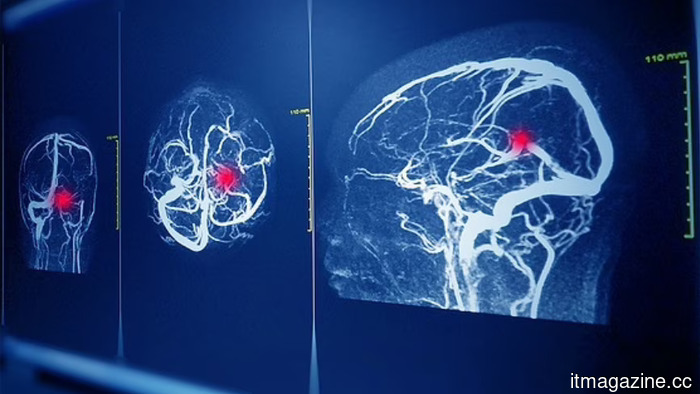 Within the subtle transformation of clinical decision-making.
CARA Systems, a spinoff from NYU, employs AI-based imaging and personalized analytics to assist neurospecialists in making more uniform and tailored choices regarding the risk of intracranial aneurysms.
Within the subtle transformation of clinical decision-making.
CARA Systems, a spinoff from NYU, employs AI-based imaging and personalized analytics to assist neurospecialists in making more uniform and tailored choices regarding the risk of intracranial aneurysms.
 Magic Cue, one of the most intelligent Android features on Pixel phones, is set to be integrated into additional apps.
Google has confirmed the integration of Snapchat, introduced a new user interface, and provided strong indications of support for Wallet and Tasks. This is the update that the feature genuinely required.
Magic Cue, one of the most intelligent Android features on Pixel phones, is set to be integrated into additional apps.
Google has confirmed the integration of Snapchat, introduced a new user interface, and provided strong indications of support for Wallet and Tasks. This is the update that the feature genuinely required.
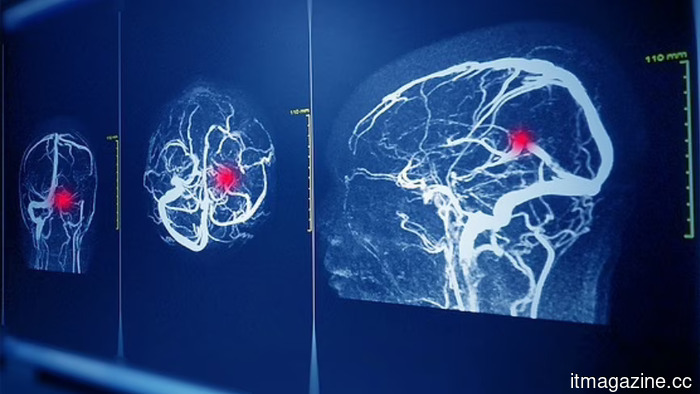 Within the subtle transformation of clinical decision-making
CARA Systems, a spinout from NYU, employs AI-powered imaging and patient-specific analytics to assist neurospecialists in making more uniform and personalized choices regarding the risk of intracranial aneurysms.
Within the subtle transformation of clinical decision-making
CARA Systems, a spinout from NYU, employs AI-powered imaging and patient-specific analytics to assist neurospecialists in making more uniform and personalized choices regarding the risk of intracranial aneurysms.
 Oura confidentially submits its filing for a US IPO as sales of its rings surge.
Finnish smart ring manufacturer Oura has submitted a confidential filing for an IPO in the US, shortly after raising $11 billion in a Series E funding round and surpassing $1 billion in revenue.
Oura confidentially submits its filing for a US IPO as sales of its rings surge.
Finnish smart ring manufacturer Oura has submitted a confidential filing for an IPO in the US, shortly after raising $11 billion in a Series E funding round and surpassing $1 billion in revenue.
A UN draft protocol aims to broaden countries' authority to impose taxes on technology giants.
A UN draft protocol from May 5 would allow countries to impose taxes on digital giants based on the location of their users. The document is set for negotiation in New York this August.