
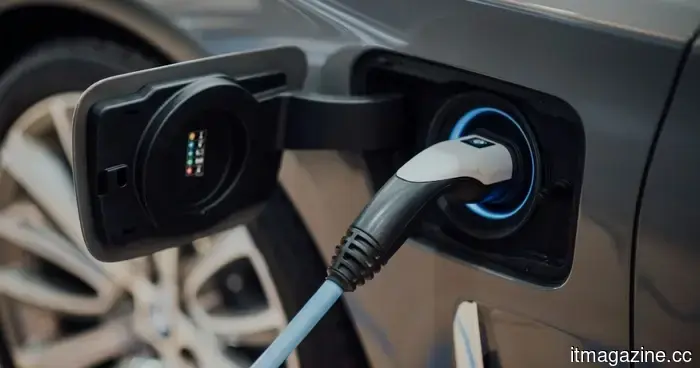
Chinese researchers assert that a solid-state EV battery can be charged in only a few minutes.
Chinese researchers have announced the development of a new solid-state battery that can withstand ultra-fast charging while offering significantly higher energy density, which could transform the future of electric vehicles. Scientists at the Chinese Academy of Sciences assert that they have created a solid-state lithium-metal battery capable of achieving extremely high energy density and enduring ultra-fast charging conditions—a combination that the global EV industry has sought for years.
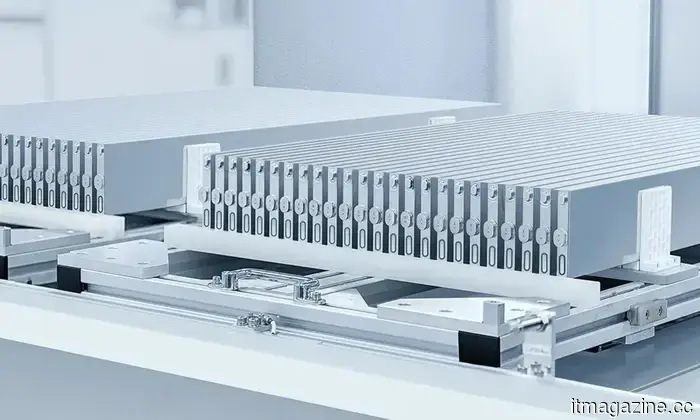
As detailed in a research paper in the Journal of the American Chemical Society, the prototype battery reached an energy density of 451.5 Wh/kg while maintaining stable performance over 700 charge cycles at a 20C charging rate. In practical terms, this means it could theoretically charge and discharge in about three minutes.
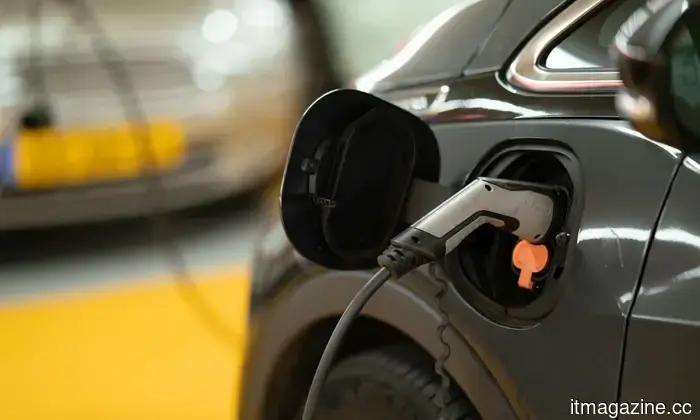
If successfully commercialized, this technology could mark a significant advancement over current EV batteries. Most existing mass-market electric vehicles from U.S. and European manufacturers still operate within conservative fast-charging limits. Brands such as Tesla, Ford, Volkswagen, and Mercedes-Benz typically achieve charging speeds of between 150kW and 350kW under optimal conditions, with many vehicles still needing 20 to 40 minutes for meaningful charging periods.
Conversely, Chinese automakers and battery companies are rapidly advancing the development of ultra-fast charging technologies. Firms like BYD, CATL, Ganfeng Lithium, and various startups are actively working on solid-state battery designs capable of much higher charging speeds and energy density.
China's battery advancements are transforming the industry
This breakthrough coincides with Western automakers increasingly forming partnerships with Chinese firms to stay competitive in EV technologies. Earlier this month, Stellantis expanded its collaboration with Chinese automaker Dongfeng Motor Corporation through a €1.17 billion agreement that includes vehicle production, exports, and engineering cooperation. The company has also bolstered its partnership with Leapmotor to collaboratively develop electric vehicles for the European market.
Other global manufacturers are following suit. Volkswagen has teamed up with Chinese EV startups, including Xpeng, while several Japanese and European brands are investigating joint manufacturing and battery development projects with Chinese suppliers.
As Chinese companies make strides in battery chemistry and manufacturing scale, these partnerships may enable Western firms to indirectly benefit from China's swift technological advancements.
High energy density presents safety challenges
Despite the enthusiasm surrounding these advancements, ultra-dense battery chemistries also pose safety risks. Increased energy density can lead to higher thermal risks if a battery experiences thermal runaway. The industry has already faced multiple high-profile EV fire incidents involving lithium battery systems, including past scrutiny of certain BYD batteries and broader concerns about EV heat management globally.
The researchers claim their pouch cell passed nail-penetration safety testing, a common method for assessing internal short-circuit resistance. However, results from the lab do not guarantee reliability in real-world automotive applications.
This remains one of the primary challenges facing solid-state batteries. While breakthroughs are frequently reported, the commercialization process can take years due to manufacturing complexity, durability validation, safety certification, and government regulatory testing.
Many battery companies are currently aiming for commercialization timelines between 2026 and 2028. Until then, traditional lithium iron phosphate (LFP) batteries are expected to maintain dominance due to their lower cost, established supply chains, and proven reliability.
Nonetheless, the rapid pace of development suggests that the EV battery race is entering a much more aggressive phase, with China currently appearing to take the lead.
Other articles
 Magic Cue, one of the most intelligent Android features on Pixel phones, is set to be integrated into additional apps.
Google has confirmed the integration of Snapchat, introduced a new user interface, and provided strong indications of support for Wallet and Tasks. This is the update that the feature genuinely required.
Magic Cue, one of the most intelligent Android features on Pixel phones, is set to be integrated into additional apps.
Google has confirmed the integration of Snapchat, introduced a new user interface, and provided strong indications of support for Wallet and Tasks. This is the update that the feature genuinely required.
 Hark, the AI hardware startup founded by Brett Adcock, has secured $700 million in funding, achieving a valuation of $6 billion.
Hark, established by serial entrepreneur Brett Adcock, has secured $700 million at a valuation of $6 billion. Notable investors include Nvidia, AMD, and Intel.
Spotify and Universal have reached an agreement for licensing AI-generated covers and remixes.
Spotify Premium subscribers will have the ability to create AI-generated covers and remixes of UMG songs as part of a new licensing agreement. The financial details of the deal have not been revealed.
Hark, the AI hardware startup founded by Brett Adcock, has secured $700 million in funding, achieving a valuation of $6 billion.
Hark, established by serial entrepreneur Brett Adcock, has secured $700 million at a valuation of $6 billion. Notable investors include Nvidia, AMD, and Intel.
Spotify and Universal have reached an agreement for licensing AI-generated covers and remixes.
Spotify Premium subscribers will have the ability to create AI-generated covers and remixes of UMG songs as part of a new licensing agreement. The financial details of the deal have not been revealed.
 HHS initiates an AI project aimed at identifying fraud and waste in federal health programs.
HHS has introduced an AI initiative to conduct real-time screenings of Medicare, Medicaid, CHIP, and Marketplace claims for fraud, moving away from the previous "pay and chase" approach.
Spotify and Universal have reached a licensing agreement for AI-generated covers and remixes.
Spotify Premium subscribers will have the ability to create AI-generated covers and remixes of UMG songs as part of a new licensing agreement. The financial details of the deal have not been revealed.
HHS initiates an AI project aimed at identifying fraud and waste in federal health programs.
HHS has introduced an AI initiative to conduct real-time screenings of Medicare, Medicaid, CHIP, and Marketplace claims for fraud, moving away from the previous "pay and chase" approach.
Spotify and Universal have reached a licensing agreement for AI-generated covers and remixes.
Spotify Premium subscribers will have the ability to create AI-generated covers and remixes of UMG songs as part of a new licensing agreement. The financial details of the deal have not been revealed.
 Chinese researchers assert that a solid-state electric vehicle battery can be charged in just a few minutes.
Chinese researchers assert that a newly developed solid-state battery can withstand ultra-fast charging while offering significantly higher energy density, which could transform the future of electric vehicles. Scientists at the Chinese Academy of Sciences report the creation of a solid-state lithium-metal battery that can provide exceptionally high energy density while enduring ultra-fast charging conditions – an impressive combination […]
Chinese researchers assert that a solid-state electric vehicle battery can be charged in just a few minutes.
Chinese researchers assert that a newly developed solid-state battery can withstand ultra-fast charging while offering significantly higher energy density, which could transform the future of electric vehicles. Scientists at the Chinese Academy of Sciences report the creation of a solid-state lithium-metal battery that can provide exceptionally high energy density while enduring ultra-fast charging conditions – an impressive combination […]
Chinese researchers assert that a solid-state EV battery can be charged in only a few minutes.
Chinese researchers assert that a new solid-state battery can endure ultra-fast charging and provide significantly higher energy density, which could transform the future of electric vehicles. Scientists from the Chinese Academy of Sciences state they have created a solid-state lithium-metal battery that can achieve exceptionally high energy density while withstanding ultra-fast charging conditions – a combination […]