
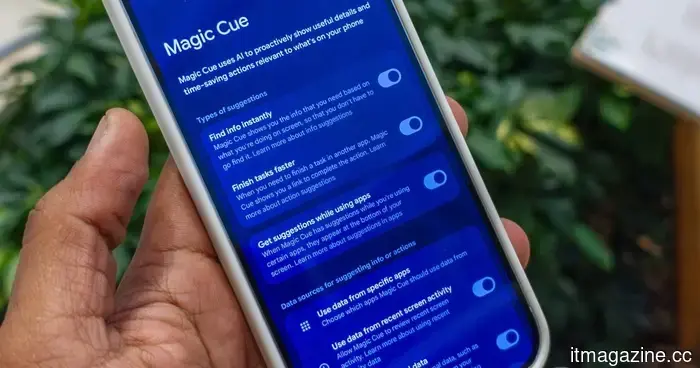
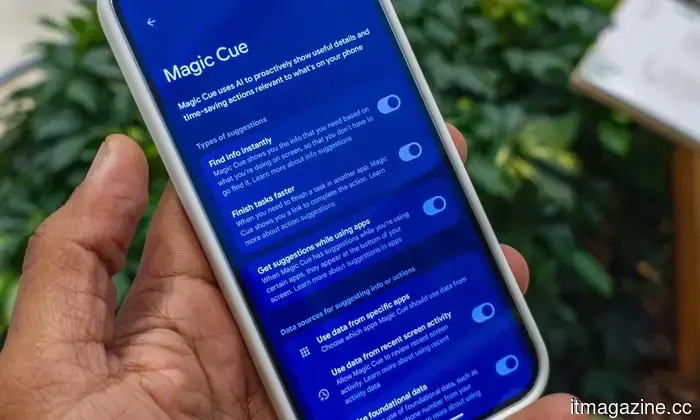
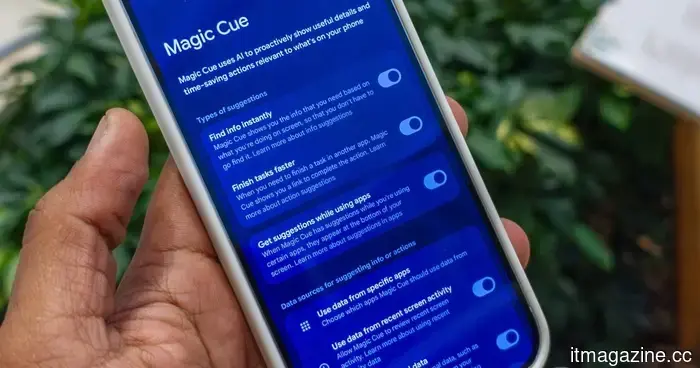
Magic Cue, one of the most intelligent Android features on Pixel phones, is set to be integrated into additional apps.
Google's lesser-known feature on the Pixel 10, Magic Cue, is finally receiving the third-party access and redesign it needed to fulfill its role as a proactive AI assistant as intended.
Nirave Gondhia / Digital Trends
Magic Cue was a feature that generated excitement for the Pixel 10 launch. However, after its on-stage presentation, it was rarely utilized in everyday scenarios, much less in any practical manner.
Google seems to have recognized this shortcoming. At I/O 2026, the company subtly revealed that the feature will be expanded along with a potential redesign. While this announcement wasn't the main highlight, it certainly has the potential to reignite enthusiasm among Pixel 10 users.
Nadeem Sarwar / Digital Trends
What has changed with Magic Cue?
The fundamental concept behind the feature remains intact. It operates solely on-device, analyzes context based on your app usage, and offers relevant predictions before you actively search for them. The significant update is that it is now extending beyond Google’s own app ecosystem.
Currently, Snapchat is the first app to be integrated, with Google hinting that more third-party apps are on the way. Although this is an encouraging sign, there has been no timeline provided by either company for the rollout.
Additionally, 9to5Google previously identified Magic Cue’s presence in Google Wallet and Google Tasks, which could greatly enhance daily utility. For instance, you could receive boarding pass notifications at the optimal moment without needing to open a separate app.
Nirave Gondhia / Digital Trends
Does the redesign matter?
Indeed, it does. Previously, Magic Cue suggestions would only appear within the specific app being used; it worked solely in supported apps, excluding many third-party keyboards.
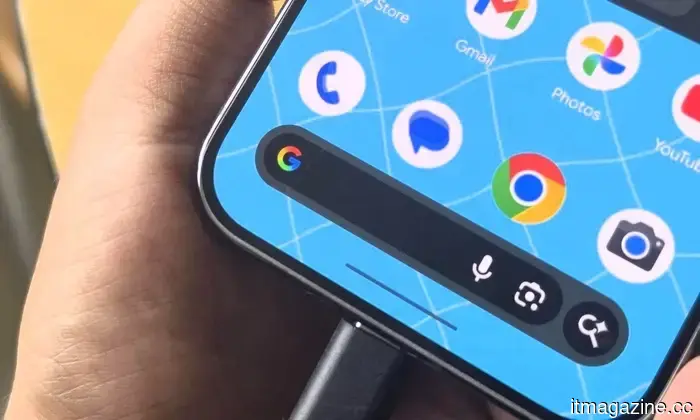
The new design changes that paradigm. Magic Cue suggestions will now present in a small floating bar at the bottom of the screen, independent of any app's interface, similar to how Gemini assistant and Circle to Search function on Android devices.
Since it now operates on a system level, it should be functional regardless of the app or keyboard in use, addressing user requests since its launch. Although Google has yet to confirm this directly, it seems to be the most probable outcome of the update.
This update appears to be a positive enhancement to a feature that had great potential but had not lived up to expectations.
Shikhar has been simplifying developments in consumer technology for over five years…
This robot barista aims to transform high-quality coffee into a scalable business model.
Some ideas seem theoretical until they manifest in everyday scenarios like your morning brew. Artly is tackling this challenge with the Barista Bot, a robotic barista system already dispensing drinks in places such as Muji in Portland, Oregon. The company's endeavor is to take a task traditionally reliant on human skill, repetition, and instinct and convert it into a system capable of consistently reproducing the same results on a larger scale.
What sets the Barista Bot apart from ordinary automation is that Artly is not attempting to create the coffee version of a vending machine. Their aim is to closely mimic the techniques, standards, and workflow of a top-tier barista so the experience remains intentional rather than automated. According to Digital Trends founder Dan Gaul, who visited the Portland location to sample the coffee firsthand, he found it surprisingly good.
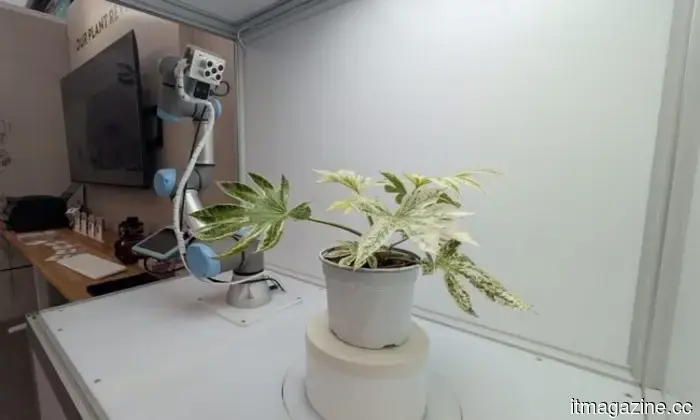
A robot with a caring touch recently earned a silver medal at one of the largest flower shows worldwide.
When considering the Chelsea Flower Show, robots likely don’t come to mind. However, the University of Lincoln brought one and was awarded a Silver Gilt medal. The exhibit, titled RoboCrops: Plant Selection, Beyond the Visible, was created by the Lincoln Institute for Agri-Food Technology (LIAT) and was featured in the show's GreenSTEM zone, showcasing the intersection of horticulture, science, technology, and the environment.
Research indicates that educational institutions should not overly rely on AI text detectors.
A study from the University of Florida reveals that these tools may be so unreliable that the foundational evidence for claims regarding AI-generated academic writing may need a complete reevaluation.
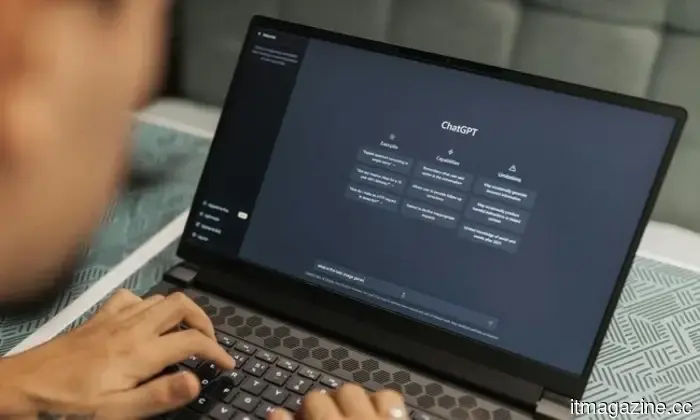
Here’s a challenging thought for all academic institutions currently utilizing AI detectors to monitor student and researcher submissions: these tools may not function as reliably as institutions presume. A paper presented at this week’s 2026 IEEE Symposium on Security and Privacy by University of Florida researchers concludes that commercially available AI-generated text detectors are “not well-suited for use in academic or high-stakes situations.”

Other articles
 Brett Adcock's AI hardware company, Hark, has secured $700 million in funding, achieving a valuation of $6 billion.
Hark, established by serial entrepreneur Brett Adcock, has secured $700 million at a valuation of $6 billion. Investors include Nvidia, AMD, and Intel.
Brett Adcock's AI hardware company, Hark, has secured $700 million in funding, achieving a valuation of $6 billion.
Hark, established by serial entrepreneur Brett Adcock, has secured $700 million at a valuation of $6 billion. Investors include Nvidia, AMD, and Intel.
 HHS initiates AI project to identify fraud and waste in federal health programs.
HHS has introduced an AI initiative to conduct real-time screenings of Medicare, Medicaid, CHIP, and Marketplace claims for fraud, moving away from the traditional "pay and chase" approach.
HHS initiates AI project to identify fraud and waste in federal health programs.
HHS has introduced an AI initiative to conduct real-time screenings of Medicare, Medicaid, CHIP, and Marketplace claims for fraud, moving away from the traditional "pay and chase" approach.
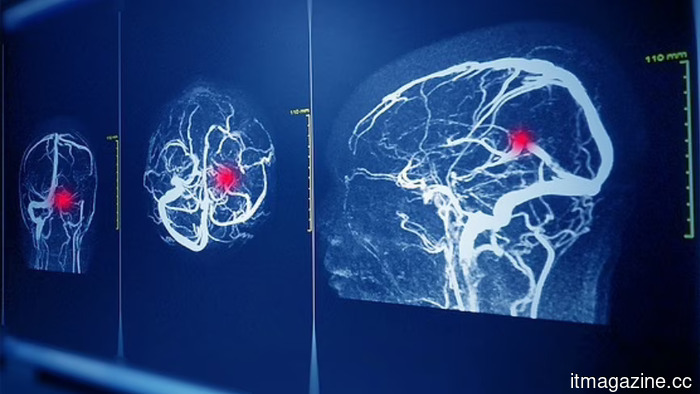 Within the subtle transformation of clinical decision-making
CARA Systems, a spinout from NYU, employs AI-powered imaging and patient-specific analytics to assist neurospecialists in making more uniform and personalized choices regarding the risk of intracranial aneurysms.
Within the subtle transformation of clinical decision-making
CARA Systems, a spinout from NYU, employs AI-powered imaging and patient-specific analytics to assist neurospecialists in making more uniform and personalized choices regarding the risk of intracranial aneurysms.
 Oura confidentially submits its filing for a US IPO as sales of its rings surge.
Finnish smart ring manufacturer Oura has submitted a confidential filing for an IPO in the US, shortly after raising $11 billion in a Series E funding round and surpassing $1 billion in revenue.
Oura confidentially submits its filing for a US IPO as sales of its rings surge.
Finnish smart ring manufacturer Oura has submitted a confidential filing for an IPO in the US, shortly after raising $11 billion in a Series E funding round and surpassing $1 billion in revenue.
 Chinese researchers assert that a solid-state EV battery can be charged in only a few minutes.
Chinese researchers assert that a new solid-state battery can endure ultra-fast charging and provide significantly higher energy density, which could transform the future of electric vehicles. Scientists from the Chinese Academy of Sciences state they have created a solid-state lithium-metal battery that can achieve exceptionally high energy density while withstanding ultra-fast charging conditions – a combination […]
Farewell to the home screen: How NEED is transforming Telegram into a digital marketplace.
NEED creates a chat-driven marketplace within Telegram, allowing users to purchase eSIMs, gift cards, and VPNs without the need to download an app. This initiative is part of a larger trend moving from traditional app stores to mini-app ecosystems.
Chinese researchers assert that a solid-state EV battery can be charged in only a few minutes.
Chinese researchers assert that a new solid-state battery can endure ultra-fast charging and provide significantly higher energy density, which could transform the future of electric vehicles. Scientists from the Chinese Academy of Sciences state they have created a solid-state lithium-metal battery that can achieve exceptionally high energy density while withstanding ultra-fast charging conditions – a combination […]
Farewell to the home screen: How NEED is transforming Telegram into a digital marketplace.
NEED creates a chat-driven marketplace within Telegram, allowing users to purchase eSIMs, gift cards, and VPNs without the need to download an app. This initiative is part of a larger trend moving from traditional app stores to mini-app ecosystems.
Magic Cue, one of the most intelligent Android features on Pixel phones, is set to be integrated into additional apps.
Google has confirmed the integration of Snapchat, introduced a new user interface, and provided strong indications of support for Wallet and Tasks. This is the update that the feature genuinely required.