

Meta provides competing AI chatbots a restricted complimentary access to WhatsApp, based on the conditions set by Brussels.
Following January's comprehensive ban and the March introduction of a fee of $0.0625 per message, Meta has proposed a new plan to the European Commission: offering free WhatsApp access for AI chatbots like OpenAI, Perplexity, and others up to a certain usage limit, after which charges would apply.
Last week, Meta submitted this updated proposal, reported by Reuters on Monday, which would allow competing AI chatbots, including ChatGPT from OpenAI, Claude from Anthropic, and others, free access to WhatsApp in Europe until a specified usage limit is reached, after which fees would begin. This move comes in response to the European Commission's indication that it might issue a formal directive requiring Meta to open WhatsApp to third-party AI services under the Digital Markets Act.
On January 15, Meta enacted a total ban on third-party AI assistants on WhatsApp, impacting services such as ChatGPT, Microsoft Copilot, and Perplexity, along with other smaller assistants that had established distribution through the app. This blanket prohibition drew antitrust scrutiny from regulatory bodies in both Brussels and Brazil. In March, Meta partially eased the ban, agreeing to permit access to rival chatbots but implementing a fee of $0.0625 per message, a scheme deemed commercially unfeasible by regulators and affected AI companies alike.
The recent proposal marks Meta’s third attempt at this strategy. The proposed free access up to a certain usage threshold aligns with the demands of regulators in various jurisdictions following the initial ban. Meta is trying to find a middle ground that satisfies the European Commission's antitrust investigation while not completely abandoning the revenue model based on per-message charges introduced in March. The Commission is currently evaluating this proposal in conjunction with its broader examination of obligations under the Digital Markets Act.
The practical implications of this new structure will depend on the specified cap. Meta's proposal might also propose a one-month window for competitors to integrate with WhatsApp’s development tools before any pricing takes effect. If the cap is sufficiently high to accommodate typical consumer use without incurring charges, it could significantly alter the competitive landscape of the AI chatbot market in Europe. Conversely, if the cap triggers fees within a few days, the proposal would essentially mirror the stance taken in March.
The ramifications for the impacted AI firms are considerable. WhatsApp boasts around 2 billion monthly active users worldwide, with about 500 million in Europe; it serves as the default messaging platform in regions like Brazil, India, and parts of the Mediterranean. Direct distribution of chatbots via WhatsApp has been a recognized product category for years, and both Perplexity and ChatGPT remained accessible within the app, even during the periods the comprehensive ban was supposed to be enforced. The inability to fully execute the ban technically has provided regulators with leverage in the ongoing negotiations.
Contextually, this situation is embedded within the broader framework of the Digital Markets Act. The European Commission has been pursuing a similar enforcement strategy against Apple regarding App Store steering and other related gatekeeping issues, and the WhatsApp case displays a comparable structure: a dominant platform whose obligations for interoperability under the DMA conflict with its commercial interests in promoting its own AI products.
Meta's application, Meta AI, is inherently integrated into WhatsApp; every interaction directed towards Meta AI is one that is not going to OpenAI or Perplexity. Based on the available evidence, the Commission's stance seems to indicate that the DMA's interoperability requirements specifically pertain to this competitive dynamic.
The competitive landscape for agent distribution is particularly pronounced. Dust recently secured $40 million in Series B funding based on the insight that the AI agent that prevails will have seamless distribution within the user's existing communication platform. The ability of OpenAI, Perplexity, and Anthropic to establish viable economics around consumer AI usage routed through WhatsApp hinges on where the Commission sets the cap.
Meta has not commented on Reuters’ request for feedback. While the timeline for the Commission's review is not publicly available, it is expected to yield a formal decision within the next several months, following the usual cadence of Article 8 of the DMA. Previous cycles, as highlighted in industry reporting, indicate that effective compromises can be swiftly reached once both parties have a framework to work with, which in this case is the proposed free-up-to-a-cap model.
Other articles
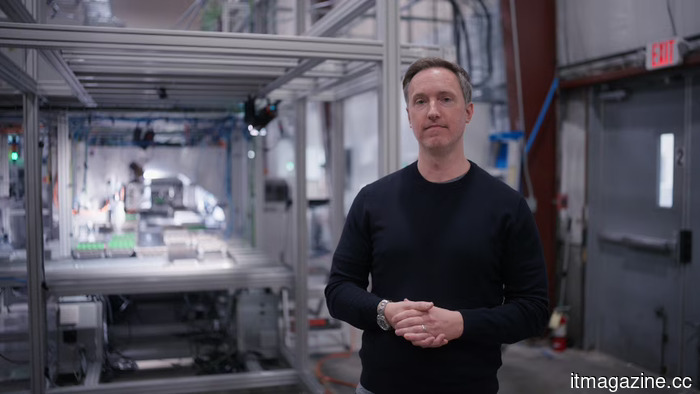 CircuitHub secures $28 million from Plural to produce PCBs in the same way that clouds deliver computing resources.
CircuitHub has secured $28 million in funding, led by Plural, to enhance its automated PCB-manufacturing 'Grid' factories in Europe and the United States.
CircuitHub secures $28 million from Plural to produce PCBs in the same way that clouds deliver computing resources.
CircuitHub has secured $28 million in funding, led by Plural, to enhance its automated PCB-manufacturing 'Grid' factories in Europe and the United States.
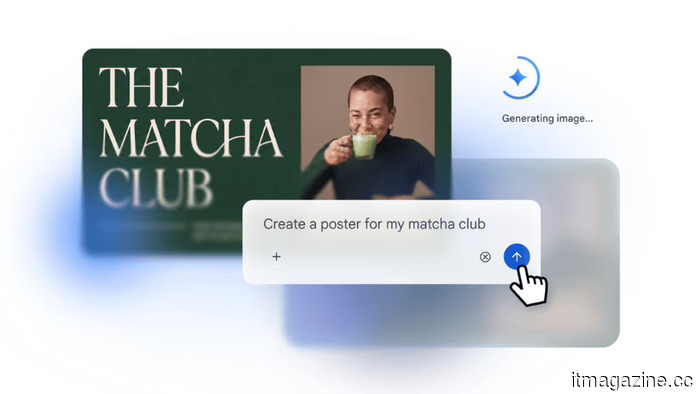 Google has introduced Pics, an AI image generator integrated within Workspace, aimed at competing with Canva in the realm of precise editing.
Google has unveiled Pics, an AI image generator native to Workspace that utilizes Nano Banana 2, featuring precise editing controls and integration with Slides and Drive.
Google has introduced Pics, an AI image generator integrated within Workspace, aimed at competing with Canva in the realm of precise editing.
Google has unveiled Pics, an AI image generator native to Workspace that utilizes Nano Banana 2, featuring precise editing controls and integration with Slides and Drive.
 OpenAI establishes its inaugural international applied-AI laboratory in Singapore, with a commitment of $235 million.
OpenAI is set to establish its first applied-AI lab outside the United States in Singapore, backed by a commitment of S$300 million ($235 million) and plans to increase its workforce to approximately 200 individuals in the coming years.
OpenAI establishes its inaugural international applied-AI laboratory in Singapore, with a commitment of $235 million.
OpenAI is set to establish its first applied-AI lab outside the United States in Singapore, backed by a commitment of S$300 million ($235 million) and plans to increase its workforce to approximately 200 individuals in the coming years.
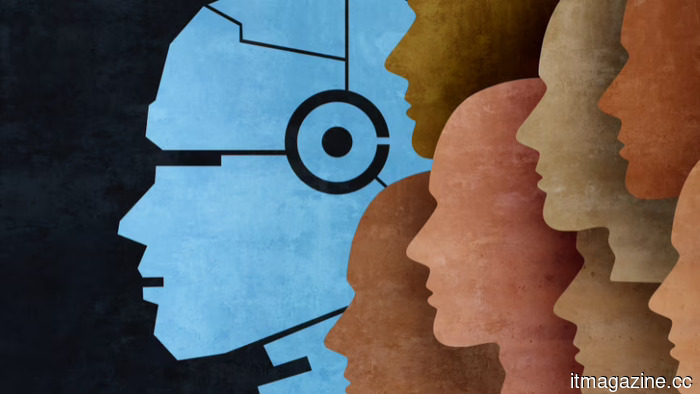 Gen Z isn't criticizing AI; they're expressing discontent with their own job market.
Eric Schmidt faced boos at the University of Arizona, while Gloria Caulfield was met with hostility at UCF. This framing referred to it as generational confusion, but the data suggests it was actually generational accuracy.
Gen Z isn't criticizing AI; they're expressing discontent with their own job market.
Eric Schmidt faced boos at the University of Arizona, while Gloria Caulfield was met with hostility at UCF. This framing referred to it as generational confusion, but the data suggests it was actually generational accuracy.
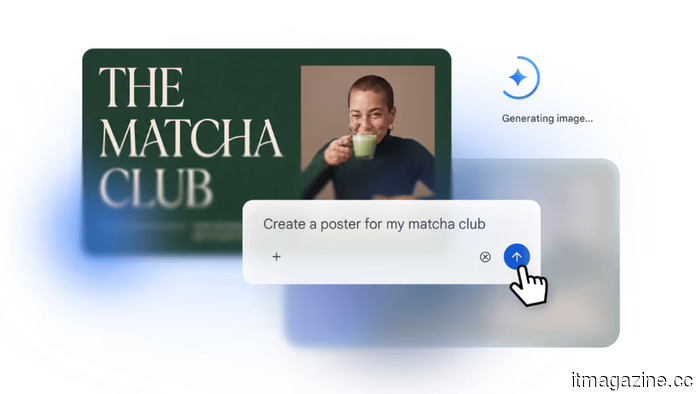 Google reveals Pics, an AI image generator integrated into Workspace, aimed at competing with Canva in precise editing.
Google has introduced Pics, an AI image generator integrated into Workspace, powered by Nano Banana 2. It features precision-editing controls and integrates with Slides and Drive.
Google reveals Pics, an AI image generator integrated into Workspace, aimed at competing with Canva in precise editing.
Google has introduced Pics, an AI image generator integrated into Workspace, powered by Nano Banana 2. It features precision-editing controls and integrates with Slides and Drive.
 Alibaba introduces the Zhenwu M890 as China intensifies its efforts to create an alternative to NVIDIA.
Alibaba's T-Head chip division has introduced the Zhenwu M890, its most advanced AI accelerator to date, and announced that the chip is currently in 'scaled mass production' as China speeds up its efforts to create a domestic alternative to NVIDIA.
Alibaba introduces the Zhenwu M890 as China intensifies its efforts to create an alternative to NVIDIA.
Alibaba's T-Head chip division has introduced the Zhenwu M890, its most advanced AI accelerator to date, and announced that the chip is currently in 'scaled mass production' as China speeds up its efforts to create a domestic alternative to NVIDIA.
Meta provides competing AI chatbots a restricted complimentary access to WhatsApp, based on the conditions set by Brussels.
Meta has submitted a new proposal to the European Commission, providing competing AI chatbots with free access to WhatsApp in Europe up to a certain usage limit, after which a fee per message will be charged. The Commission is currently evaluating this proposal in accordance with the Digital Markets Act.