

Meta provides competing AI chatbots a restricted complimentary access to WhatsApp, adhering to Brussels' conditions.
Following January's comprehensive ban and March's fee of $0.0625 per message, Meta has proposed a new initiative to the European Commission: offering free access to WhatsApp for OpenAI, Perplexity, and other AI competitors up to a certain usage limit, after which charges would apply.
According to a Reuters report on Monday, the proposal, which was made last week, aims to provide competing AI chatbots, such as OpenAI's ChatGPT, Perplexity, and Anthropic's Claude, with complimentary access to WhatsApp in Europe up to a specified usage threshold before instituting fees. This move comes after the European Commission indicated it might issue a formal order requiring Meta to allow third-party AI services access to WhatsApp under the Digital Markets Act.
On January 15, Meta restricted all third-party AI assistants from using WhatsApp, impacting not just ChatGPT but also Microsoft Copilot, Perplexity, and various smaller assistants that had already integrated within the messaging platform. This comprehensive ban drew scrutiny from antitrust authorities in both Brussels and Brazil. In March, Meta partially eased these restrictions by allowing access to rival chatbots for a fee of $0.0625 per message. However, both regulators and affected AI companies viewed this fee structure as prohibitively expensive.
The new proposal represents the third version of Meta's position. The framework of offering free access up to a set usage limit is what regulators across various regions have been advocating for since the initial ban. Meta seeks to find a compromise that will satisfy the European Commission's antitrust investigation without completely discarding the per-message revenue model it proposed in March. The European Commission is currently reviewing this proposal alongside other gatekeeper obligations stemming from the Digital Markets Act.
The practical implications of the new proposal will depend significantly on the usage cap. Meta’s submission might also propose a preferential one-month access period for competing companies to integrate with WhatsApp's developer infrastructure before any costs are incurred.
If the cap is set high enough to accommodate regular consumer use without incurring fees, this proposal could significantly alter the competitive landscape of the European AI chatbot market. Conversely, if the threshold is low enough to initiate charges within a short time, it would merely resemble the earlier position from March.
The implications for the affected AI companies are considerable. WhatsApp boasts around 2 billion monthly active users worldwide, with approximately 500 million in Europe; in regions such as Brazil, India, and parts of the Mediterranean, it serves as the primary messaging platform. Integration of chatbots within WhatsApp has been a recognized product category for years, and both Perplexity and ChatGPT have been available in the app during times when a complete ban was allegedly in effect.
The fact that the ban has not resulted in a complete technical shutdown has given regulators leverage in the current negotiations. The broader context of the Digital Markets Act is crucial to this scenario. The European Commission is simultaneously pursuing similar enforcement actions against Apple regarding App Store anti-steering practices, as the WhatsApp case presents parallel issues: a dominant platform whose obligations for interoperability according to the DMA conflict with its economic incentives to prioritize its own AI products.
Meta's AI offering, Meta AI, is integrated into WhatsApp by default; each consumer interaction directed to Meta AI represents an interaction not directed towards OpenAI or Perplexity. According to available evidence, the Commission’s stance indicates that the DMA’s interoperability requirements apply specifically to this competitive dynamic.
The competitive implications for the agent-distribution category are more pronounced. Dust recently raised $40 million in a Series B round, based on the belief that the AI agent that succeeds will be the one with seamless distribution within the user’s existing communication channels. Whether OpenAI, Perplexity, and Anthropic can develop sustainable economics around consumer AI usage routed through WhatsApp will depend on the Commission's decision on the cap.
Meta did not respond to Reuters' request for comment. The timeline for the Commission's review is not publicly available, but based on the typical cadence for Article 8 DMA reviews, a formal decision is anticipated within the next several months. The prior cycle from January to March suggests that compromises can be reached swiftly once both parties have a framework to work within. The free access up to a cap model serves as that framework.
Other articles
 Meta initiates the 10% reduction, with the Singapore office receiving the notification at 4 am first.
On Wednesday, Meta started informing numerous employees about layoffs, beginning with its Singapore staff at 4 am local time. These reductions fulfill a commitment made in April to decrease the workforce by approximately 8,000 positions.
Meta initiates the 10% reduction, with the Singapore office receiving the notification at 4 am first.
On Wednesday, Meta started informing numerous employees about layoffs, beginning with its Singapore staff at 4 am local time. These reductions fulfill a commitment made in April to decrease the workforce by approximately 8,000 positions.
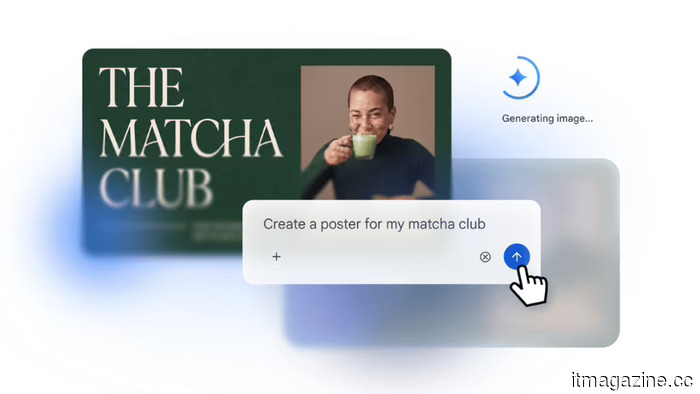 Google has revealed Pics, an AI image creator integrated into Workspace, aimed at competing with Canva in the realm of precise editing.
Google has unveiled Pics, an AI image generator native to Workspace, which is powered by Nano Banana 2 and features precise editing controls along with integration for Slides and Drive.
Google has revealed Pics, an AI image creator integrated into Workspace, aimed at competing with Canva in the realm of precise editing.
Google has unveiled Pics, an AI image generator native to Workspace, which is powered by Nano Banana 2 and features precise editing controls along with integration for Slides and Drive.
 Meta initiates the 10% reduction, with the Singapore office receiving the notification at 4 am first.
On Wednesday, Meta began informing thousands of employees about layoffs, starting with staff in Singapore at 4 am local time. This job reduction follows a commitment made in April to decrease the workforce by approximately 8,000 positions.
Meta initiates the 10% reduction, with the Singapore office receiving the notification at 4 am first.
On Wednesday, Meta began informing thousands of employees about layoffs, starting with staff in Singapore at 4 am local time. This job reduction follows a commitment made in April to decrease the workforce by approximately 8,000 positions.
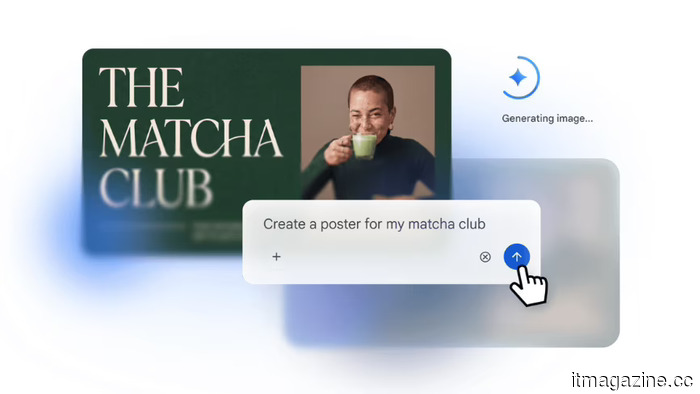 Google has unveiled Pics, an AI image generator integrated within Workspace, aiming to compete with Canva in terms of precise editing.
Google has unveiled Pics, an AI image generator native to Workspace, which utilizes Nano Banana 2 and features precision editing controls along with integration for Slides and Drive.
Google has unveiled Pics, an AI image generator integrated within Workspace, aiming to compete with Canva in terms of precise editing.
Google has unveiled Pics, an AI image generator native to Workspace, which utilizes Nano Banana 2 and features precision editing controls along with integration for Slides and Drive.
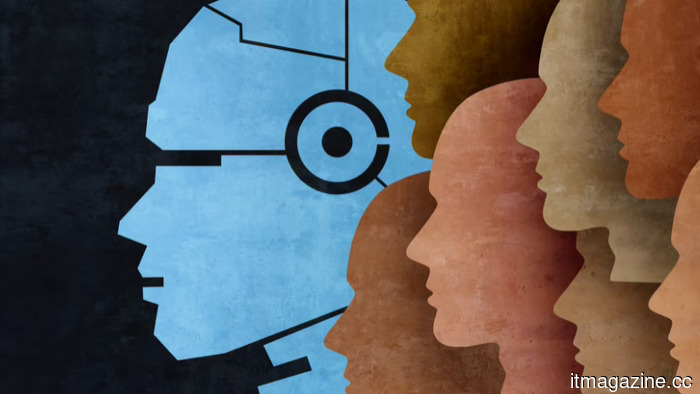 Gen Z is not rejecting AI; rather, it is expressing dissatisfaction with the job market for themselves.
Eric Schmidt faced boos at the University of Arizona, while Gloria Caulfield was also met with boos at UCF. The narrative framed it as generational confusion, but the statistics indicate it was actually generational accuracy.
Gen Z is not rejecting AI; rather, it is expressing dissatisfaction with the job market for themselves.
Eric Schmidt faced boos at the University of Arizona, while Gloria Caulfield was also met with boos at UCF. The narrative framed it as generational confusion, but the statistics indicate it was actually generational accuracy.
 Alibaba introduces the Zhenwu M890 as China intensifies its efforts to create an alternative to NVIDIA.
Alibaba's T-Head chip division has introduced the Zhenwu M890, its most advanced AI accelerator to date, and announced that the chip is currently in 'scaled mass production' as China speeds up its efforts to create a domestic alternative to NVIDIA.
Alibaba introduces the Zhenwu M890 as China intensifies its efforts to create an alternative to NVIDIA.
Alibaba's T-Head chip division has introduced the Zhenwu M890, its most advanced AI accelerator to date, and announced that the chip is currently in 'scaled mass production' as China speeds up its efforts to create a domestic alternative to NVIDIA.
Meta provides competing AI chatbots a restricted complimentary access to WhatsApp, adhering to Brussels' conditions.
Meta has submitted a new proposal to the European Commission that would grant competing AI chatbots free access to WhatsApp in Europe, subject to a usage limit, after which a fee per message would apply. The Commission is currently assessing this proposal under the Digital Markets Act.