
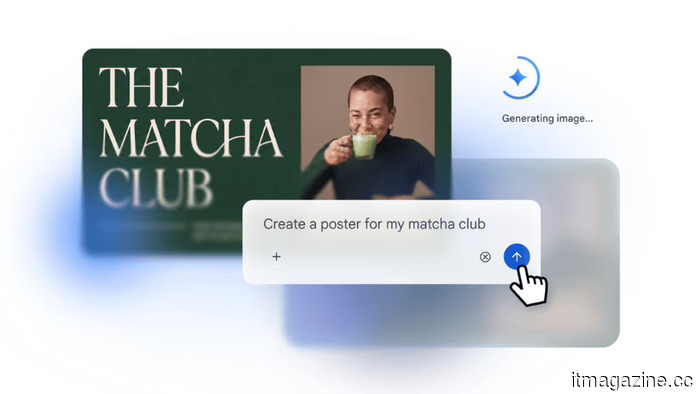
Google has introduced Pics, an AI image generator integrated within Workspace, aimed at competing with Canva in the realm of precise editing.
Pics, utilizing Nano Banana 2, enables users to create images from text prompts and allows for the movement, resizing, and translation of individual elements without needing to regenerate the entire composition. It will be available in the upcoming months for Workspace Business Standard and higher plans, as well as for Google AI Pro and Ultra subscribers.
Google introduced Pics at the I/O 2026 developer conference on Tuesday, presenting a new AI image generator and editor integrated within Google Workspace. The offering is positioned as Google's response to design tools like Canva and Adobe Express, featuring precision-editing controls designed to improve upon the earlier 'prompt-and-pray' approach of traditional AI image generators.
Powered by Nano Banana 2, Google's image model, Pics is tailored for its capabilities in precise text rendering, real-world knowledge, and detailed visual output. This combination of generation and editing allows users to manipulate individual elements in a composition, adjust embedded text, and modify specific areas of an image without having to regenerate the entire frame. This last feature, referred to as localized object editing, is a major selling point for Pics compared to other single-prompt generators.
The second key aspect of the launch is its integration with Workspace. Pics will be embedded within Google Slides, enabling users to generate and edit images directly in their presentations, with creations saved immediately to Google Drive for sharing. While the company has yet to confirm Docs as a launch platform, the product page explicitly mentions Slides and Drive, suggesting a broader but not specified integration with Workspace.
Initially, Pics will be offered as part of Google’s Workspace Experiments program to a select group of early-access testers. Admins in organizations using Workspace can opt in by enabling Gemini Alpha features. It will be widely available ‘in the coming months’ for customers on Business Standard or higher plans and Google AI Pro and Ultra subscribers. The company has not disclosed pricing details for these tiers, nor indicated a specific add-on cost for Pics.
Pics expands the Nano Banana family, following the deployment of the Gemini app over the past year, with Nano Banana 2 designed for precise applications like text-on-image rendering and maintaining brand consistency. A product walkthrough by PetaPixel highlights the workflow distinction between Pics and OpenAI's image-generation feature in ChatGPT, noting that while ChatGPT produces images more quickly, Pics provides better control for users over adjustments after the initial generation.
AI design tools are increasingly becoming a competitive focus for major model labs, with Pics being the most prominent commitment made by any company to integrate such tools within a productivity suite, rather than as a standalone consumer application.
Regarding content provenance, the launch coincides with Google’s SynthID watermarking layer, which has been standard for generative image outputs since 2023 and which OpenAI has adopted this year under the C2PA standard. Google has not released a specific provenance statement for Pics outputs yet, but the integration into Workspace implies that the same SynthID watermarking system used across the Gemini family is also applicable here. DeepMind's ongoing release schedule through 2025 and 2026 has consistently included watermarking as a default feature on launch.
What remains undisclosed includes the timeline for enabling Pics on a per-tenancy basis beyond the vague ‘coming months’ description, whether it will be offered at no additional cost to those on Business Standard, Business Plus, Enterprise, AI Pro, and AI Ultra tiers, and if usage caps will be implemented. Details on the specific Nano Banana 2 model card, benchmark scores, compute requirements, and whether the precision-editing capabilities will extend into Docs and Gmail are also not yet specified.
The Workspace Discord community and the Experiments newsletter are the primary channels for updates on staged availability. The next significant milestone will be the rollout for AI Ultra subscribers and Business Standard customers, which is anticipated this summer based on timelines highlighted in third-party briefings.
Other articles
 Alibaba introduces the Zhenwu M890, marking a strong push in China to create an alternative to NVIDIA.
Alibaba's T-Head chip division has introduced the Zhenwu M890, its most advanced AI accelerator to date, and announced that the chip is currently in 'scaled mass production' as China intensifies its efforts to develop a domestic alternative to NVIDIA.
Alibaba introduces the Zhenwu M890, marking a strong push in China to create an alternative to NVIDIA.
Alibaba's T-Head chip division has introduced the Zhenwu M890, its most advanced AI accelerator to date, and announced that the chip is currently in 'scaled mass production' as China intensifies its efforts to develop a domestic alternative to NVIDIA.
 Meta implements the 10% reduction, beginning with the Singapore office, which receives the notification at 4 am.
On Wednesday, Meta started informing thousands of employees about layoffs, beginning with staff in Singapore at 4 a.m. local time. These reductions honor a commitment made in April to decrease the workforce by approximately 8,000 positions.
Meta implements the 10% reduction, beginning with the Singapore office, which receives the notification at 4 am.
On Wednesday, Meta started informing thousands of employees about layoffs, beginning with staff in Singapore at 4 a.m. local time. These reductions honor a commitment made in April to decrease the workforce by approximately 8,000 positions.
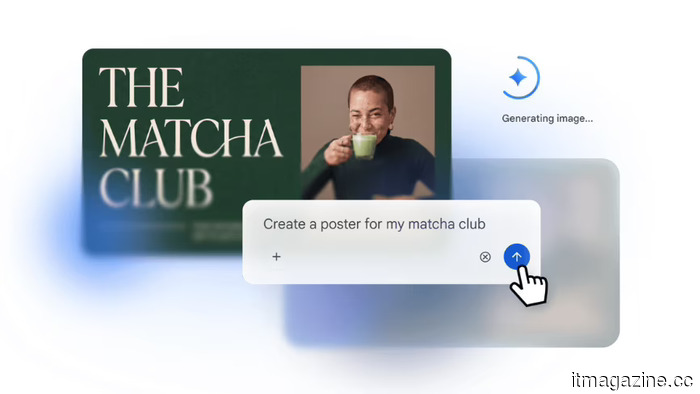 Google has unveiled Pics, an AI image generator integrated within Workspace, aiming to compete with Canva in terms of precise editing.
Google has unveiled Pics, an AI image generator native to Workspace, which utilizes Nano Banana 2 and features precision editing controls along with integration for Slides and Drive.
Google has unveiled Pics, an AI image generator integrated within Workspace, aiming to compete with Canva in terms of precise editing.
Google has unveiled Pics, an AI image generator native to Workspace, which utilizes Nano Banana 2 and features precision editing controls along with integration for Slides and Drive.
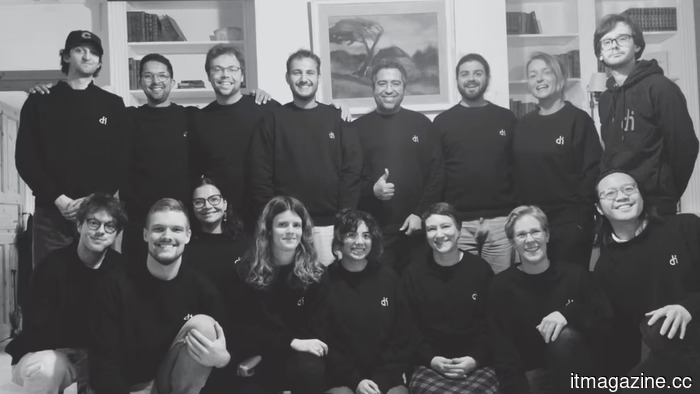 Dunia Innovations in Berlin invests €280 million in a GigaLab focused on autonomous AI materials.
Berlin's Dunia Innovations has announced plans for a €280 million, 6,000-square-meter GigaLab aimed at validating AI-created materials on an industrial level.
Dunia Innovations in Berlin invests €280 million in a GigaLab focused on autonomous AI materials.
Berlin's Dunia Innovations has announced plans for a €280 million, 6,000-square-meter GigaLab aimed at validating AI-created materials on an industrial level.
 Alibaba introduces the Zhenwu M890 as China intensifies its efforts to create an alternative to NVIDIA.
Alibaba's T-Head chip division has introduced the Zhenwu M890, its most advanced AI accelerator to date, and announced that the chip is currently in 'scaled mass production' as China speeds up its efforts to create a domestic alternative to NVIDIA.
Alibaba introduces the Zhenwu M890 as China intensifies its efforts to create an alternative to NVIDIA.
Alibaba's T-Head chip division has introduced the Zhenwu M890, its most advanced AI accelerator to date, and announced that the chip is currently in 'scaled mass production' as China speeds up its efforts to create a domestic alternative to NVIDIA.
 Alibaba introduces the Zhenwu M890 as a strong competitor to NVIDIA in China's market.
Alibaba's T-Head chip division has introduced the Zhenwu M890, its most advanced AI accelerator to date, and announced that the chip has entered 'scaled mass production' as China intensifies its efforts to develop a domestic alternative to NVIDIA.
Alibaba introduces the Zhenwu M890 as a strong competitor to NVIDIA in China's market.
Alibaba's T-Head chip division has introduced the Zhenwu M890, its most advanced AI accelerator to date, and announced that the chip has entered 'scaled mass production' as China intensifies its efforts to develop a domestic alternative to NVIDIA.
Google has introduced Pics, an AI image generator integrated within Workspace, aimed at competing with Canva in the realm of precise editing.
Google has unveiled Pics, an AI image generator native to Workspace that utilizes Nano Banana 2, featuring precise editing controls and integration with Slides and Drive.