
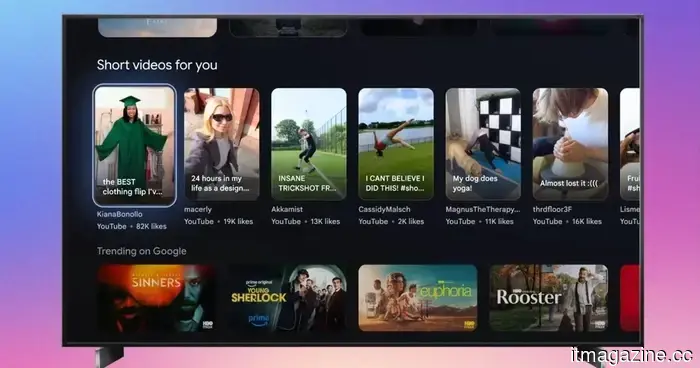
Google aims to transform your TV remote using Gemini and pointer controls.
Google is making a significant move into the living room, and this time it's not solely focused on what you watch — it's also about how you interact with your TV. During Google I/O 2026, the company introduced a new set of updates for developers of Google TV and Android TV, all revolving around the notion that TVs are no longer just passive screens placed in the corner. With over 300 million monthly active devices connected to Google TV and Android TV, Google views the television as its next major arena for AI competition, with Gemini at the forefront of that initiative.
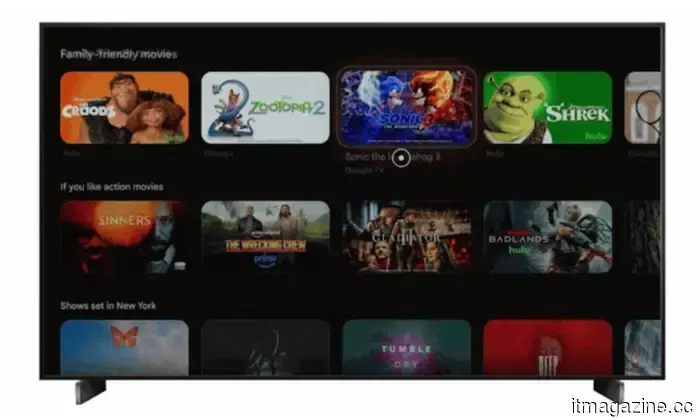
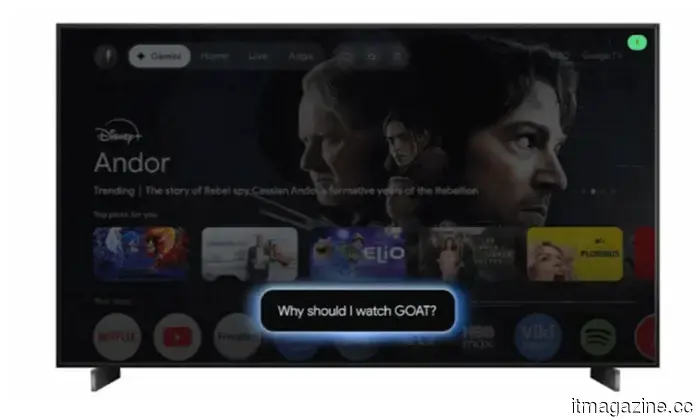
The company states that Gemini is already assisting users in discovering content through natural voice commands. However, Google aims to make the experience feel more dynamic and conversational, similar to web searching — but from the comfort of your couch. Instead of merely presenting static results, Gemini on Google TV can now deliver a mix of visuals, videos, and text snippets to address queries. If someone inquires about a thriller featuring a strong female lead or a documentary on space exploration, Gemini retrieves contextual recommendations straight from streaming services and their metadata.
This represents a significant transformation for streaming platforms. Historically, discovering content on TVs has been complicated, fragmented, and reliant on the first app that was opened. Google appears to be positioning Gemini as a layer above all this, serving as an intelligent content guide rather than just a basic search function.
The evolution of the TV remote
Interestingly, Google’s most noteworthy announcement may not be about Gemini, but rather the remote control itself. The company indicates that future Google TV devices will increasingly accommodate "pointer remotes," which introduce motion and cursor-based navigation to televisions. Consider it a hybrid between a traditional TV remote and a computer mouse. While this may seem minor, it alters how TV applications need to operate.
Currently, most TV interfaces are designed for rigid D-pad navigation — up, down, left, right, select. Pointer controls allow for hovering, free-form movement, touchpad scrolling, and cursor clicks. As a result, TV apps need to function more like desktop or tablet interfaces. Google is urging developers to begin preparing their applications for this change. This includes incorporating hover states for buttons and UI elements, enhancing scrolling interactions, and ensuring apps respond correctly to cursor-based clicks instead of only directional navigation controls.
This advancement feels long overdue. TV interfaces have remained surprisingly cumbersome for years, especially when compared to the fluidity of smartphones and tablets. Streaming apps often seem slow, limiting, and awkward to navigate through extensive content libraries. Pointer-based interaction could greatly enhance that experience — if developers effectively optimize their applications.
Google encourages developers to prepare immediately
To aid developers in this transition, Google mentions that apps built with Jetpack Compose already have a smoother path forward due to the native support for many modern interaction models. The company is also motivating developers to test these new interactions now using standard Bluetooth or wired mice connected to Google TV devices. This allows them to gain a better understanding of how hover effects, scrolling behaviors, and cursor inputs function on large-screen interfaces. However, Google points out that pointer remotes are inherently less precise than actual mice, as users typically sit several feet away and make broad gestures from their couches. To address this, developers are advised to create larger interactive targets and more accommodating UI layouts.
Finally, developers can now formally declare pointer remote support on Google Play, making it easier for users with newer remotes to find compatible TV apps. This provides a fairly clear trajectory of where Google TV is headed. TVs are gradually transforming into more active, AI-driven computing platforms rather than mere streaming devices. Gemini facilitates content discovery, pointer remotes enhance navigation, and developers are encouraged to rethink the traditional TV app experience. Whether users will actually welcome the notion of waving remotes around in their living rooms remains to be seen. Nonetheless, Google evidently believes that the future of TV interaction should be smarter, quicker, and significantly less reliant on repetitive directional clicks.
Other articles
 Google substitutes the search box with AI agents at I/O 2026.
At I/O 2026, Google revealed its most significant Search overhaul in 25 years, featuring information agents, a generative user interface, and mini-apps driven by Gemini 3.5 Flash.
Google substitutes the search box with AI agents at I/O 2026.
At I/O 2026, Google revealed its most significant Search overhaul in 25 years, featuring information agents, a generative user interface, and mini-apps driven by Gemini 3.5 Flash.
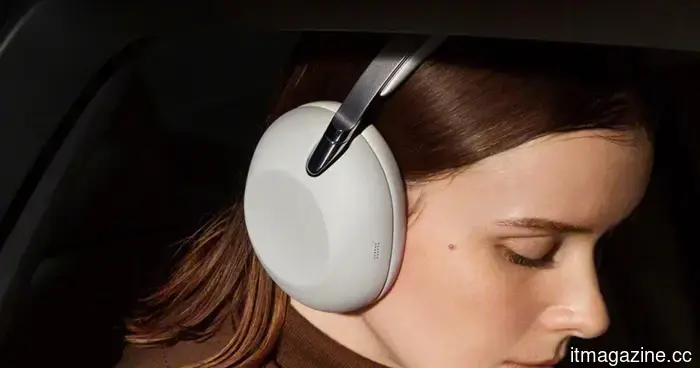 Sony introduces the 1000X Collexion headphones, maintaining a sophisticated look at an attractive price point.
Sony's latest 1000X THE COLLEXION noise-cancelling headphones share the same audio heritage as the WH-1000XM6 headphones, but come in a more fashionable design and at a striking price point.
Sony introduces the 1000X Collexion headphones, maintaining a sophisticated look at an attractive price point.
Sony's latest 1000X THE COLLEXION noise-cancelling headphones share the same audio heritage as the WH-1000XM6 headphones, but come in a more fashionable design and at a striking price point.
 Google Search will now inform you whether an image is generated by AI and provide detailed information about it.
Google is broadening the use of its SynthID technology in Search, Chrome, and Android to assist users in more easily recognizing images that are either generated or edited by AI.
Google Search will now inform you whether an image is generated by AI and provide detailed information about it.
Google is broadening the use of its SynthID technology in Search, Chrome, and Android to assist users in more easily recognizing images that are either generated or edited by AI.
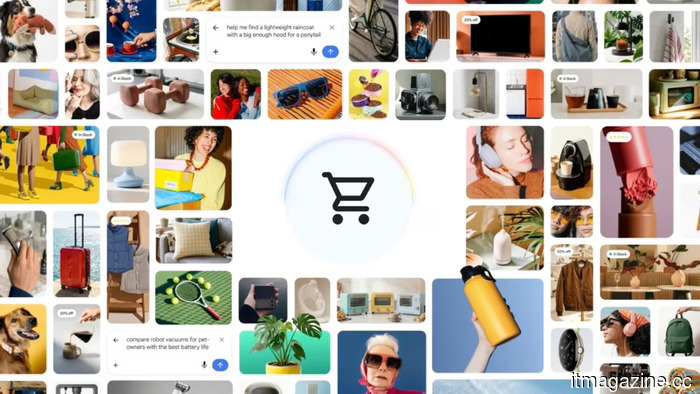 Google introduces Universal Cart and enhances AP2 at I/O 2026.
Google introduced Universal Cart, an AI shopping center that integrates Search, Gemini, YouTube, and Gmail, while also updating its Agent Payments Protocol for automated purchases.
Google introduces Universal Cart and enhances AP2 at I/O 2026.
Google introduced Universal Cart, an AI shopping center that integrates Search, Gemini, YouTube, and Gmail, while also updating its Agent Payments Protocol for automated purchases.
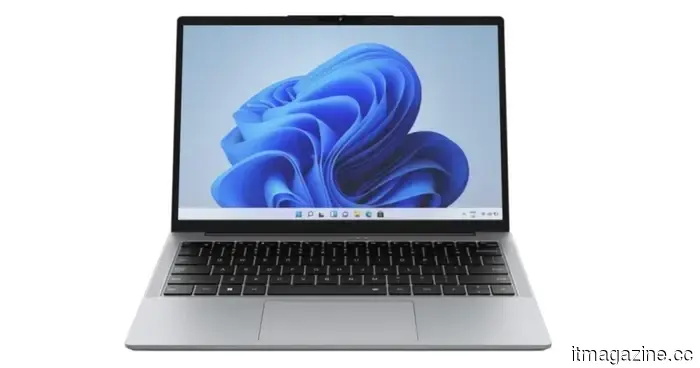 Chuwi's UniBook is a $449 laptop that aims to compete with the MacBook Neo by offering solid features.
Chuwi's UniBook combines Intel's latest Wildcat Lake Core 3 processor with a 14-inch display that covers 100% of the sRGB color gamut, offers ample ports, and is expected to be priced around $449.
Chuwi's UniBook is a $449 laptop that aims to compete with the MacBook Neo by offering solid features.
Chuwi's UniBook combines Intel's latest Wildcat Lake Core 3 processor with a 14-inch display that covers 100% of the sRGB color gamut, offers ample ports, and is expected to be priced around $449.
 Google DeepMind links Street View to Project Genie world model | TNW
Google DeepMind has connected 20 years of Street View images to its Genie world model, enabling AI Ultra subscribers to navigate AI-generated simulations of actual streets.
Google DeepMind links Street View to Project Genie world model | TNW
Google DeepMind has connected 20 years of Street View images to its Genie world model, enabling AI Ultra subscribers to navigate AI-generated simulations of actual streets.
Google aims to transform your TV remote using Gemini and pointer controls.
Google is transforming the future of televisions with Gemini-enhanced discovery features and a fresh approach to navigating apps. The most significant alteration, though, might not be on the display itself but rather in your remote control.