
Google substitutes the search box with AI agents at I/O 2026.
**TL;DR** At the I/O 2026 event, Google revealed a major transformation of Search, replacing the traditional search box with an AI-driven interface based on Gemini 3.5 Flash. This update introduces "information agents" that continuously monitor the web, a generative UI for creating custom tools in real-time, and mini-apps that users can develop using natural language.
For 25 years, Google Search has maintained a consistent format: a simple white box, a flashing cursor, and the expectation for users to distill their inquiries into a few keywords. On Monday, during its annual I/O developer conference, Google announced an end to that era.
The company presented what it refers to as an “intelligent search box,” a versatile input field powered by Gemini 3.5 Flash that accepts queries via text, images, files, videos, and even open Chrome tabs. Instead of delivering a list of blue links, the revamped interface immerses users in AI-generated interactive experiences, featuring tailored visualizations, tools, and "information agents" that work continuously on the user's behalf.
Liz Reid, Google’s vice president and head of Search, described this update as “the most significant enhancement to our iconic search box since it launched over 25 years ago.” This language is intentional, emphasizing that Google is not merely enhancing autocomplete but fundamentally rethinking the core interaction between its flagship product and its vast user base.
Transitioning from keywords to conversations and from links to agents, the statistics surrounding this announcement are impressive. The AI Overviews feature, which provides AI-generated summaries above standard results, currently serves 2.5 billion monthly users. Meanwhile, AI Mode, the conversational search interface released just a year ago, has surpassed one billion monthly users, with the number of queries more than doubling each quarter. For context, OpenAI noted that ChatGPT reached 900 million weekly active users in February 2026.
In response to competitive pressures, Google is not reverting to its old format; instead, it is advancing into the realm of agents. The information agents, key to this announcement, function behind the scenes 24/7, analyzing blogs, news sites, social media, and real-time information on finance, shopping, and sports to notify users when pertinent updates occur. Picture Google Alerts, the notification tool from 2003, revamped with a modern language model capable of more subtlety and inference.
These information agents will launch this summer for Google AI Pro and Ultra subscribers in the United States, while the new search box is set to be rolled out globally this week.
**Generative UI and mini-apps in Search**
In addition to the search box, Google introduced “generative UI,” a capability where Gemini 3.5 Flash constructs custom widgets, simulations, and visual tools on the spot according to the user's query. For instance, asking about mortgage rates might yield a live calculator, while a query about a hiking trail could result in an interactive map complete with elevation data.
An even more ambitious initiative is Antigravity, Google’s platform for creating agent-driven experiences directly integrated into Search. Users will be able to describe a “mini-app” in natural language, such as a personalized fitness tracker or a wedding planner, and Search will generate it instantly, sourcing live data from reviews, maps, and local services. These mini-apps are also expected this summer for AI Pro and Ultra subscribers.
Conversely, generative UI will be accessible to all users for free, highlighting Google’s strategy to engage its broadest audience while limiting the most advanced agentic features to paying clients.
**What this means for the open web**
This transformation has significant consequences for publishers and the wider web ecosystem. If Google's AI can summarize information, create interactive tools, and deploy background agents to keep track of relevant changes, the motivation for users to click through to original source websites decreases. Referral traffic from Google Search has already been declining as AI Overviews expand, and the introduction of these new features is likely to accelerate that trend.
The European Union is taking note of this situation. In April, the European Commission outlined new regulations requiring Google to share anonymized search data with competing search engines and AI chatbot providers under the Digital Markets Act, which must be complied with by 27 July 2026. As Google's search interface increasingly resembles a standalone AI application, it may face intensified regulatory scrutiny.
This development is part of a larger industry movement towards AI-centric search models, with companies like OpenAI and Perplexity creating conversational alternatives. Google's major advantage lies in its scale; 2.5 billion monthly users create a barrier that few competitors can overcome. However, the company seems to believe that the best defense is to evolve its product into something completely different from what defined the internet era.
The traditional search box is no more. The age of the search agent has begun.
Other articles
 Gemini 3.5 Flash is the new default AI model from Google, designed to perform actions rather than merely provide answers.
Today, Google unveiled Gemini 3.5 Flash, the most advanced model in its Flash series to date. The company claims it surpasses Gemini 3.1 Pro in coding and agency benchmarks and operates at four times the speed of similar frontier models.
Gemini 3.5 Flash is the new default AI model from Google, designed to perform actions rather than merely provide answers.
Today, Google unveiled Gemini 3.5 Flash, the most advanced model in its Flash series to date. The company claims it surpasses Gemini 3.1 Pro in coding and agency benchmarks and operates at four times the speed of similar frontier models.
 Chuwi's UniBook is a $449 laptop that aims to rival the MacBook Neo by offering impressive features.
Chuwi’s UniBook combines Intel’s latest Wildcat Lake Core 3 processor with a 14-inch display that covers 100% of the sRGB color space, offers ample port options, and is expected to be priced at around $449.
Chuwi's UniBook is a $449 laptop that aims to rival the MacBook Neo by offering impressive features.
Chuwi’s UniBook combines Intel’s latest Wildcat Lake Core 3 processor with a 14-inch display that covers 100% of the sRGB color space, offers ample port options, and is expected to be priced at around $449.
 Google's latest Gemini Spark AI assistant is capable of handling your tasks while you manage your life.
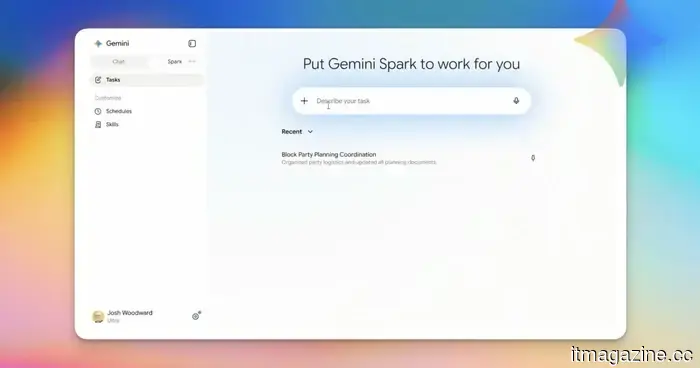
Google's Gemini Spark is an innovative AI agent designed to manage multi-step tasks in the background, operate across Google's applications, and continue functioning even when you shut your laptop.
Google's latest Gemini Spark AI assistant is capable of handling your tasks while you manage your life.
Google's Gemini Spark is an innovative AI agent designed to manage multi-step tasks in the background, operate across Google's applications, and continue functioning even when you shut your laptop.
 Google's latest Gemini Spark AI agent can handle your tasks while you manage your life.
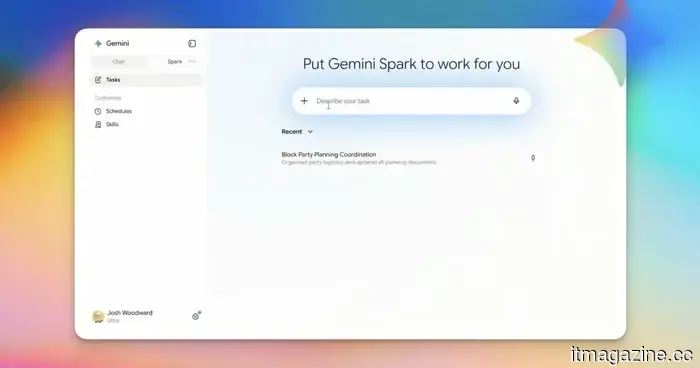
Google's Gemini Spark is an innovative AI assistant that manages multi-step tasks in the background, operates across various Google applications, and continues its work even after you shut your laptop.
Google's latest Gemini Spark AI agent can handle your tasks while you manage your life.
Google's Gemini Spark is an innovative AI assistant that manages multi-step tasks in the background, operates across various Google applications, and continues its work even after you shut your laptop.
 Google’s Gemini Omni is a versatile content generator aiming to take over the functions of your entire studio.
Gemini Omni not only produces AI videos but also retains your edits, comprehends physics, and allows you to control everything through simple conversation. Here's what it truly offers and who can access it today.
Google’s Gemini Omni is a versatile content generator aiming to take over the functions of your entire studio.
Gemini Omni not only produces AI videos but also retains your edits, comprehends physics, and allows you to control everything through simple conversation. Here's what it truly offers and who can access it today.
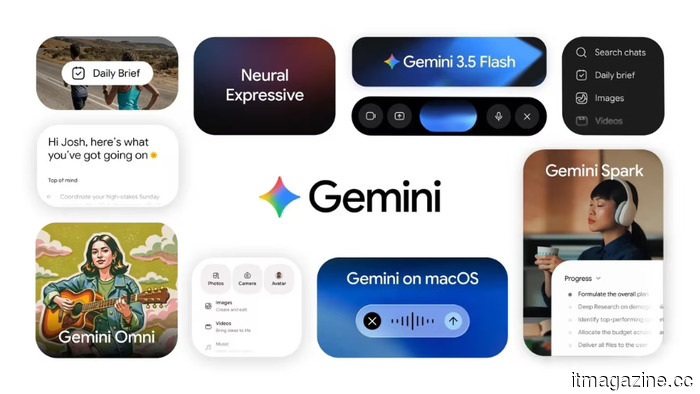 Google Gemini introduces Daily Brief and a redesign of Neural Expressive at I/O 2026.
At I/O 2026, Google introduces Daily Brief, a redesigned Neural Expressive, and a Spark AI agent for Gemini's 900 million users, intensifying its competition with ChatGPT and Claude.
Google Gemini introduces Daily Brief and a redesign of Neural Expressive at I/O 2026.
At I/O 2026, Google introduces Daily Brief, a redesigned Neural Expressive, and a Spark AI agent for Gemini's 900 million users, intensifying its competition with ChatGPT and Claude.
Google substitutes the search box with AI agents at I/O 2026.
At I/O 2026, Google revealed its most significant Search overhaul in 25 years, featuring information agents, a generative user interface, and mini-apps driven by Gemini 3.5 Flash.