

Google Search will now inform you whether an image is generated by AI and provide detailed information about it.
Google is broadening its SynthID AI watermarking technology beyond AI labs and incorporating it into everyday products such as Google Search, Chrome, Circle to Search, and Pixel devices. This initiative, announced at Google I/O 2026, is part of its larger effort to assist users in easily identifying AI-generated or AI-edited content as synthetic media proliferates online.
According to the company, users will soon be able to verify if images include AI-generated components directly through Google's ecosystem instead of depending on separate verification tools or third-party websites.
Google is making AI verification part of everyday search.
The core of this update is SynthID, Google's invisible watermarking technology that embeds metadata into AI-generated images, videos, audio, and text. SynthID was first introduced in 2023 as a means to identify AI-generated media without visibly changing the content. Now, Google is incorporating these verification tools into commonly used products. Users will soon be able to utilize Circle to Search, Google Lens, AI Mode, and Chrome to determine if an image was produced or altered using AI systems.
For instance, users looking at an image online might be able to long-press or search for it to see if AI watermarking or C2PA metadata is attached to the file. C2PA is an industry-supported standard aimed at enhancing transparency in digital content creation and editing. Google states that integration of these AI verification tools into Chrome will commence in the coming months, while functionalities related to Search will begin to appear sooner via Google Lens and Circle to Search.
Additionally, Synth ID will now be adopted by various companies and integrated into their products.
The company is also extending SynthID support to Pixel devices, enabling AI-generated or edited media created on selected phones to include metadata markers. This expansion occurs as AI-generated images, videos, and audio are becoming increasingly challenging to differentiate from authentic content. Tools capable of producing realistic deepfakes, AI art, cloned voices, and altered media have surged in popularity over the last two years.
Google emphasizes that the intent is not to label all AI-generated content as harmful but to enhance transparency, enabling users to understand how content was created or modified. This is particularly significant for areas like news verification, political misinformation, scams, and viral social media content, where fake or AI-generated visuals can spread rapidly.
The timing is noteworthy as AI-generated search experiences themselves are currently facing scrutiny. Recent academic studies suggest that Google's AI-generated search summaries may sometimes contain unverified claims or diminish traffic to original publishers, raising concerns about trust and information accuracy online.
The larger AI trust issue
Google is not the only entity tackling AI verification challenges. Companies like OpenAI, Microsoft, Adobe, Meta, and others are also exploring watermarking technologies, metadata standards, and AI detection tools.
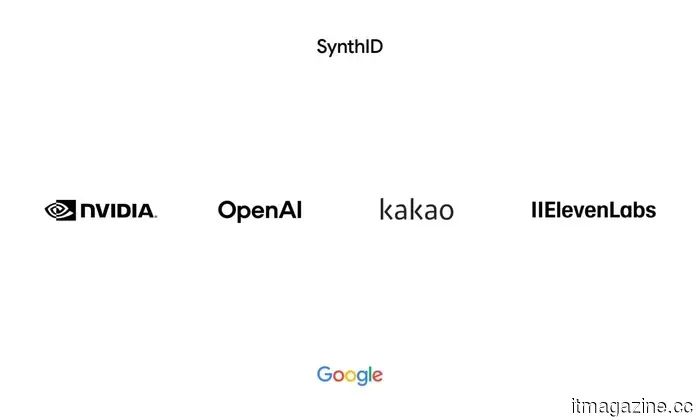
Collaboration across the industry on content transparency technology is crucial for a trustworthy web. Google is accelerating efforts that began with @NVIDIA, partnering with @OpenAI, Kakao, and @ElevenLabs to extend SynthID support to their generative content, thereby providing more helpful context.
Interestingly, Google confirmed its collaboration with Nvidia, OpenAI, Eleven Labs, and Kakao to broaden the support for SynthID and related verification standards across additional platforms and AI systems.
However, the company has also acknowledged certain limitations. The new tools primarily focus on images, while support for broader video and audio verification is still developing. Furthermore, Google opted against launching a standalone public SynthID verification portal and will instead integrate detection directly into Gemini-powered experiences.
What lies ahead
Google indicates that the expanded SynthID and C2PA integrations will gradually become available across Search, Chrome, Android, Pixel devices, and Gemini tools in the coming months.
As AI-generated media becomes increasingly prevalent online, the company seems to be banking on the notion that verification tools will eventually be as essential as search functions themselves. The larger challenge, however, will be whether invisible watermarking and metadata systems can keep up with the rapid advancements of AI models, especially as synthetic content becomes progressively difficult for individuals to detect independently.
Other articles
 Android Halo might serve as the crucial connection between Android and AI agents.
Google's new Android Halo feature suggests a future where AI seamlessly supports you without requiring constant interaction. The most intriguing aspect is how minimally it interferes with your activities.
Android Halo might serve as the crucial connection between Android and AI agents.
Google's new Android Halo feature suggests a future where AI seamlessly supports you without requiring constant interaction. The most intriguing aspect is how minimally it interferes with your activities.
 The Marshall Milton ANC is priced at $229, offers 80 hours of battery life, and comes with a replaceable battery.
The Marshall Milton ANC offers 80 hours of battery life with active noise cancellation (ANC) disabled and 50 hours with it enabled. It also supports LDAC and allows for battery replacement when it eventually wears out.
The Marshall Milton ANC is priced at $229, offers 80 hours of battery life, and comes with a replaceable battery.
The Marshall Milton ANC offers 80 hours of battery life with active noise cancellation (ANC) disabled and 50 hours with it enabled. It also supports LDAC and allows for battery replacement when it eventually wears out.
 Gemini 3.5 Flash is the new default AI model from Google, designed to perform actions rather than merely provide answers.
Today, Google unveiled Gemini 3.5 Flash, the most advanced model in its Flash series to date. The company claims it surpasses Gemini 3.1 Pro in coding and agency benchmarks and operates at four times the speed of similar frontier models.
Gemini 3.5 Flash is the new default AI model from Google, designed to perform actions rather than merely provide answers.
Today, Google unveiled Gemini 3.5 Flash, the most advanced model in its Flash series to date. The company claims it surpasses Gemini 3.1 Pro in coding and agency benchmarks and operates at four times the speed of similar frontier models.
 Microsoft has announced that new Surface laptops featuring Snapdragon X2 chips will be released later this year.
Microsoft introduced Intel Surface models today and announced that Snapdragon X2 variants will be available later in 2026, featuring accelerated AI inferencing, improved battery life, and a potential OLED display option.
Microsoft has announced that new Surface laptops featuring Snapdragon X2 chips will be released later this year.
Microsoft introduced Intel Surface models today and announced that Snapdragon X2 variants will be available later in 2026, featuring accelerated AI inferencing, improved battery life, and a potential OLED display option.
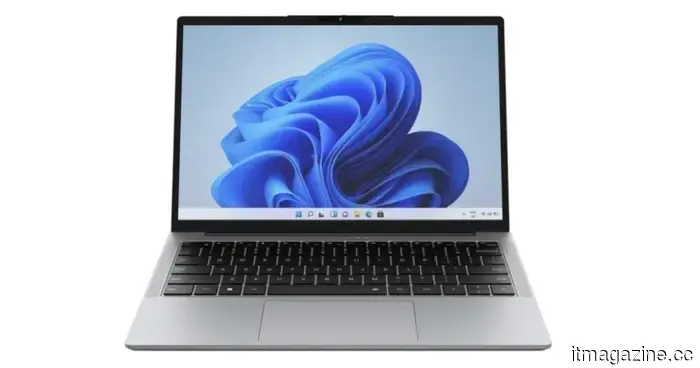 Chuwi's UniBook is a $449 laptop vying for the title held by the MacBook Neo, offering substantial features.
Chuwi's UniBook features Intel's latest Wildcat Lake Core 3 processor, along with a 14-inch display that covers 100% of the sRGB spectrum, ample ports, and an estimated price of $449.
Chuwi's UniBook is a $449 laptop vying for the title held by the MacBook Neo, offering substantial features.
Chuwi's UniBook features Intel's latest Wildcat Lake Core 3 processor, along with a 14-inch display that covers 100% of the sRGB spectrum, ample ports, and an estimated price of $449.
 Google substitutes the search box with AI agents at I/O 2026.
At I/O 2026, Google introduced its most significant redesign of Search in 25 years, featuring information agents, a generative user interface, and mini-apps driven by Gemini 3.5 Flash.
Google substitutes the search box with AI agents at I/O 2026.
At I/O 2026, Google introduced its most significant redesign of Search in 25 years, featuring information agents, a generative user interface, and mini-apps driven by Gemini 3.5 Flash.
Google Search will now inform you whether an image is generated by AI and provide detailed information about it.
Google is broadening the use of its SynthID technology in Search, Chrome, and Android to assist users in more easily recognizing images that are either generated or edited by AI.