

Google Search will now indicate whether an image is generated by AI and provide detailed information about it.
Google is extending its SynthID AI watermarking system beyond AI laboratories and into everyday products, including Google Search, Chrome, Circle to Search, and Pixel devices. This initiative, announced at Google I/O 2026, aims to assist users in easily identifying AI-generated or AI-edited content as synthetic media proliferates online.
The company states that users will soon have the ability to verify whether images include AI-generated components directly within Google's ecosystem, rather than depending on separate verification tools or external websites.
Google is integrating AI verification into regular search functions.
The core of this update is SynthID, Google's invisible watermarking technology that embeds metadata into AI-generated images, videos, audio, and text. SynthID was first introduced in 2023 to identify AI-generated media without visibly altering the content. Now, Google is incorporating these verification tools into mainstream products. Users will soon be able to utilize Circle to Search, Google Lens, AI Mode, and even Chrome to determine whether an image was created or altered by AI systems.
For instance, users viewing an image online could potentially long-press or search it to see if AI watermarking or C2PA metadata is linked to the file. C2PA is an industry-supported standard aimed at providing transparency regarding digital content creation and editing. Google plans to roll out Chrome integrations for these AI verification tools in the next few months, while Search-related functionalities will appear sooner through Google Lens and Circle to Search.
The SynthID system will also be adopted by other companies and integrated into their offerings.
Additionally, the company is expanding SynthID support to Pixel devices, allowing AI-generated or altered media created on compatible phones to include metadata markers. This expansion comes at a time when distinguishing between AI-generated images, videos, and audio and real content is becoming increasingly challenging. Tools capable of producing realistic deepfakes, AI art, cloned voices, and manipulated media have surged in popularity over the past two years.
Google emphasizes that the aim is not to categorize all AI content as detrimental, but rather to ensure transparency so users comprehend how content was generated or modified. This is particularly significant for news verification, political misinformation, scams, and viral social media content, where fake or AI-generated visuals can spread rapidly.
The timing of this initiative is noteworthy, as AI-generated search experiences are currently facing scrutiny. Recent academic studies indicate that Google’s AI-generated search summaries can occasionally contain unsupported claims or diminish traffic to original publishers, raising concerns about trust and information accuracy online.
The broader issue of AI trust
Google is not the only company addressing the challenges of AI verification. Other firms such as OpenAI, Microsoft, Adobe, and Meta are also exploring watermarking systems, metadata standards, and AI detection tools.
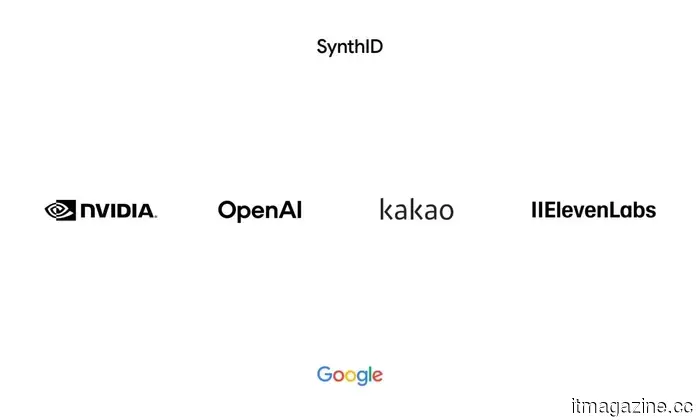
Collaboration across the industry on content transparency technology is essential for building a trusted web. Google is advancing the momentum initiated with NVIDIA and partnering with OpenAI, Kakao, and Eleven Labs to extend SynthID’s reach to their generative content, thus providing users with better contextual information.
However, the company recognizes certain limitations. Currently, the new tools are primarily focused on images, while expanded video and audio verification support is still under development. Google has also decided against introducing a standalone public SynthID verification platform, opting instead to embed detection capabilities directly into Gemini-powered experiences.
Next steps
Google indicates that the expanded SynthID and C2PA integrations will be gradually introduced across Search, Chrome, Android, Pixel devices, and Gemini tools in the upcoming months.
As AI-generated media becomes increasingly prevalent online, the company seems to believe that verification tools will eventually gain as much importance as search itself. The larger challenge will be whether invisible watermarking and metadata systems can keep up with the rapid advancements in AI models, especially as synthetic content becomes increasingly difficult for individuals to detect independently.
Other articles
 Google substitutes the search box with AI agents at I/O 2026.
At I/O 2026, Google revealed its most significant Search overhaul in 25 years, featuring information agents, a generative user interface, and mini-apps driven by Gemini 3.5 Flash.
Google substitutes the search box with AI agents at I/O 2026.
At I/O 2026, Google revealed its most significant Search overhaul in 25 years, featuring information agents, a generative user interface, and mini-apps driven by Gemini 3.5 Flash.
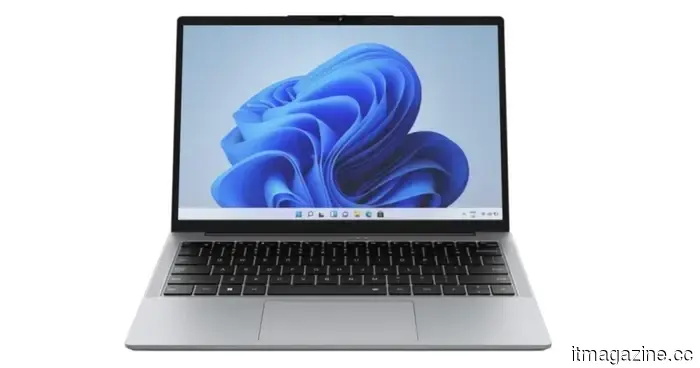 Chuwi's UniBook is a $449 laptop that aims to compete with the MacBook Neo by offering solid features.
Chuwi's UniBook combines Intel's latest Wildcat Lake Core 3 processor with a 14-inch display that covers 100% of the sRGB color gamut, offers ample ports, and is expected to be priced around $449.
Chuwi's UniBook is a $449 laptop that aims to compete with the MacBook Neo by offering solid features.
Chuwi's UniBook combines Intel's latest Wildcat Lake Core 3 processor with a 14-inch display that covers 100% of the sRGB color gamut, offers ample ports, and is expected to be priced around $449.
 Gemini 3.5 Flash is Google's latest default AI model, designed to take action rather than merely provide answers.
Today, Google revealed Gemini 3.5 Flash, the most advanced model in its Flash series to date. The company claims that it surpasses Gemini 3.1 Pro in coding and agentic benchmarks and operates at four times the speed of similar frontier models.
Gemini 3.5 Flash is Google's latest default AI model, designed to take action rather than merely provide answers.
Today, Google revealed Gemini 3.5 Flash, the most advanced model in its Flash series to date. The company claims that it surpasses Gemini 3.1 Pro in coding and agentic benchmarks and operates at four times the speed of similar frontier models.
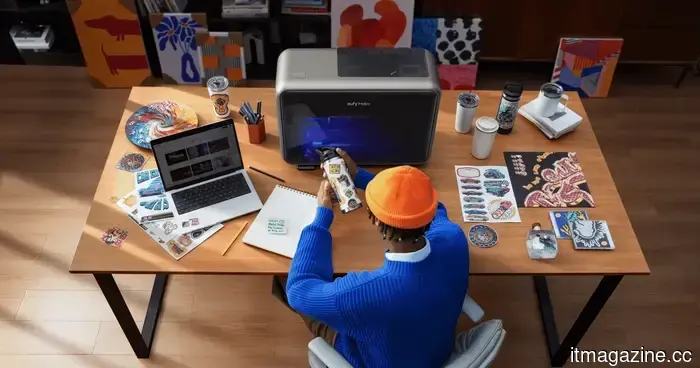 The Design Trade-Offs Influencing Contemporary UV Printing Systems
UV printing depends on precisely regulated chemical reactions, with even minor changes in ink behavior impacting the output, maintenance, and long-term reliability. As this technology is adopted by smaller studios and home environments, the discussion surrounding open versus closed ink systems increasingly revolves around finding a balance between flexibility, stability, and user-friendliness.
The Design Trade-Offs Influencing Contemporary UV Printing Systems
UV printing depends on precisely regulated chemical reactions, with even minor changes in ink behavior impacting the output, maintenance, and long-term reliability. As this technology is adopted by smaller studios and home environments, the discussion surrounding open versus closed ink systems increasingly revolves around finding a balance between flexibility, stability, and user-friendliness.
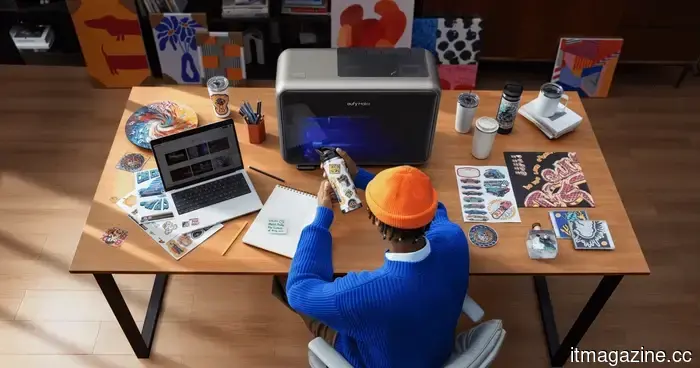 The Design Trade-Offs Influencing Contemporary UV Printing Systems
UV printing depends on precisely regulated chemical reactions, as even minor changes in ink behavior can impact production, upkeep, and long-term dependability. As this technology is adopted by smaller studios and home environments, the discussion surrounding open versus closed ink systems increasingly focuses on finding a balance between flexibility, stability, and user-friendliness.
The Design Trade-Offs Influencing Contemporary UV Printing Systems
UV printing depends on precisely regulated chemical reactions, as even minor changes in ink behavior can impact production, upkeep, and long-term dependability. As this technology is adopted by smaller studios and home environments, the discussion surrounding open versus closed ink systems increasingly focuses on finding a balance between flexibility, stability, and user-friendliness.
 Google Search will now inform you whether an image is generated by AI and provide detailed information about it.
Google is broadening the use of its SynthID technology in Search, Chrome, and Android to assist users in more easily recognizing images that are either generated or edited by AI.
Google Search will now inform you whether an image is generated by AI and provide detailed information about it.
Google is broadening the use of its SynthID technology in Search, Chrome, and Android to assist users in more easily recognizing images that are either generated or edited by AI.
Google Search will now indicate whether an image is generated by AI and provide detailed information about it.
Google is extending its SynthID technology to Search, Chrome, and Android to assist users in more easily recognizing images that have been generated or altered by AI.