
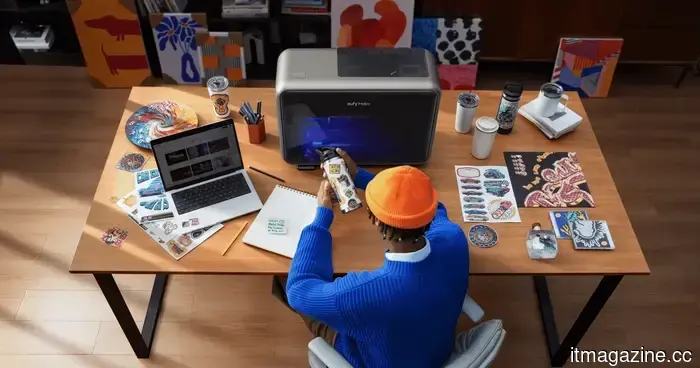
The Design Trade-Offs Influencing Contemporary UV Printing Systems
As the number of UV printers available to consumers increases, the discussion surrounding them is evolving from just print quality and creative options to more practical concerns. Users are increasingly inquiring about why many contemporary UV printers utilize closed ink systems.
This issue extends beyond individual products or brands. In the wider printer market, manufacturers are progressively opting for proprietary cartridges and closely monitored ink ecosystems, despite refillable and third-party options remaining prevalent in other printing categories. For some users, closed systems offer simplicity, reliability, and reduced maintenance, while others voice worries regarding long-term operational costs and control over supplies, especially considering that bulk refill ink can often be much cheaper than branded cartridges.
This conflict mirrors a larger transition occurring within UV printing itself. As the technology shifts from industrial settings to smaller studios, maker spaces, and home environments, manufacturers face the challenge of balancing reliability, usability, maintenance requirements, and long-term system stability in new ways. To grasp the reasons for these trade-offs, one must look beyond the cartridge and into the chemistry, engineering, and operational conditions that influence the design of modern UV printing systems.
UV ink alters the framework of the system surrounding it
Designed to cure under ultraviolet light, UV ink transitions from liquid to solid through a reaction initiated by photoinitiators. These substances absorb UV energy and initiate the polymerization of monomers, creating a robust printed layer while pigments remain suspended to ensure color delivery. While this process is quick and accurate, it introduces a degree of sensitivity that necessitates a specific design approach for the entire printing system, including the ink cartridge, ink pathway, and printhead.
Photoinitiators react not only to regulated UV exposure during printing but also to low levels of ambient light over time. This can lead to gradual micro-curing at the nozzle, and exposure to air can change viscosity and contribute to particle formation in the ink pathway. Over time, these particles can disrupt stable flow, heighten the chances of clogging, and affect the consistency of ink dispensing.
These are not merely exceptions or mishandling; they are fundamental properties of the material. Consequently, UV ink must be defended from the environmental conditions it reacts to, influencing how modern UV printing systems are engineered.
Industrial setups do not eliminate risk; they mitigate it through control
In industrial settings, the stability of UV ink is maintained through strictly managed conditions. Lighting is controlled to reduce unintended exposure, handling procedures are clearly outlined, and maintenance is routinely conducted by trained personnel. Open or refillable systems can thrive in these environments because the surrounding conditions minimize variability.
Even among professional and high-end desktop UV printers, closely regulated ink ecosystems are the rule rather than the exception. Industrial systems from manufacturers like Epson and Roland depend on proprietary UV ink systems that are calibrated alongside their hardware, illustrating the prevalence of controlled ink ecosystems within the UV printing sector.
Smaller studios and home setups face vastly different circumstances. Light exposure varies, handling methods differ, and maintenance becomes less predictable. This is where many users misjudge the system. The expectation for consistent output remains, but the necessary conditions to achieve that output are no longer guaranteed.
Open systems maintain flexibility but shift the accountability back to the user
This does not suggest that open or refillable systems have inherent flaws. In industrial environments and for skilled operators, they can provide significant benefits, especially when lower ink costs, material versatility, or customized workflows take precedence over ease of use. Users accustomed to managing maintenance schedules and environmental factors may find it acceptable to accept that additional complexity for greater control over the process.
The trade-off, however, is that stability becomes more reliant on the operator's discipline rather than the system itself. Once UV printing steps outside of highly controlled environments, factors such as air exposure, handling uniformity, and maintenance habits become increasingly challenging to standardize, elevating the risk of instability over time. For some seasoned users, this may be an acceptable compromise, but for newer users or smaller workspaces, it can swiftly turn into a learning curve.
Closed systems facilitate the transfer of control with the machine
Closed ink systems are designed to encapsulate many of the conditions necessary for stability by shielding ink from light, air, and external contaminants throughout its life cycle. In UV printing, even slight exposure can progressively influence viscosity, curing behavior, and flow consistency over time.
This level of control becomes crucial outside of industrial contexts, where handling practices and maintenance routines are far less dependable. There is also a safety aspect to consider, as photoinitiators are chemically reactive compounds; direct exposure can lead to irritation or more severe reactions, which makes containment essential for both system stability and product design.
In UV printing, ink and hardware are not independent choices
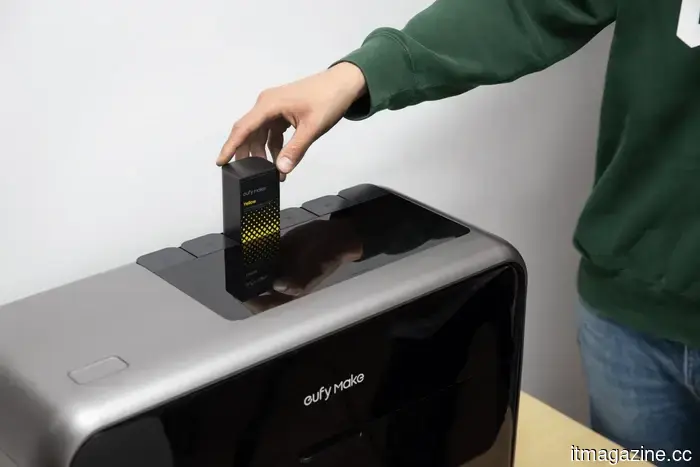
UV printing systems are formulated as integrated environments rather than interchangeable components. Ink is developed in conjunction with the hardware, with its viscosity, flow characteristics, and curing properties calibrated to align with the printer’s internal architecture, from the ink delivery path and pressure system to the printhead itself.
This alignment extends beyond mechanics to color

Other articles
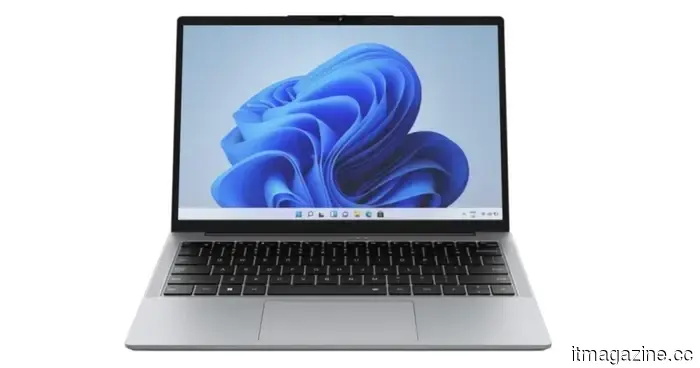 Chuwi's UniBook is a $449 laptop that aims to compete with the MacBook Neo by offering solid features.
Chuwi's UniBook combines Intel's latest Wildcat Lake Core 3 processor with a 14-inch display that covers 100% of the sRGB color gamut, offers ample ports, and is expected to be priced around $449.
Chuwi's UniBook is a $449 laptop that aims to compete with the MacBook Neo by offering solid features.
Chuwi's UniBook combines Intel's latest Wildcat Lake Core 3 processor with a 14-inch display that covers 100% of the sRGB color gamut, offers ample ports, and is expected to be priced around $449.
 Google introduces always-on information agents in Search at I/O 2026.
Google's updated information agents operate continuously in AI Mode, gathering news, monitoring prices, and sending alerts, transitioning from the traditional Google Alerts system to an agent-based AI approach.
Google introduces always-on information agents in Search at I/O 2026.
Google's updated information agents operate continuously in AI Mode, gathering news, monitoring prices, and sending alerts, transitioning from the traditional Google Alerts system to an agent-based AI approach.
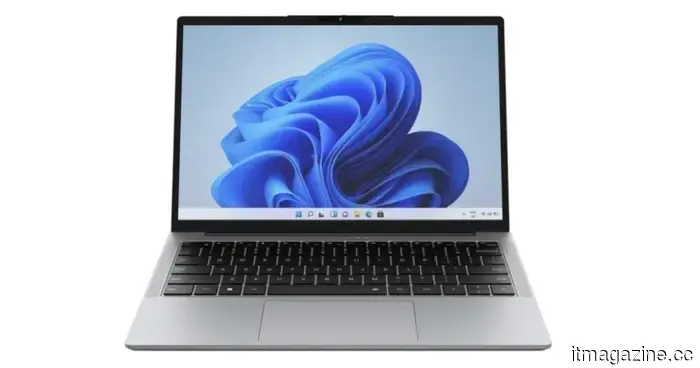 Chuwi's UniBook is a $449 laptop vying for the title held by the MacBook Neo, offering substantial features.
Chuwi's UniBook features Intel's latest Wildcat Lake Core 3 processor, along with a 14-inch display that covers 100% of the sRGB spectrum, ample ports, and an estimated price of $449.
Google introduces voice prompting for Docs, Keep, and Gmail at I/O 2026.
At I/O 2026, Google introduced voice-activated AI functionalities for Docs, Keep, and Gmail, enabling users to generate documents and search through their inboxes by speaking rather than typing.
Chuwi's UniBook is a $449 laptop vying for the title held by the MacBook Neo, offering substantial features.
Chuwi's UniBook features Intel's latest Wildcat Lake Core 3 processor, along with a 14-inch display that covers 100% of the sRGB spectrum, ample ports, and an estimated price of $449.
Google introduces voice prompting for Docs, Keep, and Gmail at I/O 2026.
At I/O 2026, Google introduced voice-activated AI functionalities for Docs, Keep, and Gmail, enabling users to generate documents and search through their inboxes by speaking rather than typing.
 Android Halo might serve as the crucial connection between Android and AI agents.
Google's new Android Halo feature suggests a future where AI seamlessly supports you without requiring constant interaction. The most intriguing aspect is how minimally it interferes with your activities.
Android Halo might serve as the crucial connection between Android and AI agents.
Google's new Android Halo feature suggests a future where AI seamlessly supports you without requiring constant interaction. The most intriguing aspect is how minimally it interferes with your activities.
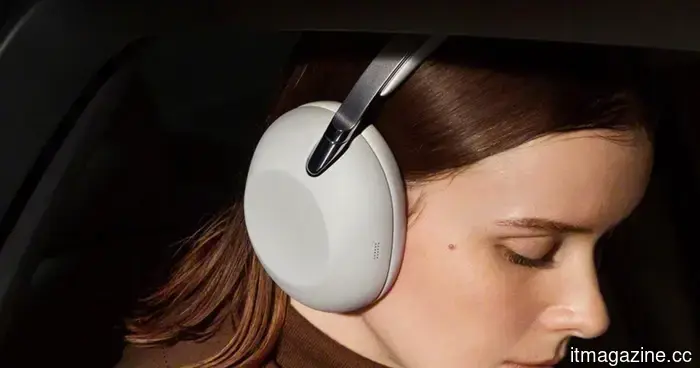 Sony introduces the 1000X Collexion headphones, maintaining a sophisticated design at an attractive price.
Sony's new 1000X THE COLLEXION noise-cancelling headphones carry forward the same audio heritage as the WH-1000XM6 headphones, but are presented in a more fashionable design and at a staggering price point.
Sony introduces the 1000X Collexion headphones, maintaining a sophisticated design at an attractive price.
Sony's new 1000X THE COLLEXION noise-cancelling headphones carry forward the same audio heritage as the WH-1000XM6 headphones, but are presented in a more fashionable design and at a staggering price point.
The Design Trade-Offs Influencing Contemporary UV Printing Systems
UV printing depends on precisely regulated chemical reactions, with even minor changes in ink behavior impacting the output, maintenance, and long-term reliability. As this technology is adopted by smaller studios and home environments, the discussion surrounding open versus closed ink systems increasingly revolves around finding a balance between flexibility, stability, and user-friendliness.