

Blackstone secures the majority stake in Google's new TPU cloud.
Blackstone and Google have established a joint venture to create a US-based AI compute-as-a-service company utilizing Google’s tensor processing units (TPUs), as announced by Blackstone on Monday. Blackstone is providing $5 billion in initial equity while taking majority ownership, with the overall deal value estimated at around $25 billion, including leverage. The initial target is to achieve 500 MW of data center capacity by 2027.
It is important to note that the new business is framed as a ‘TPU cloud’ rather than a typical hyperscaler unit. The competitive landscape it addresses is CoreWeave, the NVIDIA-aligned neocloud that made its public debut in 2024 and now plays a significant role in the AI-compute sector adjacent to hyperscalers. Essentially, this venture represents Google’s competitive response to CoreWeave: leveraging a chip architecture Google has meticulously developed over the past decade, integrating Blackstone’s infrastructure financing capability, and offering capacity to enterprise clients seeking alternatives to NVIDIA silicon under compute-as-a-service terms.
The financial structure follows a familiar Blackstone infrastructure-fund model. The $5 billion equity stake is part of what is being described as a $25 billion total project worth, with the remaining $20 billion expected to be sourced from debt financing linked to the data center and equipment assets. Blackstone’s current infrastructure portfolio includes the QTS Realty Trust data center platform, which it acquired in 2021, demonstrating the firm’s increasing reliance on asset-heavy, long-term cash-flow initiatives as the AI infrastructure sector expands.
The implications for Google pose a separate set of considerations. Over the past year, Google has been selling TPU capacity to external clients at an unprecedented rate. The recent $40 billion-plus agreement with Anthropic includes five gigawatts of TPU capacity over five years and access to up to one million seventh-generation Ironwood chips. Earlier this year, Meta also entered into its own TPU agreement.
The success of these external sales has led to a well-known internal compute challenge, where Google’s own AI researchers, including teams at DeepMind, are now waiting for access to the same resources the company is offering to external partners. The Blackstone joint venture represents the third element of this external distribution strategy.
The capital-cycle context contributes to the deal’s scale. Big Tech spending on AI infrastructure is projected to exceed $700 billion this year, with Google alone expected to spend between $175 billion and $185 billion in capital expenditures. When compared to Google’s overarching financial capacity, the $25 billion joint venture with Blackstone appears relatively modest. However, its structural significance lies in enabling Google to transfer the infrastructure financing responsibility off-balance-sheet while maintaining the TPU supply and architectural relationship that generates the underlying profit margin.
The competitive perspective for CoreWeave and the broader NVIDIA Neocloud sector becomes increasingly relevant. CoreWeave's stock has been trading based on the belief that the AI-compute-as-a-service market is structurally underserved and that its existing relationships with NVIDIA give it an advantage for several years ahead. A Google-Blackstone TPU cloud with 500 MW of capacity by 2027 emerges as its most substantial competitor to date, due to the differentiated silicon technology and Blackstone’s virtually limitless financing capacity within infrastructure constraints.
The choice of customers remains a point of uncertainty for both parties. Potential buyers can be categorized into three groups: foundation-model labs apart from Anthropic or Meta seeking TPU capacity through long-term contracts; enterprise clients purchasing GPU compute via CoreWeave or Lambda who are looking for TPU alternatives for inference-heavy applications; and sovereign AI buyers in regions where NVIDIA export restrictions have led to procurement challenges. The focus of the joint venture on one of these segments will influence whether it remains at 500 MW or expands further.
Operational details, such as data center locations and TPU generations, are still in progress, with the next significant indicator being the announcement of the JV’s first named anchor customer.
Other articles
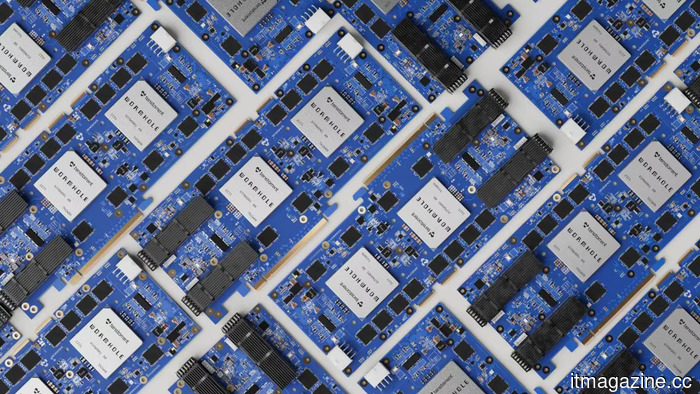 Intel and Qualcomm are eyeing Tenstorrent as an alternative to NVIDIA as the market evolves.
According to Bloomberg, Tenstorrent, the AI chip startup founded by Jim Keller that focuses on RISC-V, has engaged in preliminary discussions about a potential acquisition with Intel and Qualcomm.
Intel and Qualcomm are eyeing Tenstorrent as an alternative to NVIDIA as the market evolves.
According to Bloomberg, Tenstorrent, the AI chip startup founded by Jim Keller that focuses on RISC-V, has engaged in preliminary discussions about a potential acquisition with Intel and Qualcomm.
 Mistral acquires Vienna's Emmi AI to incorporate physics into its industrial offerings.
Mistral AI has purchased the Vienna-based physics-AI startup Emmi for an undisclosed amount, aiming to serve manufacturers in the aerospace, automotive, and semiconductor sectors. This marks Mistral's second acquisition of 2026, following their purchase of Koyeb.
Mistral acquires Vienna's Emmi AI to incorporate physics into its industrial offerings.
Mistral AI has purchased the Vienna-based physics-AI startup Emmi for an undisclosed amount, aiming to serve manufacturers in the aerospace, automotive, and semiconductor sectors. This marks Mistral's second acquisition of 2026, following their purchase of Koyeb.
 Narwal Freo Z10 Turbo Offers Premium Features at an Affordable Price
The Narwal Freo Z10 Turbo offers flagship-level suction, CarpetFocus technology, and easy maintenance cleaning at a more affordable price, making it an excellent upgrade for contemporary households.
Narwal Freo Z10 Turbo Offers Premium Features at an Affordable Price
The Narwal Freo Z10 Turbo offers flagship-level suction, CarpetFocus technology, and easy maintenance cleaning at a more affordable price, making it an excellent upgrade for contemporary households.
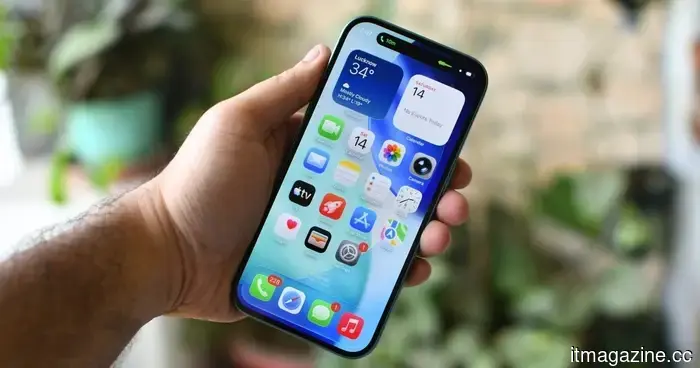 Apple's iOS 27 may introduce AI writing features, an upgraded Siri, and personalized wallpapers.
Apple's iOS 27 could bring in AI writing features, more advanced Siri connections, natural-language shortcuts, and AI-created wallpapers as the company enhances its AI ecosystem.
Apple's iOS 27 may introduce AI writing features, an upgraded Siri, and personalized wallpapers.
Apple's iOS 27 could bring in AI writing features, more advanced Siri connections, natural-language shortcuts, and AI-created wallpapers as the company enhances its AI ecosystem.
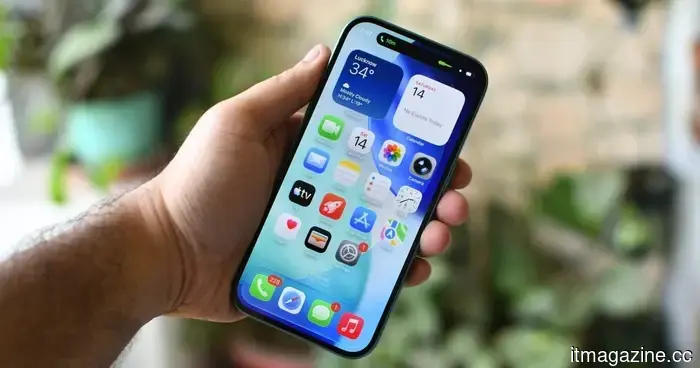 Apple's iOS 27 may introduce AI writing tools, an enhanced Siri, and personalized wallpapers.
Apple's iOS 27 might bring AI writing features, enhanced Siri integrations, natural-language shortcuts, and AI-created wallpapers as the company broadens its AI ecosystem.
Apple's iOS 27 may introduce AI writing tools, an enhanced Siri, and personalized wallpapers.
Apple's iOS 27 might bring AI writing features, enhanced Siri integrations, natural-language shortcuts, and AI-created wallpapers as the company broadens its AI ecosystem.
 Meta transitions 7,000 employees into AI positions during the same week it announces a 10% workforce reduction.
According to an internal memo from Chief People Officer Janelle Gale that was reviewed by Bloomberg, Meta is reallocating 7,000 employees to roles centered on AI in advance of a 10% reduction in its workforce later this week.
Meta transitions 7,000 employees into AI positions during the same week it announces a 10% workforce reduction.
According to an internal memo from Chief People Officer Janelle Gale that was reviewed by Bloomberg, Meta is reallocating 7,000 employees to roles centered on AI in advance of a 10% reduction in its workforce later this week.
Blackstone secures the majority stake in Google's new TPU cloud.
Google and Blackstone have revealed a partnership to establish a TPU compute-as-a-service business in the United States, backed by $5 billion in Blackstone equity, an overall valuation of approximately $25 billion, and a target of 500 MW of capacity operational by 2027.