
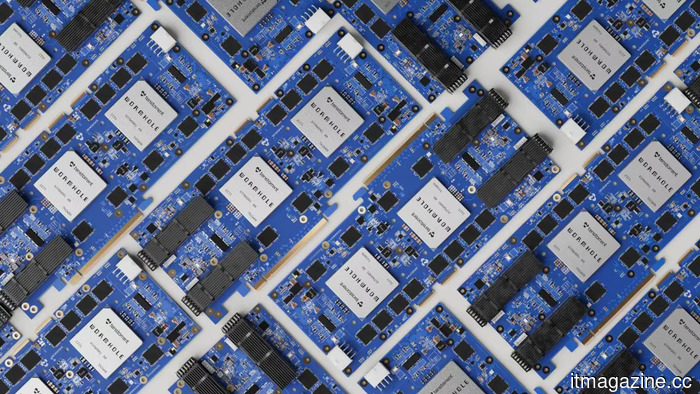
Intel and Qualcomm are eyeing Tenstorrent as an alternative to NVIDIA as the market evolves.
Bloomberg has reported that Tenstorrent, the AI chip startup led by Jim Keller, is engaged in early-stage takeover discussions with Intel and Qualcomm. The company raised $800 million last year, reaching a valuation of $3.2 billion, with notable investors such as Bezos Expeditions and Samsung.
The conversations remain in the early, non-transactional phase according to the report. Tenstorrent has opted not to comment on the matter, and neither Intel nor Qualcomm has officially verified the discussions.
Understanding the company's valuation is crucial. Tenstorrent had been in negotiations to secure $800 million at a $3.2 billion pre-money valuation, led by Fidelity Management in November 2025, an increase from the $693 million Series D it completed in December 2024 at a $2.6 billion valuation. Current investors include Bezos Expeditions, LG Electronics, Baillie Gifford, and the Healthcare of Ontario Pension Plan. The startup reportedly has about $150 million in customer contracts, which include manufacturing agreements with Samsung and commitments to automotive AI with Hyundai.
The technical aspect underpins the acquisition interest. Tenstorrent creates RISC-V-based AI accelerators (Ascalon CPU cores and Tensix AI cores), marketing them as both packaged silicon and licensable intellectual property, which is a unique hybrid approach for a chip startup.
Keller, whose extensive background includes roles at Apple, Tesla, AMD, and Intel, became CTO in 2020 and took over as CEO in 2025. The argument presented to potential buyers is that instead of developing a competitor to NVIDIA from scratch, they could acquire the only credible RISC-V-AI platform available.
The logic for each potential buyer varies. For Intel, acquiring Tenstorrent could help reposition against NVIDIA in the AI training market, particularly after restructuring its discrete-accelerator strategy due to underperformance of the Gaudi line. Qualcomm presents an interesting case, as it operates in smartphone SoC and Arm architecture but lacks a presence in data-center AI. The acquisition of Tenstorrent would provide it with both licensable IP and a viable non-Arm CPU roadmap.
Bloomberg did not clarify whether either buyer is considering a full acquisition or a minority strategic investment. The discussions are occurring within the broader context of the reevaluation of NVIDIA alternatives. NVIDIA has committed over $40 billion in AI equity for 2026 to secure long-term GPU supply agreements; Google's TPU program has demonstrated that alternative architectures can achieve significant customer traction; Cerebras is seeking to go public with a focus on inference optimization; and Groq has experienced rising valuations through 2025.
The Tenstorrent discussions are situated within this competitive environment, where either acquirer would be paying not just for the technology but also for the market position. However, Bloomberg’s report does not address the structure of the proposed transaction, indicative pricing, or whether Tenstorrent's previously announced IPO plans are still being considered alongside these strategic discussions.
Companies often conduct dual-track processes at this stage, meaning that an $800 million primary funding round and takeover talks are not necessarily mutually exclusive. The most likely scenario, based on available information, is that Tenstorrent will pursue its primary fundraising while the strategic dialogues help define its potential public-market exit valuation.
From a corporate finance perspective, Tenstorrent's Ascalon RISC-V CPU and Tensix AI core initiatives are valuable assets that align well with the data-center strategies of either Intel or Qualcomm. The valuation will be a key variable, with the $3.2 billion from its last fundraising setting a baseline that any buyer would need to exceed, along with a typical strategic acquisition premium.
The question remains whether these discussions will lead to formal bids in the coming months, which the upcoming product and customer announcements from Tenstorrent will help clarify.
Other articles
 Blackstone secures the majority stake in Google's new TPU cloud.
Google and Blackstone have revealed a partnership to establish a TPU compute-as-a-service business in the United States, backed by $5 billion in Blackstone equity, an overall valuation of approximately $25 billion, and a target of 500 MW of capacity operational by 2027.
Blackstone secures the majority stake in Google's new TPU cloud.
Google and Blackstone have revealed a partnership to establish a TPU compute-as-a-service business in the United States, backed by $5 billion in Blackstone equity, an overall valuation of approximately $25 billion, and a target of 500 MW of capacity operational by 2027.
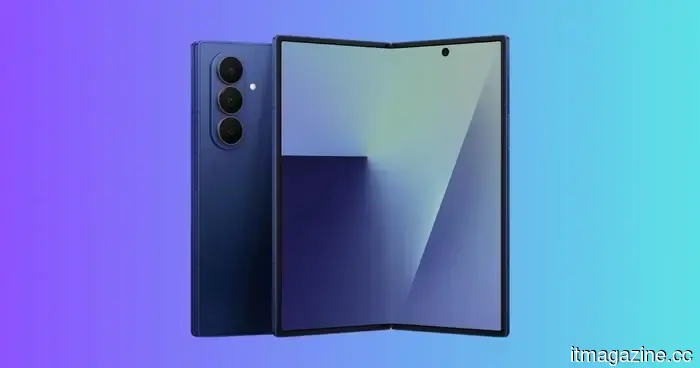 The Samsung Galaxy Z Fold 8 might finally address the most significant issue with foldable devices.
A recent leak regarding the Galaxy Z Fold 8 indicates that Samsung might enhance foldable battery life while also offering slimmer designs and improved camera features.
The Samsung Galaxy Z Fold 8 might finally address the most significant issue with foldable devices.
A recent leak regarding the Galaxy Z Fold 8 indicates that Samsung might enhance foldable battery life while also offering slimmer designs and improved camera features.
 Apple's iOS 27 may introduce AI writing features, an enhanced Siri, and personalized wallpapers.
Apple's iOS 27 could bring AI writing features, enhanced Siri interactions, natural-language shortcuts, and AI-created wallpapers as the company broadens its AI ecosystem.
Apple's iOS 27 may introduce AI writing features, an enhanced Siri, and personalized wallpapers.
Apple's iOS 27 could bring AI writing features, enhanced Siri interactions, natural-language shortcuts, and AI-created wallpapers as the company broadens its AI ecosystem.
 Analog Devices is nearing a $1.5 billion cash agreement for Empower Semiconductor's AI power chips.
Analog Devices is currently in advanced negotiations to purchase AI power chip firm Empower Semiconductor for $1.5 billion in cash. An announcement regarding the deal might be made as soon as Tuesday.
Analog Devices is nearing a $1.5 billion cash agreement for Empower Semiconductor's AI power chips.
Analog Devices is currently in advanced negotiations to purchase AI power chip firm Empower Semiconductor for $1.5 billion in cash. An announcement regarding the deal might be made as soon as Tuesday.
 iOS 27 may resolve a significant issue with the Shortcuts app, and I'm looking forward to it.
Apple is preparing a significant update for the Shortcuts app in iOS 27. With the help of AI, users will now be able to create multi-step shortcuts by simply explaining their needs to the AI in natural language.
iOS 27 may resolve a significant issue with the Shortcuts app, and I'm looking forward to it.
Apple is preparing a significant update for the Shortcuts app in iOS 27. With the help of AI, users will now be able to create multi-step shortcuts by simply explaining their needs to the AI in natural language.
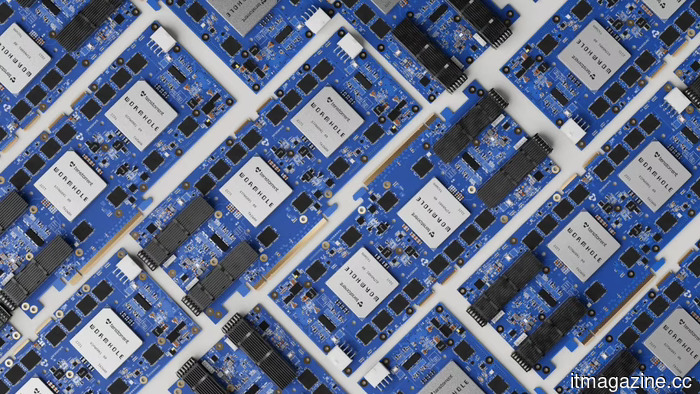 Intel and Qualcomm are eyeing Tenstorrent as NVIDIA's rival trade comes to fruition.
Tenstorrent, the RISC-V AI chip startup led by Jim Keller, has engaged in preliminary discussions regarding a potential acquisition with Intel and Qualcomm, according to Bloomberg.
Intel and Qualcomm are eyeing Tenstorrent as NVIDIA's rival trade comes to fruition.
Tenstorrent, the RISC-V AI chip startup led by Jim Keller, has engaged in preliminary discussions regarding a potential acquisition with Intel and Qualcomm, according to Bloomberg.
Intel and Qualcomm are eyeing Tenstorrent as an alternative to NVIDIA as the market evolves.
According to Bloomberg, Tenstorrent, the AI chip startup founded by Jim Keller that focuses on RISC-V, has engaged in preliminary discussions about a potential acquisition with Intel and Qualcomm.