

Step aside gigabytes, AI tokens have become the latest unit on your phone bill.
It's honestly remarkable how rapidly artificial intelligence has transformed from a futuristic novelty into something that people depend on every day. Platforms like ChatGPT, Claude, and Gemini are gradually becoming integral to our digital lives—assisting with writing emails, summarizing documents, organizing schedules, debugging code, and even helping to solve problems. Now, a recent report indicates that telecom companies in China are capitalizing on this transition in a way that is both intriguing and somewhat unsettling: by offering AI token plans akin to mobile data packages.
Indeed, actual AI usage quotas are beginning to emerge. Rather than stressing about exhausting 5GB of data before the month ends, individuals might soon find themselves pondering whether they have sufficient tokens left for a few chats with ChatGPT, AI-generated images, or coding inquiries.
Telecom companies have already observed this trend.
China Telecom, one of the nation's major carriers, has reportedly launched dedicated AI token packages. Consumer plans start at 9.9 yuan (approximately $1.45) for 10 million tokens, extending up to 80 million tokens for the pricier plans. Business-focused packages targeting coding tasks and AI agents go further, reaching up to 250 million tokens monthly. The figures may sound extraordinarily large until you grasp what tokens represent.
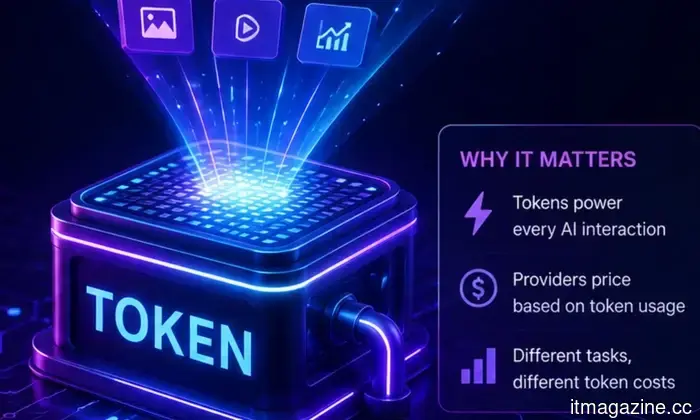
Tokens are the small segments of language and data that AI models decode. Each sentence entered into an AI chatbot is divided into tokens, and every generated response consumes tokens as well. Images and code also utilize them.
In general terms, one token equates to about four characters or approximately three-quarters of a word in English. A million tokens seems substantial, but AI systems can use them surprisingly quickly once you begin creating lengthy documents, analyzing data, or working with images. The report states that processing a high-resolution image can consume between 200 and 1,000 tokens alone. What intrigues me most is not the pricing but what this indicates about the future direction of the tech industry regarding AI.
Telecom companies are beginning to treat AI similarly to how they once viewed internet access: as a service that people will consistently pay for each month. This marks a significant psychological shift. AI is no longer being portrayed merely as a premium application separate from the internet; it is being gradually integrated into the overall internet experience.
That future doesn't seem far off.
China Telecom is reportedly bundling these token plans with its own TeleChat AI system while also supporting third-party models like DeepSeek and GLM-5. Simultaneously, other major Chinese carriers are following suit. China Unicom has rolled out regional token plans, while China Mobile has reportedly begun testing analogous offerings across various provinces earlier this year.
The timing is also notable. The demand for AI in China is skyrocketing at an astonishing rate. The report references government statistics indicating that daily AI token calls surged to over 140 trillion in March—an increase of a thousand times compared to early 2024. That figure almost seems unbelievable until you consider how deeply AI has integrated into everyday life just in the past year.
The strange aspect is that most individuals might not initially recognize this shift. AI token plans are likely to launch under the guise of “AI assistant bundles,” “premium productivity packages,” or “smart services.” Yet beneath the marketing, the industry is constructing a completely new economy centered on AI consumption.
We spent years paying for access to information online, and now it appears we are entering a phase where we pay for cognitive capacity itself.

Other articles
 Meta eliminates 8,000 positions while reporting a record $56 billion in quarterly revenue, as Zuckerberg invests $145 billion in AI infrastructure.
Employee morale has plummeted following Meta's announcement of record profits while cutting 10 percent of its workforce. Additional layoffs are anticipated in August and fall 2026 as the company shifts payroll into AI capital expenditures.
Meta eliminates 8,000 positions while reporting a record $56 billion in quarterly revenue, as Zuckerberg invests $145 billion in AI infrastructure.
Employee morale has plummeted following Meta's announcement of record profits while cutting 10 percent of its workforce. Additional layoffs are anticipated in August and fall 2026 as the company shifts payroll into AI capital expenditures.
 Elon Musk suffers defeat in lawsuit against Sam Altman and OpenAI, as the jury concludes that the claims were submitted beyond the allowable time frame.
Nine jurors unanimously dismissed Musk's claim that the statute of limitations should begin from when he later realized OpenAI had strayed from its nonprofit goals. The advisory verdict essentially concludes his attempt to oust Altman and reverse the $852 billion restructuring.
Elon Musk suffers defeat in lawsuit against Sam Altman and OpenAI, as the jury concludes that the claims were submitted beyond the allowable time frame.
Nine jurors unanimously dismissed Musk's claim that the statute of limitations should begin from when he later realized OpenAI had strayed from its nonprofit goals. The advisory verdict essentially concludes his attempt to oust Altman and reverse the $852 billion restructuring.
 Elon Musk's lawsuit against Sam Altman and OpenAI was dismissed as the jury determined that the claims were submitted past the deadline.
Nine jurors unanimously dismissed Musk's claim that the statute of limitations should begin from his later realization of OpenAI's shift from its nonprofit goals. The advisory verdict essentially concludes his efforts to oust Altman and reverse the $852 billion restructuring.
Elon Musk's lawsuit against Sam Altman and OpenAI was dismissed as the jury determined that the claims were submitted past the deadline.
Nine jurors unanimously dismissed Musk's claim that the statute of limitations should begin from his later realization of OpenAI's shift from its nonprofit goals. The advisory verdict essentially concludes his efforts to oust Altman and reverse the $852 billion restructuring.
 Peter Steinberger's 100 AI agents amassed $1.3 million in OpenAI tokens over the course of 30 days while creating OpenClaw.
The bill amounted to 603 billion tokens from 7.6 million requests generated by 100 Codex instances operating on GPT-5.5. Turning off Fast Mode would reduce the cost to $300,000, but this figure highlights the actual economics involved in autonomous AI development.
Peter Steinberger's 100 AI agents amassed $1.3 million in OpenAI tokens over the course of 30 days while creating OpenClaw.
The bill amounted to 603 billion tokens from 7.6 million requests generated by 100 Codex instances operating on GPT-5.5. Turning off Fast Mode would reduce the cost to $300,000, but this figure highlights the actual economics involved in autonomous AI development.
 Meta reduces its workforce by 8,000 positions while reporting a record quarterly revenue of $56 billion, as Zuckerberg invests $145 billion in AI infrastructure.
Employee morale has plummeted, as Meta announces unprecedented profits while cutting 10 percent of its workforce. Additional layoffs are anticipated in August and fall 2026, as the company shifts payroll expenditures towards AI investments.
Meta reduces its workforce by 8,000 positions while reporting a record quarterly revenue of $56 billion, as Zuckerberg invests $145 billion in AI infrastructure.
Employee morale has plummeted, as Meta announces unprecedented profits while cutting 10 percent of its workforce. Additional layoffs are anticipated in August and fall 2026, as the company shifts payroll expenditures towards AI investments.
 Experts are concerned that as artificial intelligence becomes more intelligent, we may become less intelligent.
As AI transforms intelligence into a readily available service, specialists caution that immediate responses may diminish the curiosity, critical thinking, and verification practices that are essential to valuable human reasoning.
Experts are concerned that as artificial intelligence becomes more intelligent, we may become less intelligent.
As AI transforms intelligence into a readily available service, specialists caution that immediate responses may diminish the curiosity, critical thinking, and verification practices that are essential to valuable human reasoning.
Step aside gigabytes, AI tokens have become the latest unit on your phone bill.
China's telecommunications firms are beginning to approach AI utilization similarly to mobile data, and this transition suggests a future for technology that is more unconventional than many anticipated.