

Experts are concerned that as artificial intelligence becomes more intelligent, we may become less intelligent.
Experts indicate that while chatbots can aid research, over-reliance on them may lead to a loss of the intellectual effort needed to develop true understanding.
AI now provides answers so swiftly that the act of searching can seem unnecessary. This immediacy raises concerns from the Royal Observatory Greenwich, which warns that quick AI responses may diminish the curiosity, critical analysis, and verification that underpin genuine knowledge.
The danger is embedded within their practicality. While chatbots are valuable for testing ideas, speeding up processes, and discovering fresh perspectives, a complete answer may sever users from the challenging path essential for meaningful learning. This detachment can result in information being received without the critical struggle necessary for forming sound judgments.
How much cognitive work should AI undertake for us?
The Royal Observatory’s viewpoint is significant due to its foundation in thorough observation rather than superficial summaries. Paddy Rodgers, director of Royal Museums Greenwich, emphasizes the habits vital for scientific discovery, such as asking insightful questions, evaluating evidence, and pursuing seemingly unimportant leads.
The historical context of astronomy supports his position. Early astronomers meticulously recorded extensive data about the universe, which later generations found to be useful in ways that the original investigators could not have foreseen. A machine designed for efficiency might have neglected those valuable explorations due to their immediate lack of relevance.
What occurs when intelligence is treated as a commodity?
Sam Altman has characterized AI as evolving into a metered service, with intelligence akin to utilities like electricity or water, billed by usage. Though this perspective represents a business model, it highlights cultural concerns regarding AI’s role as a substitute for mental effort.
If intelligence is perceived as something to be purchased on demand, engaging in reasoning might begin to resemble ordering a service rather than developing a skill. The risk intensifies when a refined answer is accepted as established knowledge, particularly if users remain unaware of what the system has overlooked, simplified, or failed to verify.
What actions should individuals take next?
A more beneficial practice is to use AI as a means of challenging one's certainty. Encourage it to confront ideas, reveal missing evidence, and scrutinize conclusions before accepting any response as conclusive.
This transforms the Royal Observatory’s caution into actionable advice. Leverage AI to expand your inquiry, rather than conclude it. Examine what might be missing, trace assertions back to their sources, and retain the final judgment within human control.
Paulo Vargas is an English major who transitioned into reporting and technical writing, consistently drawing on a diverse career path...
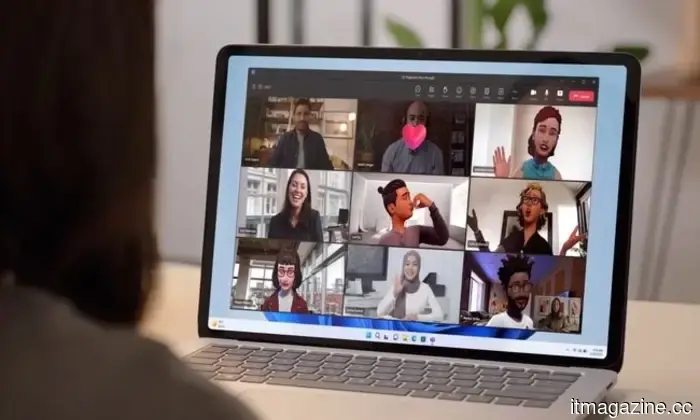
Microsoft is discontinuing the Together Mode in Teams to prioritize cleaner and simpler meeting layouts.
Microsoft Teams is phasing out one of its notable meeting features, which could be an improvement. The company has announced the removal of Together Mode as it shifts towards more straightforward meeting layouts. Together Mode was launched during the rise of video calls in the pandemic, placing participants in shared virtual settings like auditoriums or classrooms. Although it was an innovative concept at the time, it did not become the default view for most users.
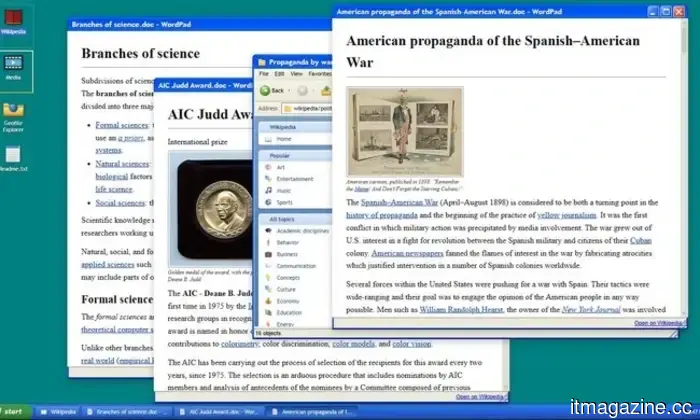
Do you miss the old PC experience? This site allows you to explore Wikipedia as if it were on Windows XP.
An unofficial new interface for Wikipedia offers a nostalgic experience reminiscent of a particular era of family computers, school labs, and prominent blue title bars. Developer Sami Smith has created a browser-based Windows XP Wikipedia explorer that transforms categories into folders and articles into files. It’s whimsical, slightly less efficient, and provides a more engaging alternative to another AI search interface added to the web.
A proposed economy class route by scientists may reduce the costs of lunar travel slightly.
Reaching the Moon has just become a bit more affordable, and scientists are quite enthusiastic about it. The high expense of lunar travel is well known, with fuel costs being a significant factor. Consequently, finding ways to lower these expenses has been a major focus. A recent study in the journal Astrodynamics outlines a new trajectory from Earth’s orbit to the Moon, potentially leading to considerable reductions in mission costs. The key lies in a cosmic stop at a gravitational equilibrium point between the two bodies, known as the L1 Lagrange point.




Other articles
 Elon Musk loses the lawsuit against Sam Altman and OpenAI after the jury determines that the claims were submitted after the deadline.
Nine jurors unanimously dismissed Musk's claim that the statute of limitations should begin from his later realization of OpenAI's shift from its nonprofit mission. This advisory verdict essentially concludes his attempt to oust Altman and reverse the $852 billion restructuring.
Starlink price hike: SpaceX raises the costs for residential and Roam plans by $5 to $10 and increases the Standby Mode fee to $10.
All consumer Starlink plans, with the exception of the new Roam 300GB option, are impacted. The price hikes come at a time when SpaceX is preparing for the largest IPO ever and Amazon Leo is getting ready for its commercial launch.
Elon Musk loses the lawsuit against Sam Altman and OpenAI after the jury determines that the claims were submitted after the deadline.
Nine jurors unanimously dismissed Musk's claim that the statute of limitations should begin from his later realization of OpenAI's shift from its nonprofit mission. This advisory verdict essentially concludes his attempt to oust Altman and reverse the $852 billion restructuring.
Starlink price hike: SpaceX raises the costs for residential and Roam plans by $5 to $10 and increases the Standby Mode fee to $10.
All consumer Starlink plans, with the exception of the new Roam 300GB option, are impacted. The price hikes come at a time when SpaceX is preparing for the largest IPO ever and Amazon Leo is getting ready for its commercial launch.
 Step aside gigabytes, AI tokens have become the latest unit on your phone bill.
China's telecommunications firms are beginning to approach AI utilization similarly to mobile data, and this transition suggests a future for technology that is more unconventional than many anticipated.
Step aside gigabytes, AI tokens have become the latest unit on your phone bill.
China's telecommunications firms are beginning to approach AI utilization similarly to mobile data, and this transition suggests a future for technology that is more unconventional than many anticipated.
 A breach at NYC Health and Hospitals has compromised medical records, fingerprints, and geolocation data for 1.8 million individuals.
The hackers managed to access the network for over two months before being discovered, making off with biometric data that individuals cannot replace. The breach started through a third-party vendor that has not been named.
A breach at NYC Health and Hospitals has compromised medical records, fingerprints, and geolocation data for 1.8 million individuals.
The hackers managed to access the network for over two months before being discovered, making off with biometric data that individuals cannot replace. The breach started through a third-party vendor that has not been named.
 Meta eliminates 8,000 positions while reporting a historic $56 billion in quarterly revenue, as Zuckerberg invests $145 billion in AI infrastructure.
Employee morale has plummeted as Meta announces record profits while cutting 10 percent of its staff. Further layoffs are anticipated in August and fall 2026 as the company shifts payroll into investments in AI technology.
Starlink price hike: SpaceX has increased residential and Roam plan prices by $5 to $10 and has raised the Standby Mode fee to $10.
All consumer Starlink tiers, with the exception of the new Roam 300GB plan, are impacted. These price hikes come as SpaceX applies for the largest IPO in history and Amazon Leo readies for its commercial launch.
Meta eliminates 8,000 positions while reporting a historic $56 billion in quarterly revenue, as Zuckerberg invests $145 billion in AI infrastructure.
Employee morale has plummeted as Meta announces record profits while cutting 10 percent of its staff. Further layoffs are anticipated in August and fall 2026 as the company shifts payroll into investments in AI technology.
Starlink price hike: SpaceX has increased residential and Roam plan prices by $5 to $10 and has raised the Standby Mode fee to $10.
All consumer Starlink tiers, with the exception of the new Roam 300GB plan, are impacted. These price hikes come as SpaceX applies for the largest IPO in history and Amazon Leo readies for its commercial launch.
Experts are concerned that as artificial intelligence becomes more intelligent, we may become less intelligent.
As AI transforms intelligence into a readily available service, specialists caution that immediate responses may diminish the curiosity, critical thinking, and verification practices that are essential to valuable human reasoning.