

Meta eliminates 8,000 positions while reporting a record $56 billion in quarterly revenue, as Zuckerberg invests $145 billion in AI infrastructure.
Meta will commence a reduction of around 8,000 jobs on May 20, marking the largest round of layoffs since its restructuring in 2023, reflecting CEO Mark Zuckerberg’s belief that investment in artificial intelligence infrastructure is more valuable than human labor. The company will also cancel 6,000 job openings, resulting in a total reduction of 14,000 positions.
These layoffs occur despite record financial success, as Meta announced first-quarter 2026 revenues of $56.31 billion and a net income of $26.8 billion. In 2025, total revenue reached $201 billion, a 22% increase from the previous year, with free cash flow at $43.6 billion. The downsizing is not due to financial struggles but a strategic shift prioritizing AI infrastructure over human resources, an unprecedented move in the tech industry.
Meta has raised its capital expenditure forecast for 2026 between $125 billion and $145 billion, up from $72.2 billion in 2025 and $39.2 billion in 2024, with most of this increase allocated for data centers, Nvidia GPUs, and custom silicon, supporting its Llama model ecosystem. In the first quarter alone, Meta added $107 billion in new cloud and infrastructure commitments, including a $27 billion investment in a joint venture for a large AI data center in Louisiana.
Bank of America estimates these layoffs could save Meta $7 billion to $8 billion annually, contributing to the operating margin that CFO Susan Li intends to maintain. Li noted that a more efficient operating model would expedite processes and help cover infrastructure costs, though she admitted uncertainty about the future optimal company size, a surprising statement given the context of strong profits.
While the financial rationale for restructuring makes sense, the human impact is stark. Meta's record results were announced just three weeks before the planned layoffs, creating a sense of corporate dissonance among employees and industry observers.
In a town hall meeting on April 30, Zuckerberg addressed potential cuts, insisting that AI tools were not the cause for job losses, though he did not clarify what was. This lack of information has heightened anxiety within the company.
Meanwhile, compensation for the broader workforce has decreased, while AI researchers' salaries have soared. The median total compensation at Meta dropped from $417,400 in 2024 to $388,200 in 2025, with stock portions of annual raises cut by 5% in February 2026, following a 10% reduction the previous year. Conversely, Zuckerberg has attracted AI researchers with packages reportedly reaching up to $100 million for his Superintelligence Labs.
This disparity in compensation has fostered an atmosphere of resignation, with employees monitoring the countdown to the layoffs. An anonymous network indicated a 25% decline in Meta’s overall employee rating since mid-2024, with a 39% decrease in cultural ratings. In most categories, Meta now trails behind Amazon, Google, and Netflix.
The atmosphere is further strained by the Model Capability Initiative, a program implemented on US employees' laptops that tracks their activity to inform AI training, which employees have labeled an "Employee Data Extraction Factory." Protests have arisen against the program, which many see as a precursor to their own obsolescence.
Including the upcoming layoffs, Zuckerberg has overseen around 33,000 job eliminations since 2022, framed under various justifications, including correcting pandemic-era hiring, promoting efficiency, and performance management. The impending reductions are more comprehensive, reorganizing the company into AI-centric “pods.”
More layoffs are anticipated for this year, potentially reaching 20% of the workforce. Other tech companies like Microsoft, Oracle, and Amazon have also made significant cuts in a similar trend seen across the industry.
The underlying theory of Meta's restructuring posits that fewer highly skilled employees alongside AI can achieve what once required larger teams. Zuckerberg envisions developing AI products that serve as “personal superintellects” for billions. The success of this vision hinges on whether the AI being developed justifies the substantial investment and the loss of workforce knowledge resulting from the current wave of layoffs.
The impact of this technological shift disproportionally affects roles concentrated in recruiting, sales, and middle management, as the company hires primarily in machine learning and related fields.
Zuckerberg has previously navigated similar restructurings, leading to substantial financial gains. However, this time, the market's reaction has been tepid with Meta's stock down approximately 7% year-to-date. The recurring strategy across major tech firms appears to endorse layoffs as a means to enhance AI investments and subsequently validate such decisions through stock performance.
For the 8,000 employees affected this week, the validation of this strategy will come at the cost of their roles. Zuckerberg faces the critical challenge of whether the concept of personal superintelligence can substantiate a restructuring that carries immediate consequences for countless individuals who have remained committed in their positions.
Other articles
 Experts are concerned that as AI becomes more intelligent, we may become less so.
As AI transforms intelligence into a service that is available on demand, specialists caution that immediate responses may diminish the curiosity, critical examination, and source verification behaviors that enhance human thinking.
Experts are concerned that as AI becomes more intelligent, we may become less so.
As AI transforms intelligence into a service that is available on demand, specialists caution that immediate responses may diminish the curiosity, critical examination, and source verification behaviors that enhance human thinking.
 Peter Steinberger's 100 AI agents amassed $1.3 million in OpenAI tokens over the course of 30 days while creating OpenClaw.
The bill amounted to 603 billion tokens from 7.6 million requests generated by 100 Codex instances operating on GPT-5.5. Turning off Fast Mode would reduce the cost to $300,000, but this figure highlights the actual economics involved in autonomous AI development.
Peter Steinberger's 100 AI agents amassed $1.3 million in OpenAI tokens over the course of 30 days while creating OpenClaw.
The bill amounted to 603 billion tokens from 7.6 million requests generated by 100 Codex instances operating on GPT-5.5. Turning off Fast Mode would reduce the cost to $300,000, but this figure highlights the actual economics involved in autonomous AI development.
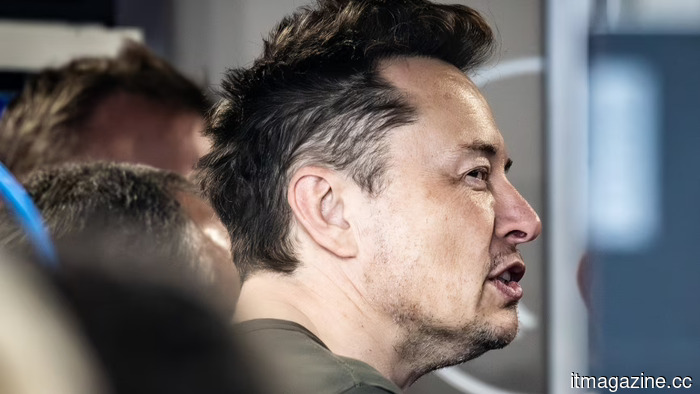 Elon Musk loses the lawsuit against Sam Altman and OpenAI after the jury determines that the claims were submitted after the deadline.
Nine jurors unanimously dismissed Musk's claim that the statute of limitations should begin from his later realization of OpenAI's shift from its nonprofit mission. This advisory verdict essentially concludes his attempt to oust Altman and reverse the $852 billion restructuring.
Starlink price hike: SpaceX has increased the cost of residential and Roam plans by $5 to $10, and has raised the fee for Standby Mode to $10.
All consumer Starlink plans, with the exception of the new Roam 300GB option, are impacted. The price hikes come as SpaceX prepares for the largest IPO ever and Amazon Leo nears its commercial rollout.
Elon Musk loses the lawsuit against Sam Altman and OpenAI after the jury determines that the claims were submitted after the deadline.
Nine jurors unanimously dismissed Musk's claim that the statute of limitations should begin from his later realization of OpenAI's shift from its nonprofit mission. This advisory verdict essentially concludes his attempt to oust Altman and reverse the $852 billion restructuring.
Starlink price hike: SpaceX has increased the cost of residential and Roam plans by $5 to $10, and has raised the fee for Standby Mode to $10.
All consumer Starlink plans, with the exception of the new Roam 300GB option, are impacted. The price hikes come as SpaceX prepares for the largest IPO ever and Amazon Leo nears its commercial rollout.
 The breach at NYC Health and Hospitals has revealed the medical records, fingerprints, and geolocation information of 1.8 million individuals.
The hackers were able to access the network for over two months before being discovered, taking biometric data that individuals cannot replace. The security incident started through an unnamed third-party vendor.
The breach at NYC Health and Hospitals has revealed the medical records, fingerprints, and geolocation information of 1.8 million individuals.
The hackers were able to access the network for over two months before being discovered, taking biometric data that individuals cannot replace. The security incident started through an unnamed third-party vendor.
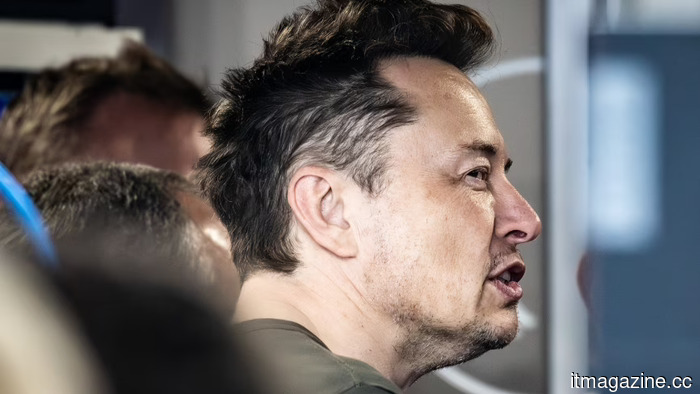 Elon Musk suffers defeat in lawsuit against Sam Altman and OpenAI, as the jury concludes that the claims were submitted beyond the allowable time frame.
Nine jurors unanimously dismissed Musk's claim that the statute of limitations should begin from when he later realized OpenAI had strayed from its nonprofit goals. The advisory verdict essentially concludes his attempt to oust Altman and reverse the $852 billion restructuring.
Elon Musk suffers defeat in lawsuit against Sam Altman and OpenAI, as the jury concludes that the claims were submitted beyond the allowable time frame.
Nine jurors unanimously dismissed Musk's claim that the statute of limitations should begin from when he later realized OpenAI had strayed from its nonprofit goals. The advisory verdict essentially concludes his attempt to oust Altman and reverse the $852 billion restructuring.
Meta eliminates 8,000 positions while reporting a record $56 billion in quarterly revenue, as Zuckerberg invests $145 billion in AI infrastructure.
Employee morale has plummeted following Meta's announcement of record profits while cutting 10 percent of its workforce. Additional layoffs are anticipated in August and fall 2026 as the company shifts payroll into AI capital expenditures.