
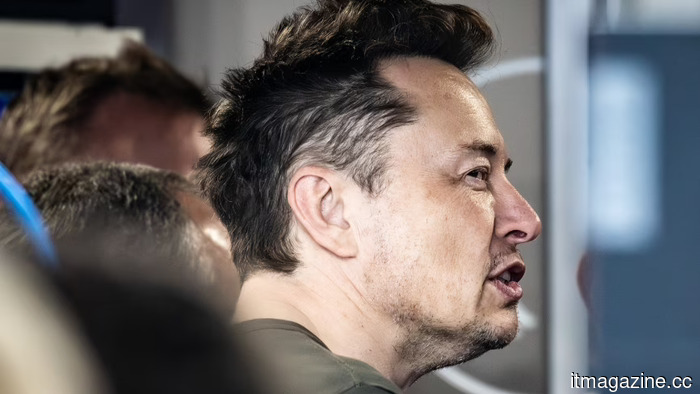
Elon Musk suffers defeat in lawsuit against Sam Altman and OpenAI, as the jury concludes that the claims were submitted beyond the allowable time frame.
A nine-member jury in Oakland unanimously determined that Elon Musk’s lawsuit against Sam Altman and OpenAI was filed after the time limit had expired, concluding the trial on statute of limitations grounds without addressing the actual claims. If this advisory verdict is accepted by Judge Yvonne Gonzalez Rogers, it would eliminate a significant legal hurdle for OpenAI’s IPO ambitions.
Elon Musk has lost his case against Sam Altman, Greg Brockman, OpenAI, and Microsoft. The jury in Oakland reached a unanimous verdict on Sunday, ruling that Musk’s claims were not filed in time as per the statute of limitations, thus ending this pivotal corporate governance trial in AI without considering the core issue of whether OpenAI’s leaders had "stolen a charity."
While the jury's verdict is advisory, Judge Gonzalez Rogers of the Northern District of California is expected to adhere to it. Should she do so, Musk's efforts to oust Altman from OpenAI, reverse the company's $852 billion restructuring, and seek up to $134 billion in restitution for OpenAI’s nonprofit foundation would essentially be over.
Determining the Jury's Findings
The jury was tasked with answering a more focused question: had Musk filed his lawsuit within the statutory time frame? Although Musk left OpenAI's board in 2018, he did not initiate legal proceedings until February 2024, a gap of six years that his legal team struggled to justify during the trial. Musk asserted he only became aware of OpenAI's straying from its nonprofit mission in 2022, coinciding with Microsoft’s plans to invest $10 billion. In contrast, OpenAI’s lawyers contended that relevant events, such as the establishment of a for-profit subsidiary in 2019 and Microsoft’s initial $1 billion investment that same year, were publicly available well before Musk could file.
The jury sided with OpenAI, concluding that all nine jurors agreed the alleged harms Musk identified occurred prior to the filing deadline, rendering the lawsuit untimely regardless of its merits. Notably, none of the jurors accepted Musk’s argument that the statute of limitations should be reset due to his later awareness of the supposed misconduct.
Implications of the Trial
Both parties had positioned the trial as a pivotal case for AI governance over the next decade. Musk’s lead attorney, Steven Molo, contended that Altman and Brockman “stole a charity,” whereas OpenAI's lawyer, William Savitt, argued that Musk only filed suit after not getting his way at OpenAI and launching his own competing AI company, xAI, in 2023.
If the case had moved on to the merits, the jury would have evaluated two civil claims: breach of charitable trust and unjust enrichment. Musk had contributed roughly $44 million to OpenAI between 2015 and 2017, claiming that these donations were effectively misappropriated when the organization transitioned from a nonprofit research lab to a for-profit entity now worth hundreds of billions of dollars. He sought Altman's removal from leadership and aimed to reverse OpenAI’s restructuring into a public benefit corporation, seeking up to $134 billion in restitution from OpenAI and Microsoft.
Musk testified over three days, asserting that the case would set a precedent for charitable giving in the U.S., rejecting any personal financial gain and requesting damages be allocated to OpenAI’s nonprofit division. OpenAI’s defense maintained that Musk had advocated for creating a for-profit subsidiary as early as 2017, contingent on his controlling it, and left the board when that demand was denied.
Trial Developments
The three-week trial featured a range of testimonies from notable figures in Silicon Valley, including Altman, Brockman, Microsoft CEO Satya Nadella, former OpenAI chief scientist Ilya Sutskever, and Musk himself. A critical piece of evidence for OpenAI was a personal journal entry by Brockman from November 2017, in which he recognized that the company could not convincingly claim adherence to a nonprofit model if it was planning to transition to a benefit corporation soon after. Judge Gonzalez Rogers had referenced this entry in her earlier ruling allowing the case to proceed to trial.
Sutskever’s testimony complicated matters for both sides. He, who played a key role in Altman’s brief removal from the CEO role in November 2023, testified that he had spent months collecting evidence of what he considered Altman's deceptive pattern but later expressed regret over reinstating him. During cross-examination, Altman acknowledged he had “told the occasional lie,” with five witnesses characterizing him as dishonest.
OpenAI also called Shivon Zilis, the mother of four of Musk’s children, whose testimony did not support Musk’s portrayal of the founding commitments. Furthermore, Musk himself was absent for the closing arguments on May 14, having accompanied President Trump’s delegation to Beijing, a fact that OpenAI’s attorneys highlighted before the jury.
Consequences for OpenAI
If Judge Gonzalez Rogers adopts the statute of limitations
Other articles
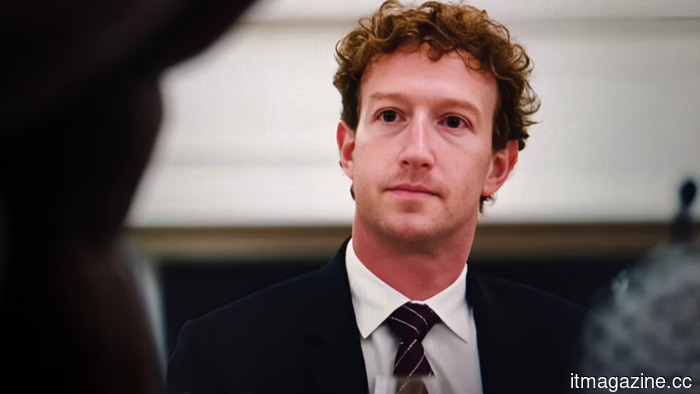 Meta reduces its workforce by 8,000 employees while reporting a record quarterly revenue of $56 billion, as Zuckerberg invests $145 billion in AI infrastructure.
Employee morale has plummeted as Meta announces record profits while cutting 10 percent of its workforce. Additional layoffs are anticipated in August and fall 2026, as the company shifts payroll expenses towards AI capital investments.
Meta reduces its workforce by 8,000 employees while reporting a record quarterly revenue of $56 billion, as Zuckerberg invests $145 billion in AI infrastructure.
Employee morale has plummeted as Meta announces record profits while cutting 10 percent of its workforce. Additional layoffs are anticipated in August and fall 2026, as the company shifts payroll expenses towards AI capital investments.
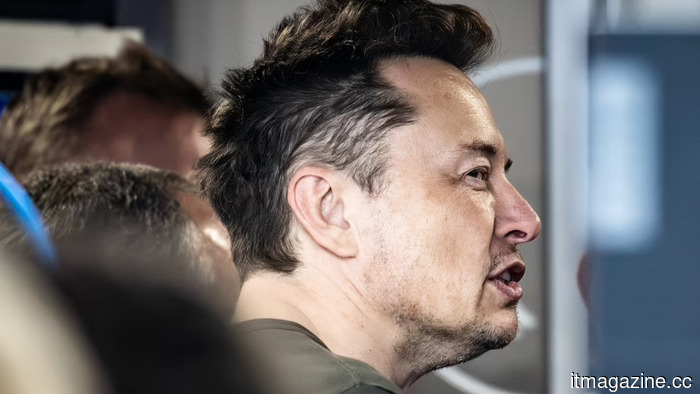 Elon Musk's lawsuit against Sam Altman and OpenAI was dismissed as the jury determined that the claims were submitted past the deadline.
Nine jurors unanimously dismissed Musk's claim that the statute of limitations should begin from his later realization of OpenAI's shift from its nonprofit goals. The advisory verdict essentially concludes his efforts to oust Altman and reverse the $852 billion restructuring.
Starlink price hike: SpaceX has increased residential and Roam plan prices by $5 to $10 and has raised the Standby Mode fee to $10.
All consumer Starlink tiers, with the exception of the new Roam 300GB plan, are impacted. These price hikes come as SpaceX applies for the largest IPO in history and Amazon Leo readies for its commercial launch.
Starlink price hike: SpaceX raises the costs for residential and Roam plans by $5 to $10 and increases the Standby Mode fee to $10.
All consumer Starlink plans, with the exception of the new Roam 300GB option, are impacted. The price hikes come at a time when SpaceX is preparing for the largest IPO ever and Amazon Leo is getting ready for its commercial launch.
Starlink price hike: SpaceX increases residential and Roam plans by $5 to $10 and raises Standby Mode fees to $10.
All consumer Starlink tiers, with the exception of the new Roam 300GB plan, are impacted. The price hikes come as SpaceX prepares for the largest IPO ever and Amazon's Leo nears its commercial launch.
Elon Musk's lawsuit against Sam Altman and OpenAI was dismissed as the jury determined that the claims were submitted past the deadline.
Nine jurors unanimously dismissed Musk's claim that the statute of limitations should begin from his later realization of OpenAI's shift from its nonprofit goals. The advisory verdict essentially concludes his efforts to oust Altman and reverse the $852 billion restructuring.
Starlink price hike: SpaceX has increased residential and Roam plan prices by $5 to $10 and has raised the Standby Mode fee to $10.
All consumer Starlink tiers, with the exception of the new Roam 300GB plan, are impacted. These price hikes come as SpaceX applies for the largest IPO in history and Amazon Leo readies for its commercial launch.
Starlink price hike: SpaceX raises the costs for residential and Roam plans by $5 to $10 and increases the Standby Mode fee to $10.
All consumer Starlink plans, with the exception of the new Roam 300GB option, are impacted. The price hikes come at a time when SpaceX is preparing for the largest IPO ever and Amazon Leo is getting ready for its commercial launch.
Starlink price hike: SpaceX increases residential and Roam plans by $5 to $10 and raises Standby Mode fees to $10.
All consumer Starlink tiers, with the exception of the new Roam 300GB plan, are impacted. The price hikes come as SpaceX prepares for the largest IPO ever and Amazon's Leo nears its commercial launch.
 Amazon introduces Alexa Podcasts, an AI capability that produces complete episodes using licensed news material.
Alexa+ is now able to produce podcast episodes on a wide range of topics, featuring narration by two AI-generated co-hosts. This capability leverages licensing agreements with organizations such as AP, Reuters, the Washington Post, and over 200 local newspapers.
Amazon introduces Alexa Podcasts, an AI capability that produces complete episodes using licensed news material.
Alexa+ is now able to produce podcast episodes on a wide range of topics, featuring narration by two AI-generated co-hosts. This capability leverages licensing agreements with organizations such as AP, Reuters, the Washington Post, and over 200 local newspapers.
Elon Musk suffers defeat in lawsuit against Sam Altman and OpenAI, as the jury concludes that the claims were submitted beyond the allowable time frame.
Nine jurors unanimously dismissed Musk's claim that the statute of limitations should begin from when he later realized OpenAI had strayed from its nonprofit goals. The advisory verdict essentially concludes his attempt to oust Altman and reverse the $852 billion restructuring.