
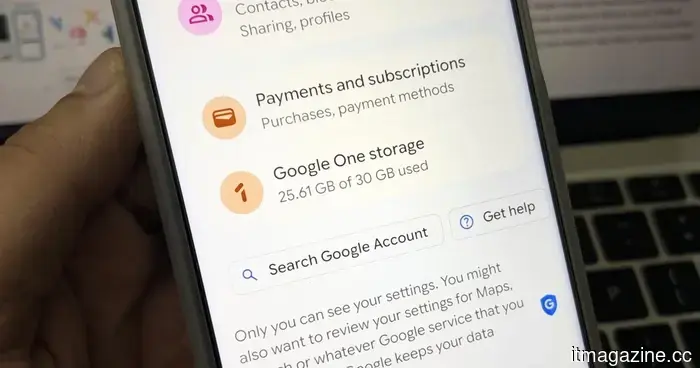
Your upcoming free Google account may only include 5GB of storage.
Google's free storage has long been a key advantage over Apple's 5GB iCloud limit, but that is now shifting.
Google has subtly modified one of the most dependable assurances in consumer technology: the 15GB of free cloud storage. For years, creating a Google account provided users with 15GB of complimentary storage shared among Gmail, Drive, and Photos. However, this has now changed.
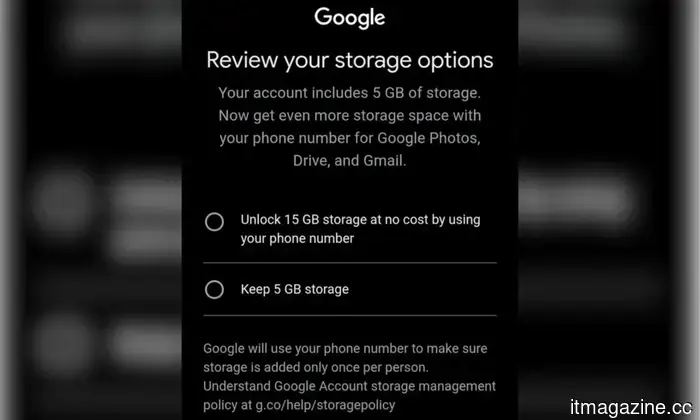
New accounts now default to just 5GB (matching iCloud), with the complete 15GB only accessible if a phone number is provided during account setup. Users are prompted with the message: “Your account includes 5GB of storage. Now get even more storage space with your phone number.”
What has changed specifically?
The policy modification was implemented around March 18, 2026 (as reported by 9To5Google). This was when the company changed the wording on its support page from definitive to conditional. Initially, the page stated: “Your Google account comes with 15GB of cloud storage at no charge.”
It has now been revised to "up to 15GB of cloud storage at no charge." Furthermore, Google did not announce this alteration through a tweet or a blog post, as is customary for other updates related to consumer products.
During the account setup, users now face two clear options: link a phone number to obtain 15GB of storage or stick with 5GB.
Why is Google making this change?
Google aims to ensure that the 15GB storage is granted to users only once, rather than multiple times for each new account created. Tying the free storage to users’ phone numbers is a clever strategy since acquiring a new number is considerably harder than creating a new Google account.
Thus, the company is framing this change as a measure against account duplication rather than anything else. A Google representative has also confirmed to Endgadget that this is a regional test, which explains why some users can still access the full 15GB without phone verification.
Additionally, it's worth noting the timing of this change. Recently, Google increased storage for AI Pro subscribers from 1TB to 5TB, while simultaneously tightening available space for free users. Ultimately, users should brace for reduced free storage options.
For over five years, Shikhar has effectively conveyed developments in consumer technology in a simplified manner...
Dell enhances its AI PC lineup with new sleek Dell 14s and 16s laptops.
Dell has launched the new Dell 14S and Dell 16S laptops, expanding its AI-centric Copilot+ PC lineup with slimmer designs, updated Intel processors, and better battery life. The company positions both devices as high-end productivity machines that integrate AI features, portability, and multimedia capabilities into a more compact design.
The new laptops feature Intel Core Ultra Series 3 processors, reaching up to the Intel Core Ultra 9 386H chipset. Dell indicates that both models support on-device AI acceleration with up to 50 TOPS NPU performance, enabling AI tasks to be performed locally without solely relying on cloud processing. Variants with AMD Ryzen AI 400 Series chips are also set to be released later this month.
Intel appears to have begun manufacturing chips for Apple, although not the most advanced types.
The Apple-Intel chip agreement that many thought would never happen seems to be happening, albeit with significant caveats that many headlines have overlooked.
Ming Chi Kuo reports that Apple has initiated the production of processors for lower-end iPhones, iPads, and Macs at Intel, utilizing its 18A-P process node with Foveros packaging. These chips are not the A-series processors that power the iPhone Pro or the M-series silicon used in the MacBook Pro; rather, they are legacy and mid-range products — the reliable components produced in large volumes but possessing less prestige. Roughly 80% of the orders pertain to iPhones, which closely aligns with Apple's sales distribution. This detail is more significant than it may initially seem.
OpenAI has introduced the powerful Codex tool to the ChatGPT app on mobile devices.
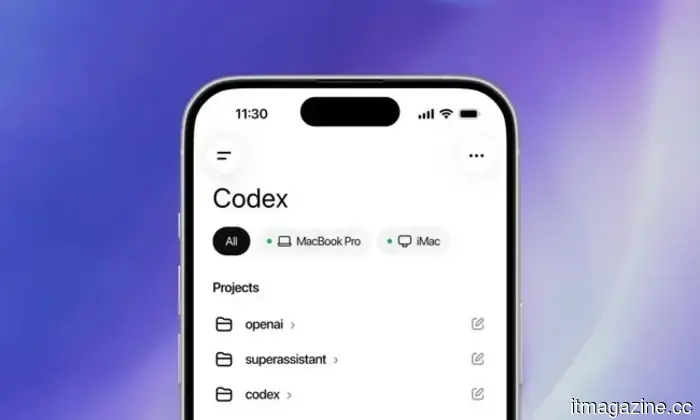
The ChatGPT mobile application now features Codex, allowing users to handle coding tasks on the go.
If you have ever wished for Codex to assist with debugging and pull requests during coffee breaks or commutes, OpenAI has made that a reality. Codex, the company's AI-driven coding assistant, is now accessible in the ChatGPT mobile app for iOS and Android.
This feature is currently being rolled out in preview mode across all plans, including Free and Go, in all regions supported. At present, mobile support is compatible with the macOS Codex app, with Windows support on the way.




Other articles
 Meta will permit third-party applications for Ray-Ban Display glasses. You need to keep your focus on digital reality.
Meta is allowing third-party developers to access the Ray-Ban Display glasses, which may enhance the practicality of smart glasses in your everyday activities.
Meta will permit third-party applications for Ray-Ban Display glasses. You need to keep your focus on digital reality.
Meta is allowing third-party developers to access the Ray-Ban Display glasses, which may enhance the practicality of smart glasses in your everyday activities.
 Jury deliberations are set to start in the OpenAI nonprofit trial following Musk's absence from the closing arguments to travel to Beijing.
Closing arguments in the case of Musk v. Altman concluded on Thursday in Oakland, and the jury will start deliberations on Monday. The case involves up to $134 billion in disgorgement and the structure of OpenAI.
Jury deliberations are set to start in the OpenAI nonprofit trial following Musk's absence from the closing arguments to travel to Beijing.
Closing arguments in the case of Musk v. Altman concluded on Thursday in Oakland, and the jury will start deliberations on Monday. The case involves up to $134 billion in disgorgement and the structure of OpenAI.
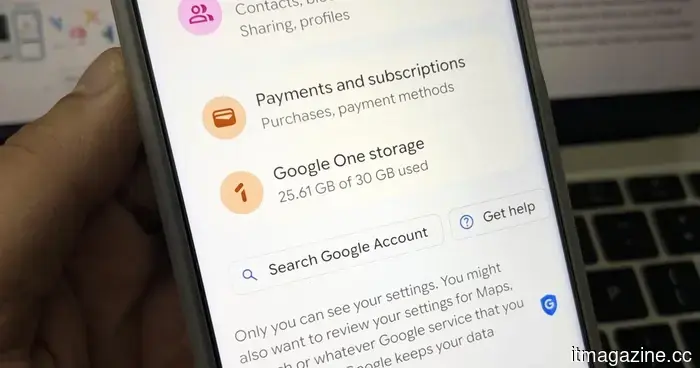 Your next complimentary Google account may only include 5GB of storage.
New Google accounts now come with 5GB of complimentary storage. Associating a phone number enables users to access the full storage capacity, but the support page has subtly removed the guaranteed 15GB offer.
Your next complimentary Google account may only include 5GB of storage.
New Google accounts now come with 5GB of complimentary storage. Associating a phone number enables users to access the full storage capacity, but the support page has subtly removed the guaranteed 15GB offer.
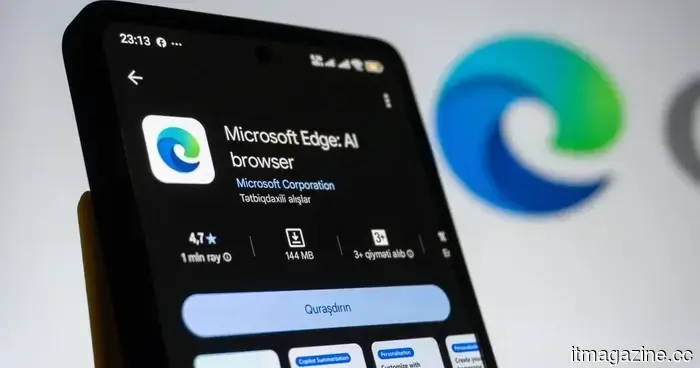 The mobile Edge browser receives a significant update, making it a strong contender against Chrome.
Microsoft Edge is introducing Copilot tab reasoning, Journeys, Voice, and Vision to mobile devices, providing smartphone users with a compelling reason to try it out ahead of Chrome's Gemini upgrade.
The mobile Edge browser receives a significant update, making it a strong contender against Chrome.
Microsoft Edge is introducing Copilot tab reasoning, Journeys, Voice, and Vision to mobile devices, providing smartphone users with a compelling reason to try it out ahead of Chrome's Gemini upgrade.
 Windows 11 will take care of its own driver issues so you won't have to worry about it.
Microsoft's new Cloud-Initiated Driver Recovery feature automatically reverts malfunctioning drivers sent via Windows Update, without the need for manual corrections or involvement from hardware partners.
Windows 11 will take care of its own driver issues so you won't have to worry about it.
Microsoft's new Cloud-Initiated Driver Recovery feature automatically reverts malfunctioning drivers sent via Windows Update, without the need for manual corrections or involvement from hardware partners.
 Oh, shall we? In Russia, they released the "Shalyapin" acoustic system based on the "Russian bass."
A fresh perspective on what should play in cars has emerged in the country. The brand "Ural" has introduced the AK-3 "Shalyapin" acoustic system. The main feature is the so-called "Russian sound," which the developers have separated from just high-quality music and tied to cultural tradition.
Oh, shall we? In Russia, they released the "Shalyapin" acoustic system based on the "Russian bass."
A fresh perspective on what should play in cars has emerged in the country. The brand "Ural" has introduced the AK-3 "Shalyapin" acoustic system. The main feature is the so-called "Russian sound," which the developers have separated from just high-quality music and tied to cultural tradition.
Your upcoming free Google account may only include 5GB of storage.
New Google accounts now come with 5GB of complimentary storage. By linking a phone number, users can access the complete storage allocation; however, the support page has quietly removed the guarantee of 15GB.