

Meta will permit third-party applications for Ray-Ban Display glasses. You need to keep your focus on digital reality.
Meta has just provided developers with access to the display on its glasses, opening up numerous possibilities.
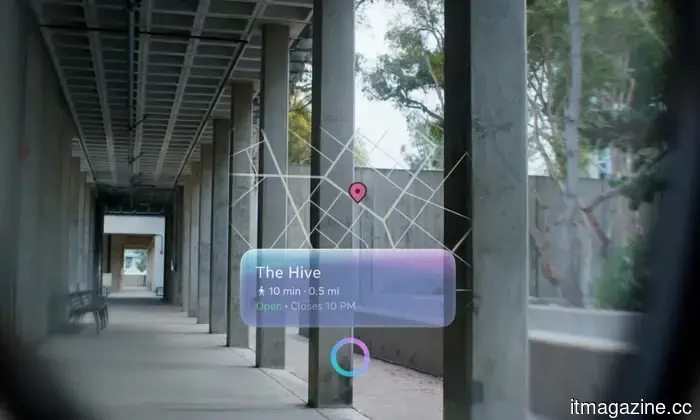
Meta has unveiled its Meta Ray-Ban Display glasses, featuring an integrated in-lens display that enables users to view captured images, check and respond to messages, and engage with Meta AI.
While the existing apps and functionalities were decent, true potential could only be realized by enabling third-party developers to create apps. Today, Meta is finally granting developers access to the display on its Ray-Ban smart glasses.
What can developers create with this?
Meta is empowering developers to create new app experiences, supporting both mobile and web applications. With access to the display, developers can design information overlays, real-time data displays such as scores or live notifications, micro-apps, utilities, and much more.
There are two approaches for developing on the display. The first method is using the Meta Wearables Device Access Toolkit, a native mobile SDK for both iOS and Android. This allows developers to extend their existing mobile apps to the glasses’ display using Swift or Kotlin, incorporating UI elements like text, images, lists, buttons, and video playback.
The second approach is through web apps, ideal for developers aiming to build standalone experiences with standard HTML, CSS, and JavaScript. They can create anything from cooking guides to transit applications, test them in a browser, and deploy them directly to the glasses.
What does this mean for Meta Ray-Ban users?
If you've purchased Meta Ray-Ban Display smart glasses, the opportunity for new apps and experiences has just expanded significantly. Imagine easily accessing real-time sports scores, turn-by-turn navigation, your grocery lists, and more, all visible right in your glasses without the need to pull out your phone.
With gesture control support through the Meta Neural Band, you will be able to interact with these apps using subtle hand movements. As developers innovate with the display, your everyday experience with the glasses will become increasingly rich and functional.
Without the privacy concerns related to Meta Ray-Ban, these would have already been an immediate purchase for me now that third-party developers can create apps for the platform.
Rachit is an experienced tech journalist with over seven years of experience in the consumer technology sector.
Forget smart glasses; these earbuds can see, hear, and remember everything for you.
Smart glasses have always seemed a bit awkward to me. They can play music, make calls, capture photos, and present notifications right in front of your eyes, but ultimately, they remain just small screens on your face. Now, envision completely removing the screen.
That's exactly what this new set of AI-powered earbuds aims to achieve. Rather than displaying information, these earbuds are designed to quietly listen, see, remember, and react to the environment around you. This approach might represent one of the most intriguing advancements in wearable AI to date.
Samsung’s AI smart glasses are set to debut in July, possibly named Galaxy Glasses.
Samsung is gearing up to showcase its first AI smart glasses at the upcoming Galaxy Unpacked event in London on July 22, as reported by Seoul Economic Daily. This wearable is anticipated to launch alongside the Galaxy Z Fold8, Galaxy Z Flip8, and Galaxy Watch9 series, positioning Samsung’s AI smart glasses at the forefront of its summer product lineup.
For users, the transition is straightforward. Galaxy AI could evolve from something you unlock or tap into a wearable device, leveraging voice recognition, cameras, and Samsung’s connected-device network for enhanced functionality.
Sony’s wearable air conditioner is returning, and it has somehow improved.
This compact Sony wearable AC may sound absurd until the heatwaves strike.
Sony has revealed a new wearable that deviates from typical smartwatches, fitness trackers, or AI smart glasses—it's something far more useful. The company has introduced the Reon Pocket Pro Plus, the latest iteration of its wearable cooling device. The Reon series has been around since it began as a crowdfunding initiative in 2019. After its expansion across Asia and a few Western markets, this upgraded model is now making its way to the UK and Europe.






Other articles
 Oh, shall we? In Russia, they released the "Shalyapin" acoustic system based on the "Russian bass."
A fresh perspective on what should be played in cars has emerged in the country. The brand "Ural" has introduced the AK-3 "Shalyapin" acoustic system. The main feature is the so-called "Russian sound," which the developers have separated from just quality music and tied to cultural tradition.
Oh, shall we? In Russia, they released the "Shalyapin" acoustic system based on the "Russian bass."
A fresh perspective on what should be played in cars has emerged in the country. The brand "Ural" has introduced the AK-3 "Shalyapin" acoustic system. The main feature is the so-called "Russian sound," which the developers have separated from just quality music and tied to cultural tradition.
 STT Global Data Centres is preparing for a $500 million listing in Mumbai, ahead of a crowded IPO lineup in 2026.
According to Bloomberg, STT Global Data Centres India is set to launch an IPO in Mumbai for up to $500 million, with bank presentations scheduled for next week and mandates expected to be finalized by the end of May. This IPO would position the company at the forefront of the 2026 data center listing lineup.
STT Global Data Centres is preparing for a $500 million listing in Mumbai, ahead of a crowded IPO lineup in 2026.
According to Bloomberg, STT Global Data Centres India is set to launch an IPO in Mumbai for up to $500 million, with bank presentations scheduled for next week and mandates expected to be finalized by the end of May. This IPO would position the company at the forefront of the 2026 data center listing lineup.
 Jury deliberations are set to start in the OpenAI nonprofit trial following Musk's absence from the closing arguments to travel to Beijing.
Closing arguments in the case of Musk v. Altman concluded on Thursday in Oakland, and the jury will start deliberations on Monday. The case involves up to $134 billion in disgorgement and the structure of OpenAI.
Jury deliberations are set to start in the OpenAI nonprofit trial following Musk's absence from the closing arguments to travel to Beijing.
Closing arguments in the case of Musk v. Altman concluded on Thursday in Oakland, and the jury will start deliberations on Monday. The case involves up to $134 billion in disgorgement and the structure of OpenAI.
 Netflix now has its own AI studio, and AI-generated content is on its way to your feed whether you want it or not.
Netflix has been quietly establishing an AI animation studio named INKubator to create animated shorts and specials utilizing generative AI technologies.
Netflix now has its own AI studio, and AI-generated content is on its way to your feed whether you want it or not.
Netflix has been quietly establishing an AI animation studio named INKubator to create animated shorts and specials utilizing generative AI technologies.
 Forget about smart glasses; these earbuds are capable of seeing, hearing, and remembering everything on your behalf.
AI wearables could be taking a distinct path. These innovative smart earbuds claim to see, hear, and even retain information for you — all while keeping another screen out of your line of sight.
Forget about smart glasses; these earbuds are capable of seeing, hearing, and remembering everything on your behalf.
AI wearables could be taking a distinct path. These innovative smart earbuds claim to see, hear, and even retain information for you — all while keeping another screen out of your line of sight.
 Multiverse secures $70 million at a $2.1 billion valuation to promote its AI adoption strategy throughout Europe.
Multiverse secured $70 million in a funding round led by Schroders Capital, achieving a valuation of $2.1 billion. The company noted a year-over-year revenue growth of 50%, highlighted its acquisition of StackFuel in January, and expressed its goal to establish itself as Europe's AI adoption platform.
Multiverse secures $70 million at a $2.1 billion valuation to promote its AI adoption strategy throughout Europe.
Multiverse secured $70 million in a funding round led by Schroders Capital, achieving a valuation of $2.1 billion. The company noted a year-over-year revenue growth of 50%, highlighted its acquisition of StackFuel in January, and expressed its goal to establish itself as Europe's AI adoption platform.
Meta will permit third-party applications for Ray-Ban Display glasses. You need to keep your focus on digital reality.
Meta is allowing third-party developers to access the Ray-Ban Display glasses, which may enhance the practicality of smart glasses in your everyday activities.