
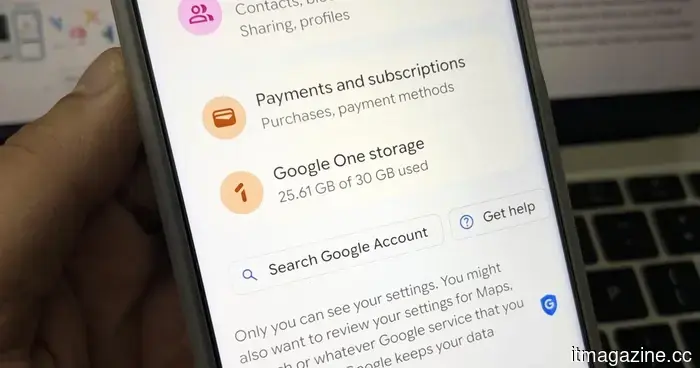
Your next complimentary Google account may only include 5GB of storage.
Google's complimentary storage option has been a competitive edge over Apple's 5GB iCloud cap for an extended period, but that is now changing.
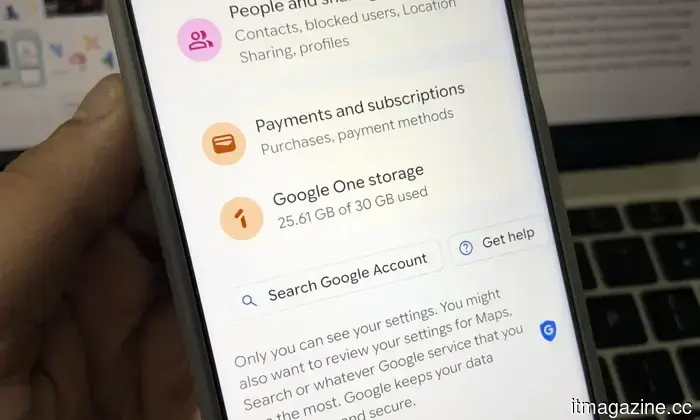
Google has discreetly modified one of its most reliable offerings in consumer technology: the 15GB of free cloud storage. For years, creating a Google account granted users 15GB of shared storage across Gmail, Drive, and Photos. However, this has now changed.
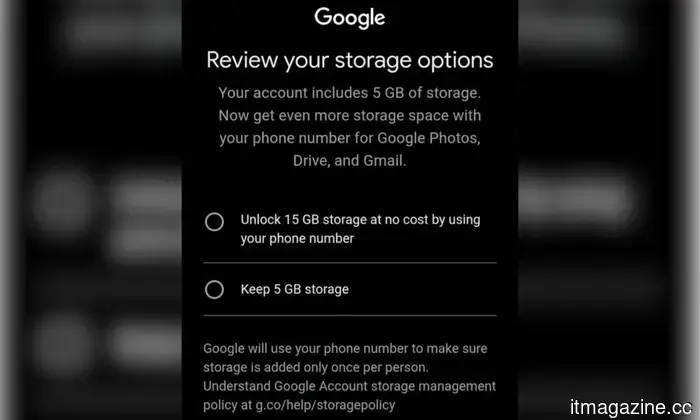
New accounts now automatically receive only 5GB (matching iCloud), with the full 15GB available only if a phone number is provided during account setup. The message displayed to users states, “Your account includes 5GB of storage. Now get even more storage space with your phone number.”
What exactly has changed?
This policy modification took place around March 18, 2026 (as reported by 9To5Google). The company updated the language on its support page from a definitive statement to a conditional one. Previously, the page read “Your Google account comes with 15GB of cloud storage at no charge.”
It has now been revised to “up to 15GB of cloud storage at no charge.” Google did not announce this change via social media or a blog post, unlike other updates for consumer products.
During the account setup process, users are now presented with two clear options: link a phone number to access 15GB of storage or remain at 5GB.
Why is Google implementing this change?
Google aims to ensure that the 15GB storage is granted to users only once, and not repeatedly with each new account they create. Tying the free storage to users’ phone numbers is, presumably, a clever strategy, as obtaining a new phone number is more challenging than creating additional Google accounts.
Thus, the company is framing this change as a measure to prevent duplication rather than anything else. A Google representative also confirmed to Endgadget that this is a regional test, which explains why some users can still access the 15GB of free storage without phone number verification.
Additionally, it's important to note the timing of this shift. Recently, Google increased the storage limit for AI Pro subscribers from 1TB to 5TB while tightening the free storage provision for regular users. Ultimately, it seems we should brace for reduced free storage availability.
For over five years, Shikhar has effectively distilled developments in the realm of consumer technology and shared them...
Dell expands AI PC product range with the introduction of new slim Dell 14S and 16S laptops
Your next Dell laptop might last all day without needing a charge.
Dell has unveiled the new Dell 14S and Dell 16S laptops, broadening its AI-centric Copilot+ PC lineup with sleeker designs, updated Intel processors, and enhanced battery performance. The company is marketing both laptops as high-end productivity devices that integrate AI features, portability, and multimedia capabilities in a more compact form.
The new laptops are equipped with Intel Core Ultra Series 3 processors, including options up to the Intel Core Ultra 9 386H chipset. Dell states that both systems feature on-device AI acceleration with up to 50 TOPS NPU performance, enabling AI tasks to run locally without solely depending on cloud processing. Variants with AMD Ryzen AI 400 Series are also expected to launch later this month.
Intel has seemingly started producing chips for Apple, but not the most advanced types.
The anticipated Apple-Intel chip partnership is reportedly becoming a reality, albeit with significant caveats that have been largely overlooked by enthusiastic headlines.
Ming Chi Kuo indicates that Apple has begun manufacturing processors for lower-tier iPhones, iPads, and Macs at Intel, utilizing its 18A-P process node with Foveros packaging. These are not the leading A-series chips found in iPhone Pro models or the M-series silicon in MacBook Pros. Rather, they are legacy and mid-range products — the workhorses that are produced in high volume but are less prestigious. The order composition is approximately 80% iPhone, aligning closely with Apple's sales distribution. This detail may hold more significance than it initially appears.
OpenAI is introducing the powerful Codex tool to the ChatGPT app on mobile devices.
The ChatGPT mobile application has added Codex, allowing you to handle coding tasks on the go.
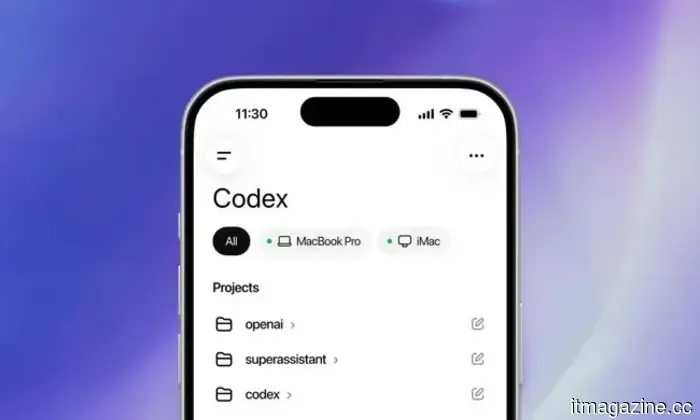
If you have ever wished to use Codex for debugging and managing pull requests while out for coffee or during your commute, OpenAI has made that possible. Codex, the company’s AI-driven coding assistant, is now integrated into the ChatGPT mobile app for iOS and Android.
This feature is currently being rolled out in preview across all plans, including Free and Go, in all supported regions. At the moment, mobile support is available with the macOS Codex app, with Windows support expected soon.




Other articles
 Multiverse secures $70 million at a $2.1 billion valuation to promote its AI adoption strategy throughout Europe.
Multiverse secured $70 million in a funding round led by Schroders Capital, achieving a valuation of $2.1 billion. The company reported a 50% year-over-year revenue increase, highlighted its acquisition of StackFuel in January, and expressed its goal of becoming the leading AI adoption platform in Europe.
Multiverse secures $70 million at a $2.1 billion valuation to promote its AI adoption strategy throughout Europe.
Multiverse secured $70 million in a funding round led by Schroders Capital, achieving a valuation of $2.1 billion. The company reported a 50% year-over-year revenue increase, highlighted its acquisition of StackFuel in January, and expressed its goal of becoming the leading AI adoption platform in Europe.
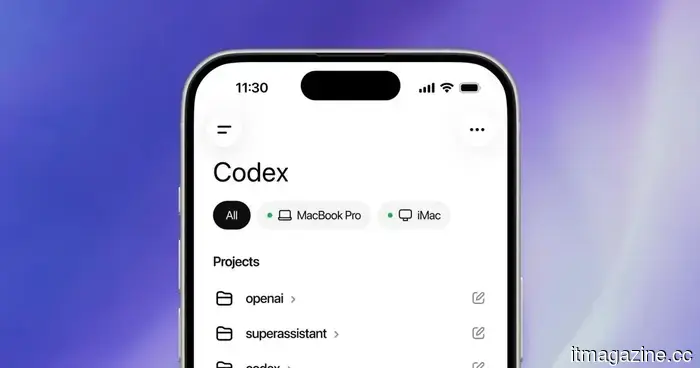 OpenAI is introducing the powerful Codex tool to the ChatGPT application on your mobile device.
OpenAI has integrated its Codex coding agent into the ChatGPT mobile application for both iOS and Android, enabling users to handle coding tasks remotely from their smartphones.
OpenAI is introducing the powerful Codex tool to the ChatGPT application on your mobile device.
OpenAI has integrated its Codex coding agent into the ChatGPT mobile application for both iOS and Android, enabling users to handle coding tasks remotely from their smartphones.
 According to US Trade Representative Greer, chip export controls did not emerge as a significant issue during discussions in Beijing.
Chip export regulations were 'not a significant issue' during the Trump-Xi meeting, according to US Trade Representative Jamieson Greer in an interview with Bloomberg, even as Washington approved Nvidia H200 sales to China.
According to US Trade Representative Greer, chip export controls did not emerge as a significant issue during discussions in Beijing.
Chip export regulations were 'not a significant issue' during the Trump-Xi meeting, according to US Trade Representative Jamieson Greer in an interview with Bloomberg, even as Washington approved Nvidia H200 sales to China.
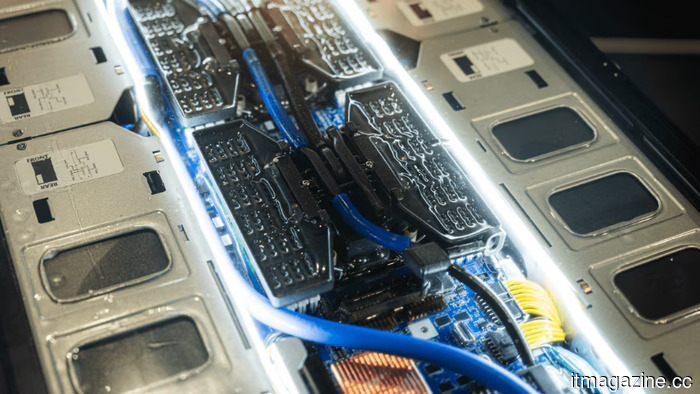 Iceotope secures $26 million as AI rack densities exceed the capabilities of air cooling.
The UK-based precision liquid cooling firm Iceotope has secured $26 million in a Series B funding round led by Two Seas Capital and Barclays Climate Ventures.
Iceotope secures $26 million as AI rack densities exceed the capabilities of air cooling.
The UK-based precision liquid cooling firm Iceotope has secured $26 million in a Series B funding round led by Two Seas Capital and Barclays Climate Ventures.
 Oh, shall we? In Russia, they released the "Shalyapin" acoustic system based on the "Russian bass."
A fresh perspective on what should play in cars has emerged in the country. The brand "Ural" has introduced the AK-3 "Shalyapin" acoustic system. The main feature is the so-called "Russian sound," which the developers have separated from just high-quality music and tied to cultural tradition.
Oh, shall we? In Russia, they released the "Shalyapin" acoustic system based on the "Russian bass."
A fresh perspective on what should play in cars has emerged in the country. The brand "Ural" has introduced the AK-3 "Shalyapin" acoustic system. The main feature is the so-called "Russian sound," which the developers have separated from just high-quality music and tied to cultural tradition.
 Federal judge delays decision on Anthropic's $1.5 billion author settlement.
Judge Araceli Martínez-Olguín on Thursday refused to give final approval to Anthropic's $1.5 billion settlement with the authors, requesting additional information regarding attorney fees and payments to the lead plaintiff.
Federal judge delays decision on Anthropic's $1.5 billion author settlement.
Judge Araceli Martínez-Olguín on Thursday refused to give final approval to Anthropic's $1.5 billion settlement with the authors, requesting additional information regarding attorney fees and payments to the lead plaintiff.
Your next complimentary Google account may only include 5GB of storage.
New Google accounts now come with 5GB of complimentary storage. Associating a phone number enables users to access the full storage capacity, but the support page has subtly removed the guaranteed 15GB offer.