
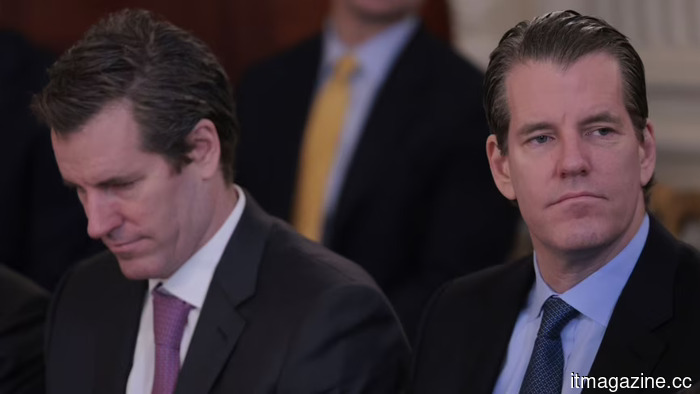
The Winklevoss twins paid 2.5 times the share price to get Gemini off the ground.
Gemini Space Station's shares surged over 20% in premarket trading on Friday following the Winklevoss Capital Fund's acquisition of $100 million in stock at $14, significantly higher than Thursday’s close of $5.26. Additionally, the exchange reported a smaller-than-anticipated loss for Q1.
The Winklevoss twins have invested $100 million into their own enterprise. The Winklevoss Capital Fund, the investment vehicle for Gemini Space Station co-founders Tyler and Cameron Winklevoss, completed a private placement on Thursday for 7,142,857 Class A shares priced at $14 each. This purchase price is more than 2.5 times Gemini’s Thursday closing price of $5.26 on the Nasdaq.
The market reacted positively to this news. On Friday, Gemini’s stock rose more than 20% in premarket trading, buoyed by a Q1 report that exceeded expectations for both revenue and loss. The revenue reached $50.3 million, up 42% year-over-year and surpassing the FactSet consensus of $47.9 million, with a loss of 93 cents per share as compared to an anticipated loss of $1.03. While both figures remain in the red for a public exchange, they provided reassurance alongside the founders’ display of confidence.
The financing structure is particularly noteworthy. The Winklevoss entity funded the $100 million entirely in bitcoin, transferring approximately 1,258 BTC to Gemini’s balance sheet at the agreed valuation. This move not only provides Gemini with a newly bitcoin-denominated treasury but also recapitalizes a balance sheet that had been weakened by losses. Moreover, it indicates what the founders believe the stock's floor value is, in contrast to an open-market purchase at the current $5.26 price.
Tyler Winklevoss commented alongside the placement, stating that the market has "significantly undervalued Gemini" and that the company has "achieved several major product and regulatory milestones that position us well to evolve from a crypto company into a markets company." This perspective aligns with the narrative Coinbase has been promoting for nearly two years: that publicly traded crypto exchanges are best viewed as multi-asset marketplaces that originated in spot crypto.
However, the underlying calculations are more complex. Gemini set its IPO price at $28 a share in September 2025, valuing the exchange at about $3.3 billion and raising $425 million through the offering. Eight months later, the stock has spent most of 2026 trading below its IPO price, and Thursday’s closing price of $5.26 placed the company’s market valuation at roughly one-fifth of its initial listing value. The Q1 2026 results came after pre-IPO filings revealed a loss of $159 million in 2024 and a $283 million loss in the first half of 2025.
In this context, the founders’ placement serves a dual purpose: it acts as a capital raise and simultaneously signals that the exchange’s inherent value is closer to its IPO price than its current market price, paid for using the very asset that Gemini was established around. The question of whether the broader market concurs will be addressed in the upcoming quarters.
Coinbase, a direct competitor, went public in 2021 and has since fluctuated between trading at deep discounts to its listing price and brief periods of outperforming it. In contrast, Gemini's analogous discount has been steeper and more rapid.
Gemini's defense has been operational, with over $21 billion in customer assets at listing, enhanced institutional product offerings, and a U.S. regulatory stance supporting stricter compliance disclosures. However, the market has not rewarded any of these factors with a premium.
The Friday movement has lifted the stock somewhat off its lows but does not resolve structural issues: whether Gemini's loss trajectory is nearing break-even, if its product diversification is sufficient to distinguish it from other crypto exchanges, and whether it can transition to a "markets company" without further dilution.
Additionally, the placement officially links Gemini’s balance sheet to bitcoin prices, a connection that Coinbase does not share. Investors purchasing GEMI after Friday’s announcement are now, in part, also investing in that bitcoin position.
Other articles
 Apple ought to apply the Neo treatment to its soon-to-be-released iPhone 18e, and I would definitely be interested.
Apple ought to develop the iPhone 18e into a vibrant, compact, personality-focused "Neo" device rather than just another simplified version of its flagship series.
Apple ought to apply the Neo treatment to its soon-to-be-released iPhone 18e, and I would definitely be interested.
Apple ought to develop the iPhone 18e into a vibrant, compact, personality-focused "Neo" device rather than just another simplified version of its flagship series.
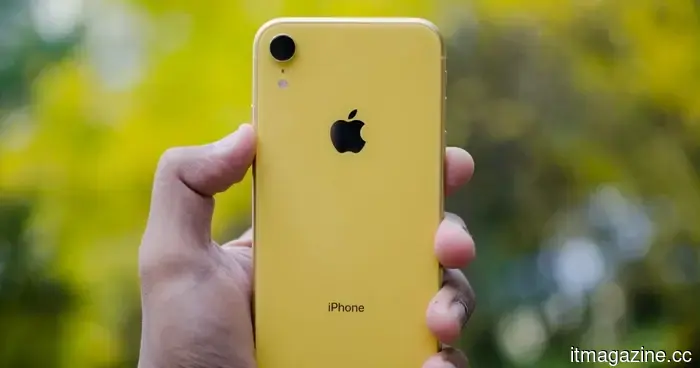 Apple should apply the Neo approach to its soon-to-be-released iPhone 18e, and I would definitely be interested.
Apple ought to reshape the iPhone 18e into a vibrant, compact, and personality-focused "Neo" device rather than producing yet another simplified version of its flagship series.
Apple should apply the Neo approach to its soon-to-be-released iPhone 18e, and I would definitely be interested.
Apple ought to reshape the iPhone 18e into a vibrant, compact, and personality-focused "Neo" device rather than producing yet another simplified version of its flagship series.
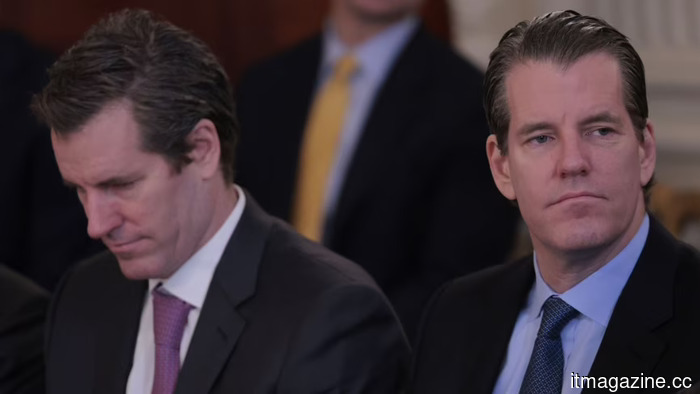 The Winklevoss twins invested 2.5 times the share price to get Gemini up and running.
Shares of Gemini Space Station saw a rise in premarket trading following Winklevoss Capital's purchase of 7.1 million new Class A shares for $100 million in bitcoin, priced at 2.5 times the market rate, in addition to a strong performance in Q1.
The Winklevoss twins invested 2.5 times the share price to get Gemini up and running.
Shares of Gemini Space Station saw a rise in premarket trading following Winklevoss Capital's purchase of 7.1 million new Class A shares for $100 million in bitcoin, priced at 2.5 times the market rate, in addition to a strong performance in Q1.
 AI-driven cryptocurrency hacks siphon off $600 million from DeFi, with North Korea taking advantage of the increase.
In April, two hacks associated with North Korea-related groups resulted in the theft of $600 million from Drift Protocol and Kelp DAO. Analysts claim that AI played a role in speeding up the attacks. Aave experienced a $9 billion drop in deposits within just two days.
AI-driven cryptocurrency hacks siphon off $600 million from DeFi, with North Korea taking advantage of the increase.
In April, two hacks associated with North Korea-related groups resulted in the theft of $600 million from Drift Protocol and Kelp DAO. Analysts claim that AI played a role in speeding up the attacks. Aave experienced a $9 billion drop in deposits within just two days.
 AI-driven cryptocurrency hacks siphon off $600 million from DeFi as North Korea takes advantage of the increase.
Two hacks in April resulted in North Korea-affiliated groups securing $600 million from Drift Protocol and Kelp DAO. Analysts indicate that AI played a role in hastening the attacks. Aave experienced a loss of $9 billion in deposits over the course of two days.
AI-driven cryptocurrency hacks siphon off $600 million from DeFi as North Korea takes advantage of the increase.
Two hacks in April resulted in North Korea-affiliated groups securing $600 million from Drift Protocol and Kelp DAO. Analysts indicate that AI played a role in hastening the attacks. Aave experienced a loss of $9 billion in deposits over the course of two days.
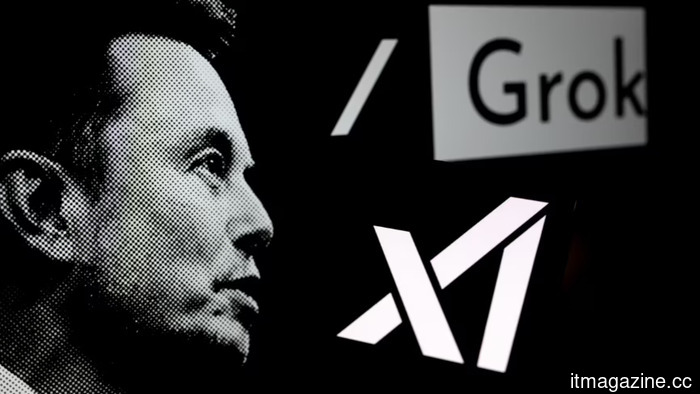 Musk's X has made a commitment to the UK regulator regarding hate speech, while the Grok investigation remains ongoing.
X has reached an agreement with Ofcom to assess illegal hate and terrorism posts within an average of 24 hours and provide quarterly reports. Additionally, a distinct investigation in the UK concerning X, which includes Grok, is still ongoing.
Musk's X has made a commitment to the UK regulator regarding hate speech, while the Grok investigation remains ongoing.
X has reached an agreement with Ofcom to assess illegal hate and terrorism posts within an average of 24 hours and provide quarterly reports. Additionally, a distinct investigation in the UK concerning X, which includes Grok, is still ongoing.
The Winklevoss twins paid 2.5 times the share price to get Gemini off the ground.
Gemini Space Station's shares increased in premarket trading following Winklevoss Capital's acquisition of 7.1 million new Class A shares for $100 million in bitcoin, at 2.5 times the market value, along with exceeding Q1 expectations.