
AI-driven cryptocurrency hacks siphon off $600 million from DeFi, with North Korea taking advantage of the increase.
In April, two hacks linked to North Korea resulted in the theft of nearly $600 million from DeFi protocols: Drift Protocol ($285 million) and Kelp DAO ($292 million). Cybersecurity experts suspect the attackers may have employed AI to identify their targets and develop their exploits. The Kelp DAO breach led to $9 billion being withdrawn from Aave within two days, highlighting the systemic vulnerabilities in DeFi.
The two incidents occurred just over two weeks apart. On April 1, hackers stole about $285 million from Drift Protocol, a Solana-based derivatives exchange, by posing as a quantitative trading firm to deceive employees into approving harmful transactions. On April 18, another group exploited a flaw in Kelp DAO's cross-chain bridge, extracting approximately $292 million in wrapped ether. Together, these attacks accounted for nearly $600 million—76% of all cryptocurrency hack losses in 2026, according to TRM Labs.
Both hacks are largely attributed to groups connected with North Korea, as reported by Bloomberg. However, what particularly worried cybersecurity experts was not just the scale of the thefts, but the methods used. Nick Carlsen, an investigator at TRM and former FBI analyst specializing in North Korean cybercrime, noted that the sophisticated nature of the April hacks strongly suggests the use of artificial intelligence for target selection and exploit design. “This is behavior North Korea has not typically exhibited,” he remarked.
The Drift hack significantly impacted the platform. The attackers created a fake token with a fabricated trading history to appear legitimate, using it as collateral to siphon off real assets in approximately 12 minutes. The total value locked in Drift plummeted from $550 million to under $300 million in just one hour, leading to the platform shutting down. It is now seeking to relaunch after securing a $148 million rescue package, primarily from stablecoin issuer Tether. A smaller DeFi project, Carrot, which had used Drift-integrated vaults, announced its complete shutdown on April 30.
The Kelp DAO hack turned out to be dire in a different sense. Instead of selling the stolen funds right away, the attackers placed about $200 million of the proceeds as collateral on Aave, the largest decentralized lending protocol. This led to a crisis of confidence as depositors, concerned about the value of Aave’s collateral, withdrew around $9 billion in a mere two days. The total locked value across all DeFi lending protocols fell by over $13 billion within 48 hours. Aave subsequently required rescue measures of its own.
This incident revealed a fundamental vulnerability that sets decentralized finance apart from traditional banking. Blockchain transactions are irreversible, meaning there is no central authority capable of halting suspicious transfers before settlement. The interconnected nature of DeFi, where one platform's collateral is another's liability, allows a single exploit to cascade through an ecosystem worth approximately $130 billion in locked assets.
Assessing whether hackers utilized AI isn't straightforward. Investigators base their conclusions on the attack's sophistication, the techniques used, and the speed at which targets were identified. Over half a dozen cybersecurity experts interviewed by Bloomberg indicated that the recent surge in DeFi exploits—April alone recorded 28 to 30 incidents, nearly double the previous high—serves as a clear sign that attackers are leveraging widely accessible AI models.
“With AI, the cost of discovering vulnerabilities is nearing zero,” stated Aneirin Flynn, CEO of security audit firm Failsafe. The time hackers require to find weaknesses in blockchain protocols has significantly reduced, now taking days or even hours instead of months, he explained.
Supporting this assertion are findings from Anthropic, which in December published a study indicating that over half of blockchain exploits executed in 2025 “could have been performed autonomously” using AI agents. Their research suggested that “potential exploit revenue” doubled roughly every 1.3 months, while the average cost of scanning smart contracts for vulnerabilities dropped to $1.22. A separate evaluation by engineers at a16z, the largest crypto venture capital firm, found that an AI trained on past DeFi hacks “consistently identified vulnerabilities” within a given protocol, though it could not yet completely devise a profitable exploit without human help.
A looming concern for the industry is Anthropic’s Mythos, an AI model that the company has withheld from broad distribution due to its security capabilities. Testing revealed that Mythos autonomously identified thousands of previously unknown zero-day vulnerabilities across all major operating systems and web browsers, including a flaw in OpenBSD that had gone unnoticed for 27 years. Instead of a public release, Anthropic decided to restrict access to a select number of major tech firms and banks through what it calls Project Glasswing.
While there is no evidence that the April hackers accessed Mythos, its existence raises broader concerns: if existing, publicly available AI tools already enhance the efficiency of crypto heists, what might occur if more powerful models, like Mythos or its successors, are leaked or replicated? In
Other articles
 How tokenized real-world assets are addressing the counterparty issue in cryptocurrency
Tokenized money market funds are transforming institutional crypto trading by separating custody from execution, reducing settlement failures, and ensuring that capital remains yield-generating continuously.
How tokenized real-world assets are addressing the counterparty issue in cryptocurrency
Tokenized money market funds are transforming institutional crypto trading by separating custody from execution, reducing settlement failures, and ensuring that capital remains yield-generating continuously.
 Apple ought to apply the Neo treatment to its soon-to-be-released iPhone 18e, and I would definitely be interested.
Apple ought to develop the iPhone 18e into a vibrant, compact, personality-focused "Neo" device rather than just another simplified version of its flagship series.
Apple ought to apply the Neo treatment to its soon-to-be-released iPhone 18e, and I would definitely be interested.
Apple ought to develop the iPhone 18e into a vibrant, compact, personality-focused "Neo" device rather than just another simplified version of its flagship series.
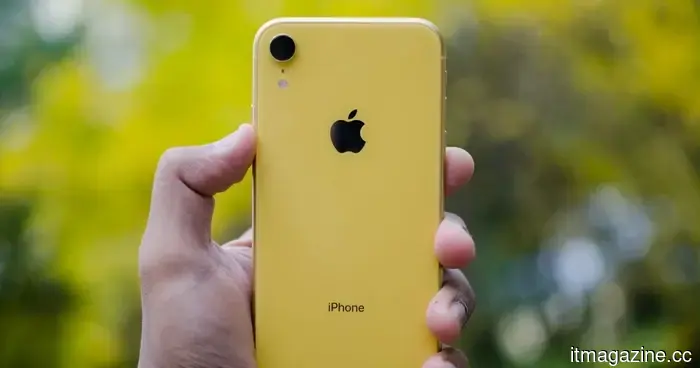 Apple should simply apply the Neo approach to its forthcoming iPhone 18e, and I'll be interested.
Apple ought to evolve the iPhone 18e into a vibrant, compact, personality-focused "Neo" device rather than producing yet another simplified variant of its flagship series.
Apple should simply apply the Neo approach to its forthcoming iPhone 18e, and I'll be interested.
Apple ought to evolve the iPhone 18e into a vibrant, compact, personality-focused "Neo" device rather than producing yet another simplified variant of its flagship series.
 After excelling in range and charging capabilities, Chinese EV brands showcase three-wheel driving features in their SUVs.
Chinese electric vehicle brands are making active suspension their next highlight for SUVs, with BYD, Aito, and Li Auto showcasing three-wheel driving demonstrations that may assist with tire changes, recovery, and traversing rough terrain.
After excelling in range and charging capabilities, Chinese EV brands showcase three-wheel driving features in their SUVs.
Chinese electric vehicle brands are making active suspension their next highlight for SUVs, with BYD, Aito, and Li Auto showcasing three-wheel driving demonstrations that may assist with tire changes, recovery, and traversing rough terrain.
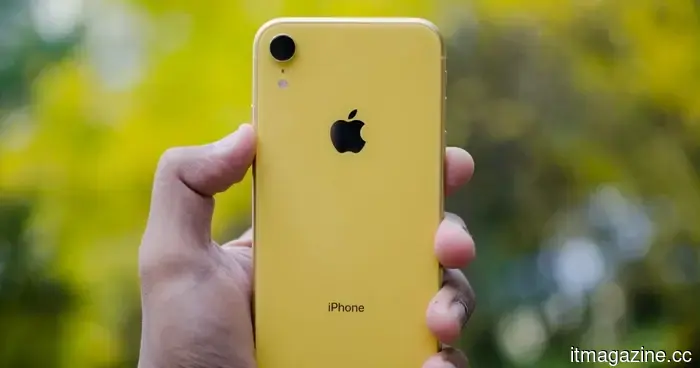 Apple should apply the Neo approach to its soon-to-be-released iPhone 18e, and I would definitely be interested.
Apple ought to reshape the iPhone 18e into a vibrant, compact, and personality-focused "Neo" device rather than producing yet another simplified version of its flagship series.
Apple should apply the Neo approach to its soon-to-be-released iPhone 18e, and I would definitely be interested.
Apple ought to reshape the iPhone 18e into a vibrant, compact, and personality-focused "Neo" device rather than producing yet another simplified version of its flagship series.
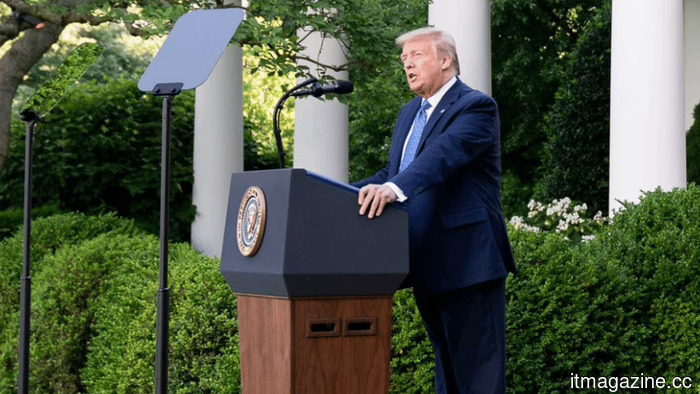 Trump departs from Beijing, indicating that he and Xi discussed AI regulations. No agreements were reached.
On Air Force One on Friday, Donald Trump stated that he and Xi Jinping talked about AI guardrails and Nvidia H200 chips during their meeting in Beijing. No agreement was reached, and the H200s for the ten approved Chinese buyers have not yet been delivered.
Trump departs from Beijing, indicating that he and Xi discussed AI regulations. No agreements were reached.
On Air Force One on Friday, Donald Trump stated that he and Xi Jinping talked about AI guardrails and Nvidia H200 chips during their meeting in Beijing. No agreement was reached, and the H200s for the ten approved Chinese buyers have not yet been delivered.
AI-driven cryptocurrency hacks siphon off $600 million from DeFi, with North Korea taking advantage of the increase.
In April, two hacks associated with North Korea-related groups resulted in the theft of $600 million from Drift Protocol and Kelp DAO. Analysts claim that AI played a role in speeding up the attacks. Aave experienced a $9 billion drop in deposits within just two days.