
The CMA has launched its fourth investigation into Microsoft's Strategic Market Status.
The UK’s Competition and Markets Authority (CMA) has initiated a Strategic Market Status investigation into Microsoft’s business software ecosystem, marking the fourth case under the digital markets framework that was established in January 2025. The scope of this case is broader than any previous ones and encompasses products such as Windows, Office (including Word, Excel, and more), Teams, the expanding Copilot capabilities, server operating systems, database management systems, and security software.
The CMA notes that Microsoft has over 15 million commercial users within this ecosystem in the UK, serving hundreds of thousands of businesses and public sector clients. The regulator's main inquiry is whether Microsoft leverages its dominant position to restrict customer choices, focusing on three key mechanisms: bundling, interoperability gaps, and default settings.
Notably, the CMA's previous cloud services investigation, which concluded in July 2025, found that Microsoft charged AWS and Google Cloud significantly higher wholesale prices for its software compared to charges for Azure customers for the same products. Although the inquiry team suggested SMS investigations for both Microsoft and AWS, the CMA Board later chose not to prioritize these, citing voluntary adjustments made by the companies regarding egress fees and interoperability terms. The current case brings Microsoft’s licensing issues back within the CMA's jurisdiction, but now through the business-software lens instead of the cloud perspective.
CMA chief executive Sarah Cardell emphasized the importance of business software to the UK economy, noting that it impacts everything from small enterprises to major public services and infrastructure. The SMS designation does not imply wrongdoing but instead enables the CMA to utilize various tools, such as conduct requirements and pro-competitive interventions, without the lengthy market-investigation process that was previously required.
The scope document explicitly includes considerations regarding AI integration. The CMA aims to determine if competing AI providers can connect with Microsoft's business software and whether the default settings for Copilot within Office and Teams prevent the use of alternative AI solutions. This issue has been under scrutiny in Brussels for the past eighteen months and will be addressed more procedurally under the EU AI Act. The CMA, in its typical fashion, pursues the SMS option first, followed by a public consultation.
The timeline for this investigation is relatively short by competition law standards. Comments are due by June 4, and the investigation must conclude within nine months, with a designation decision expected by February 2027. A public consultation will occur before the final decision. The CMA has indicated that it seeks input from challenger AI companies, business-software users, competitors in the security software space, and any organization that has attempted but failed to integrate Microsoft’s productivity tools with alternative solutions.
Microsoft’s official response will be made public in the coming month, and its recent assertions suggest a consistent defense. In previous statements regarding the cloud market inquiry, Microsoft contended that competition was functioning effectively and its licensing modifications had addressed the concerns raised by the regulator. This will likely be the stance it takes again, although the CMA is now operating under a different legal framework and has a broader focus, alongside a £1bn class action in the UK related to the same licensing issues, providing an evidentiary angle not previously available in 2024.
The eventual decision will coincide with the transition from the pilot phase to procurement of Copilot technologies within UK companies.
Other articles
 Jumia is reducing its workforce by an additional 10%. The focus is on AI, with profitability as the target.
Jumia is reducing its workforce by an additional 10%, attributing the decision to AI workflows. Since 2022, the company has eliminated over half of its employees. The deadline for achieving profitability in Q4 is approaching.
Jumia is reducing its workforce by an additional 10%. The focus is on AI, with profitability as the target.
Jumia is reducing its workforce by an additional 10%, attributing the decision to AI workflows. Since 2022, the company has eliminated over half of its employees. The deadline for achieving profitability in Q4 is approaching.
 Unitree GD01 robot revealed as the company prepares to file for a $7 billion IPO after surpassing Tesla in humanoid robot sales.
Unitree Robotics has introduced a $650,000 transformable mecha and is seeking to file for a $7 billion IPO. The Chinese firm delivered more humanoid robots than Tesla in 2025.
Unitree GD01 robot revealed as the company prepares to file for a $7 billion IPO after surpassing Tesla in humanoid robot sales.
Unitree Robotics has introduced a $650,000 transformable mecha and is seeking to file for a $7 billion IPO. The Chinese firm delivered more humanoid robots than Tesla in 2025.
 Meta and Google financially support the youth organizations they refer to when addressing regulators.
Meta and Google have established a network for advocating for children in the U.S. that they reference to regulators. The PTA withdrew in February. Reuters has the full list.
Meta and Google financially support the youth organizations they refer to when addressing regulators.
Meta and Google have established a network for advocating for children in the U.S. that they reference to regulators. The PTA withdrew in February. Reuters has the full list.
 Google may be working on a robust new Gemini AI model aimed at surpassing ChatGPT.
Google's upcoming Gemini model may close the AI gap, but the true challenge lies in its ability to capture developer routines, manage autonomous tasks, and make ChatGPT seem less robotic.
Google may be working on a robust new Gemini AI model aimed at surpassing ChatGPT.
Google's upcoming Gemini model may close the AI gap, but the true challenge lies in its ability to capture developer routines, manage autonomous tasks, and make ChatGPT seem less robotic.
 Reasons why global companies are shifting towards mass payouts with cryptocurrency.
Large-scale cryptocurrency payouts are transforming the global payment system. Discover how crypto payments to numerous recipients provide gig platforms with a scalable, quicker, and more dependable option compared to conventional payment methods.
Reasons why global companies are shifting towards mass payouts with cryptocurrency.
Large-scale cryptocurrency payouts are transforming the global payment system. Discover how crypto payments to numerous recipients provide gig platforms with a scalable, quicker, and more dependable option compared to conventional payment methods.
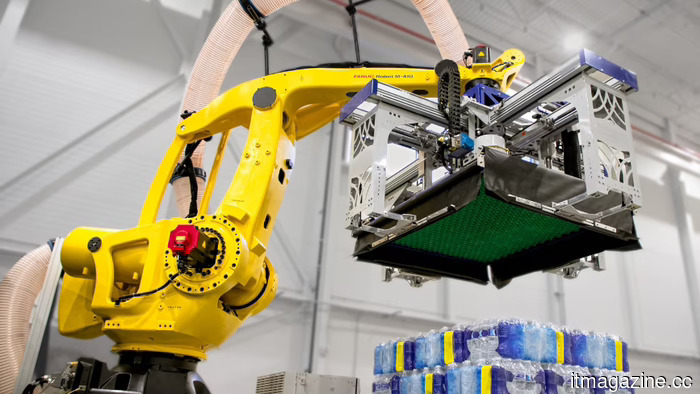 Fanuc collaborates with Google to introduce Gemini AI and the Intrinsic platform to 1.1 million industrial robots.
Fanuc's stock reached an all-time high following its collaboration with Google to merge Gemini Enterprise and the Intrinsic robotics platform into its industrial robotic systems globally.
Fanuc collaborates with Google to introduce Gemini AI and the Intrinsic platform to 1.1 million industrial robots.
Fanuc's stock reached an all-time high following its collaboration with Google to merge Gemini Enterprise and the Intrinsic robotics platform into its industrial robotic systems globally.
The CMA has launched its fourth investigation into Microsoft's Strategic Market Status.
The CMA has initiated its fourth Strategic Market Status investigation, focusing on Microsoft's business software, which encompasses cloud licensing and Copilot defaults.