

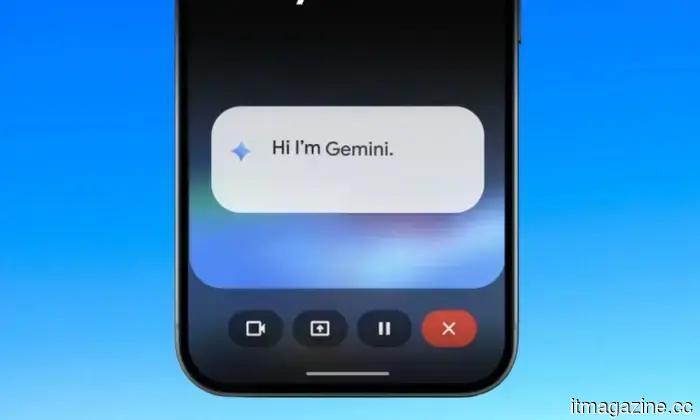
Google may be working on a robust new Gemini AI model aimed at surpassing ChatGPT.
Google is expected to unveil a new Gemini AI model at I/O on May 19, marking an aggressive timeline. Reports suggest that this release is anticipated to align with OpenAI's GPT-5.5 class, although it will still lag behind Anthropic's Mythos, which is currently influencing discussions around frontier models in the industry.
For Google, the challenging aspect isn't the quality of the model. While a robust model can generate buzz, developers typically don't change their workflows based solely on rankings. They are more likely to adopt tools that save time, simplify maintenance, and can perform effectively on real projects without adding extra management tasks.
Google has an advantageous opportunity as I/O is set for May 19 to 20. According to their developer preview, the event will focus on agentic coding and updates to the Gemini model. This positions the company’s AI goals right before an audience that will likely be critical of them.
Will Gemini attract developers again?
Coding is where the pressure lies. Google is entering a space where developers can quickly assess whether a model is truly beneficial or just polished for presentations.
This skepticism is important in coding since AI has already moved from being a novelty to becoming an integral part of daily operations. Gemini needs to demonstrate that it is faster, more dependable, and genuinely useful in real projects. Developers are unlikely to switch simply because Google claims the model is improved; they will migrate when the effort required for cleanup decreases.
Can agents function effectively in real-world tasks?
Google has already set a foundation for agents. At Cloud Next, it launched the Gemini Enterprise Agent Platform, which focuses on building, scaling, governing, and optimizing agents, integrating orchestration, identity management, observability, and security features into the system.
This is a significant initiative and enhances Google's credibility beyond a mere assortment of AI demonstrations. However, agent demonstrations can be produced easily today. The real challenge lies in handling complex tasks, poor input, vague objectives, and situations where the model must adapt without constant oversight.
Will ChatGPT feel less automatic than before?
Google's main challenge is achieving natural behavior. Developers, power users, and ordinary subscribers have already established AI routines, and Gemini must effectively disrupt these habits with clear benefits.
Currently, ChatGPT and Claude occupy a convenient spot in the minds of many AI users, while Google continues to strive to make Gemini essential. The model can only succeed if it becomes the primary choice for coding, research, and agentic work.
Google has one critical task at I/O: to present a Gemini that saves time, produces valuable code, and conducts agentic duties with minimal supervision. Anything less would simply add to the pool of respectable models in a market that is already saturated.
Other articles
 Research reveals that EV batteries only require a little AI enhancement to receive a significant 23% increase in their lifespan.
Researchers have created a charging system powered by AI that accelerates the charging of electric vehicles while simultaneously safeguarding battery health, which could lead to an increase in battery life of almost 23%.
Research reveals that EV batteries only require a little AI enhancement to receive a significant 23% increase in their lifespan.
Researchers have created a charging system powered by AI that accelerates the charging of electric vehicles while simultaneously safeguarding battery health, which could lead to an increase in battery life of almost 23%.
 Research shows that EV batteries can receive a significant 23% increase in lifespan with just a little encouragement from AI.
Researchers have created an AI-driven charging system that accelerates electric vehicle charging while simultaneously safeguarding battery health, potentially increasing battery lifespan by almost 23%.
Research shows that EV batteries can receive a significant 23% increase in lifespan with just a little encouragement from AI.
Researchers have created an AI-driven charging system that accelerates electric vehicle charging while simultaneously safeguarding battery health, potentially increasing battery lifespan by almost 23%.
 Tarot card readers are incorporating ChatGPT into their divination practices, and I am completely taken aback by this shift towards AI.
Tarot card readers are utilizing ChatGPT to interpret their spreads, illustrating the transition of AI from aspects of productivity to areas involving grief, faith, and the search for meaning, where assured responses can diminish human uncertainty.
Tarot card readers are incorporating ChatGPT into their divination practices, and I am completely taken aback by this shift towards AI.
Tarot card readers are utilizing ChatGPT to interpret their spreads, illustrating the transition of AI from aspects of productivity to areas involving grief, faith, and the search for meaning, where assured responses can diminish human uncertainty.
 Microsoft introduces tab intelligence to the Edge browser, and I genuinely hope Apple incorporates it into Safari.
Microsoft has enhanced Edge by allowing Copilot to reason across all of your open tabs. This feature is truly beneficial, and it makes me hope that Apple will introduce something similar for Safari.
Microsoft introduces tab intelligence to the Edge browser, and I genuinely hope Apple incorporates it into Safari.
Microsoft has enhanced Edge by allowing Copilot to reason across all of your open tabs. This feature is truly beneficial, and it makes me hope that Apple will introduce something similar for Safari.
 I tried out the AI Image to Video 2.0 feature on the Honor 600 Pro, and it exceeded my expectations.
Honor's AI Image to Video 2.0 represents a considerable improvement compared to the version that debuted with the 400 series last year. I experimented with the templates and tested custom prompts, and here's what you should be aware of.
I tried out the AI Image to Video 2.0 feature on the Honor 600 Pro, and it exceeded my expectations.
Honor's AI Image to Video 2.0 represents a considerable improvement compared to the version that debuted with the 400 series last year. I experimented with the templates and tested custom prompts, and here's what you should be aware of.
 More advertisements are being introduced on Netflix, even though there are already 250 million subscribers paying to watch content that includes ads.
Netflix's ad-supported plan now attracts 250 million active viewers each month. If you're subscribed to the lower-cost option, your experience with ads on Netflix is set to change in some notable ways.
More advertisements are being introduced on Netflix, even though there are already 250 million subscribers paying to watch content that includes ads.
Netflix's ad-supported plan now attracts 250 million active viewers each month. If you're subscribed to the lower-cost option, your experience with ads on Netflix is set to change in some notable ways.
Google may be working on a robust new Gemini AI model aimed at surpassing ChatGPT.
Google's upcoming Gemini model may close the AI gap, but the true challenge lies in its ability to capture developer routines, manage autonomous tasks, and make ChatGPT seem less robotic.