

Jumia is reducing its workforce by an additional 10%. The focus is on AI, with profitability as the target.
Francis Dufay informed Bloomberg TV that the African e-commerce firm is integrating AI into its operations, logistics, finance, and marketing, aiming for profitability by the end of the year. The current job cuts of 200 come on top of a workforce that has already decreased by more than half since 2022.
Jumia Technologies is set to reduce around 200 positions, approximately 10% of its current workforce of 2,000, as it strives to achieve profitability by the end of 2026. CEO Francis Dufay mentioned to Bloomberg TV that the company is now employing AI-driven processes across various sectors including operations, logistics, finance, and marketing.
This narrative mirrors the one utilized by major tech firms over the past year, though the underlying calculations are older. Jumia employed 4,318 people at the close of 2022, and currently has just under 2,000, marking a workforce reduction of roughly 54% over four years. The round of cuts in November 2025 accounted for 7%, while the current round adds another 10%.
The latest developments in the EU tech landscape include insights from our founder Boris and some dubious AI-generated art. Subscribe for free weekly updates straight to your inbox! Over recent years, the company has also exited South Africa and Tunisia, lost Baillie Gifford as its largest external investor, and witnessed Rocket Internet, the German firm that helped incubate Jumia in 2012, divest its remaining stake. As of December 2025, the total losses have reached $2.2 billion. The rationale behind this restructuring is tied to AI, though the restructuring itself predates this explanation.
The Q1 figures illuminate the rationale for the timing. Jumia reported $50.6 million in revenue for the quarter, representing a 39% increase year over year, gross merchandise value rose by 31% to $211.2 million, and the adjusted EBITDA loss narrowed by 32% to $10.7 million.
In Nigeria, Jumia’s largest market, physical goods GMV rose by 42%, while Kenya saw growth of nearly 50%. Dufay has reiterated guidance for adjusted EBITDA breakeven and positive cash flow in the fourth quarter, with an aim for full-year profitability in 2027. The announced job cuts aim to bridge the gap between Q1 performance and Q4 projections.
According to the company's description, the application of AI is mainly in back office operations and call centers. Customer service is the first area noted for automation; marketing operations and logistics query management follow. General and administrative costs fell 7% to $17.6 million in Q3 2025 due to such workflows, which the current job cuts are intended to further optimize. Essentially, the expectation is that Jumia can maintain its existing platform with 1,800 employees instead of 2,000, with the additional automation covering its own costs before customers take notice.
Over the last eighteen months, the tech workforce in Africa has been adjusting to AI-driven restructuring at a pace similar to that in the US. In mid-2025, Flutterwave laid off roughly half of its staff in Kenya and South Africa in advance of a potential IPO. Similarly, Sabi reduced its workforce by 20% and shifted focus to commodities, while MAX, the Nigerian mobility-financing startup, started 2025 by laying off 30% of its employees. Jumia's job reductions of 7% in November and 10% now fit into this trend, which is part of the larger wave of tech layoffs in 2026 that has surpassed 100,000 global jobs.
The question of whether AI is a genuine cause or merely a pretext has been posed to the global sector for a year. Last month, Mark Zuckerberg informed Meta employees that the company's layoffs were more about capital expenditure than productivity gains from AI, reflecting a candid acknowledgment that the AI narrative has become the simplest justification for layoffs.
Although Jumia is smaller and has less incentive to adopt this narrative, the pattern remains consistent: AI is being implemented as the technology; the job cuts are part of the strategy; and the marketing language is what gets highlighted.
For the African tech workforce, a crucial question is whether the AI productivity narrative holds true at Jumia's scale. The continent lacks the GPU resources, model expertise, or budget for inference that Big Tech leverages to substantiate such claims.
Swapping out a Lagos call center position for an LLM is less expensive and involves a shorter distance than replacing a Menlo Park engineer with a coding agent, which is why it is prioritized, leading to differing social implications.
The key metric to observe is the Q4 EBITDA results. If Jumia achieves its target, the AI narrative will become the primary explanation by default. Conversely, if it fails to meet expectations, this framing will merely be one of several insufficient explanations based on the evidence.
Other articles
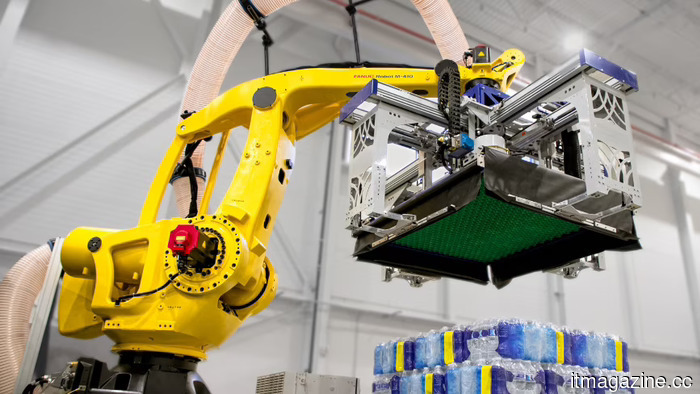 Fanuc collaborates with Google to integrate Gemini AI and the Intrinsic platform into 1.1 million industrial robots.
Fanuc stocks reached an all-time high following its collaboration with Google to incorporate Gemini Enterprise and the Intrinsic robotics platform into its global industrial robot systems.
Fanuc collaborates with Google to integrate Gemini AI and the Intrinsic platform into 1.1 million industrial robots.
Fanuc stocks reached an all-time high following its collaboration with Google to incorporate Gemini Enterprise and the Intrinsic robotics platform into its global industrial robot systems.
 How Coinspaid emerged as one of the leading remote-first employers in Fintech.
Coinspaid developed a remote-first fintech culture centered around ownership, flexibility, learning, and fostering long-term employee growth within its global teams.
How Coinspaid emerged as one of the leading remote-first employers in Fintech.
Coinspaid developed a remote-first fintech culture centered around ownership, flexibility, learning, and fostering long-term employee growth within its global teams.
 Jumia is reducing its workforce by an additional 10%. The context is centered around AI, while the aim is to achieve profitability by the set deadline.
Jumia is reducing its workforce by an additional 10%, attributing the decision to AI workflows. Since 2022, the company has eliminated over half of its employees. The deadline for achieving profitability in Q4 is approaching.
Jumia is reducing its workforce by an additional 10%. The context is centered around AI, while the aim is to achieve profitability by the set deadline.
Jumia is reducing its workforce by an additional 10%, attributing the decision to AI workflows. Since 2022, the company has eliminated over half of its employees. The deadline for achieving profitability in Q4 is approaching.
 How Coinspaid emerged as one of the leading remote-first employers in Fintech
Coinspaid established a remote-first fintech culture that emphasizes ownership, flexibility, learning, and the long-term development of employees within its global teams.
How Coinspaid emerged as one of the leading remote-first employers in Fintech
Coinspaid established a remote-first fintech culture that emphasizes ownership, flexibility, learning, and the long-term development of employees within its global teams.
 Android applications are now capable of monitoring your habits and location to provide task recommendations.
Your Android device has been subtly monitoring your Saturday activities, gym routine, and streaming preferences, and it has already determined what recommendations to make next.
Android applications are now capable of monitoring your habits and location to provide task recommendations.
Your Android device has been subtly monitoring your Saturday activities, gym routine, and streaming preferences, and it has already determined what recommendations to make next.
 The six biggest banks on Wall Street eliminated 15,000 positions and reported profits of $47 billion. The CEOs ceased their pretenses.
In the first quarter of 2026, the six largest banks in the US cut 15,000 jobs while reporting profits of $47 billion. Their CEOs specifically attributed the job losses to the impact of AI. JPMorgan, Citi, Goldman Sachs, Bank of America, and Wells Fargo are now revealing...
The six biggest banks on Wall Street eliminated 15,000 positions and reported profits of $47 billion. The CEOs ceased their pretenses.
In the first quarter of 2026, the six largest banks in the US cut 15,000 jobs while reporting profits of $47 billion. Their CEOs specifically attributed the job losses to the impact of AI. JPMorgan, Citi, Goldman Sachs, Bank of America, and Wells Fargo are now revealing...
Jumia is reducing its workforce by an additional 10%. The focus is on AI, with profitability as the target.
Jumia is reducing its workforce by an additional 10%, attributing the decision to AI workflows. Since 2022, the company has eliminated over half of its employees. The deadline for achieving profitability in Q4 is approaching.