
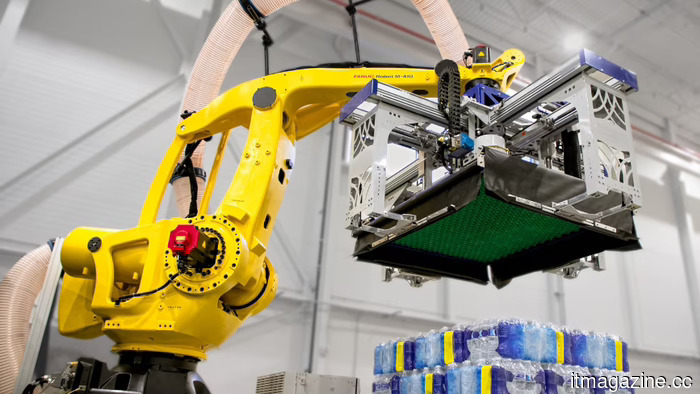
Fanuc collaborates with Google to introduce Gemini AI and the Intrinsic platform to 1.1 million industrial robots.
TL;DR: Fanuc, the largest industrial robot manufacturer globally with 1.1 million installed robots, is incorporating Google Cloud’s Gemini Enterprise and Google’s Intrinsic robotics platform into its systems, mirroring Google’s Android strategy for factory robots, which has led to a spike in Fanuc's stock to a new all-time high.
Fanuc dominates the industrial robot market, while Google excels in software platforms. On Wednesday, the two companies announced a collaboration that combines their strengths: Fanuc will integrate Google Cloud’s Gemini Enterprise and Google’s Intrinsic robotics platform into its industrial robots, enabling the existing 1.1 million Fanuc robots in factories worldwide to comprehend human commands, identify objects, and operate autonomously. This news propelled Fanuc's shares up by 16 percent to an intraday high of 8,880 yen, as the market quickly recognized the implications.
This collaboration positions Google similarly to how Android revolutionized mobile devices for factory robots.
The Android strategy
In February 2026, Google transitioned its robotics software subsidiary, Intrinsic, from the experimental Other Bets division into its core business. This was a strategic move rather than merely administrative. Intrinsic had spent years developing Flowstate, a web-based platform that enables manufacturers to create robotic applications without extensive coding. It manages motion planning, integrates machine learning, and orchestrates tasks across various manufacturers’ hardware, allowing flexibility in swapping components while using the same Intrinsic-powered software.
The analogy is fitting: Android does not manufacture phones but supplies the operating system that works across hardware from various manufacturers, granting Google access to a vast user base without producing hardware. Similarly, Intrinsic does not create robots but provides the intelligence layer used by diverse hardware, giving Google a foothold in numerous industrial machines without needing to fabricate any of them.
The Fanuc partnership is akin to Samsung's pivotal role in the Android ecosystem. Although Samsung wasn't the first to partner with Android, its considerable scale and market share demonstrated Android's potential dominance. Fanuc controls approximately 16 to 18 percent of global robot shipments and claims an estimated 50 to 60 percent of the global CNC market, having installed over 1.1 million robots in industries from automotive to pharmaceuticals. When the leading robot manufacturer adopts your software, it prompts the rest of the industry to reassess.
The partnership
The technical specifics are crucial. Fanuc will utilize Google Cloud’s Gemini Enterprise, the same generative AI platform supporting eight million paid enterprise licenses across 2,800 companies, to develop industrial robot systems capable of processing natural language instructions, identifying and classifying objects within unstructured environments, and autonomously managing multiple collaborative robots. Fanuc will also ensure full compatibility with Intrinsic’s Flowstate development environment, allowing developers to program its robots through a visual, web-based interface instead of proprietary code.
Fanuc has already delivered over 1,000 robots with physical AI capabilities since showcasing the technology at the International Robot Exhibition in Tokyo last December, and reported increasing demand. The company aims to reveal an AI agent system for industrial robots later this month, where both collaborative and non-collaborative robots will function together using natural language commands. The partnership with Google provides the foundational model layer that Fanuc's existing physical AI technology lacked.
Accenture has invested in General Robotics, which utilizes its GRID platform to implement AI capabilities across more than 40 robots from various manufacturers, including Fanuc, indicating that consulting firms are already developing businesses around multi-vendor physical AI orchestration. Google’s involvement alters the financial landscape; Intrinsic is not just a startup looking for funding but is backed by a company valued at 4.6 trillion dollars with 70 billion dollars in annual cloud revenue and the most widely used generative AI models in enterprise computing.
The company
Fanuc originated from a division of Fujitsu in 1956 and became an independent entity in 1972. It's based in Oshino, near Mount Fuji in Yamanashi Prefecture, where its campus is set in a wooded area and painted entirely in the company’s signature yellow. By 1982, Fanuc captured half of the global CNC market and has maintained that lead ever since. The company produces three main products: CNC systems that manage machine tools, industrial robots for factory operations, and robomachines that merge both functions, all made more efficiently and in greater numbers than any competitor.
Fanuc recorded its highest sales of 857 billion yen (approximately 5.7 billion dollars) in fiscal 2025, achieving an operating margin of 21.4 percent. While robot sales fell by 16 percent during this period due to reduced demand in China, Europe, and the Americas—especially in the automotive sector—the announcement regarding physical AI along with the partnership with Google indicates that Fanuc anticipates future growth not through selling more robots but by enhancing the performance of its already existing ones.
Nvidia’s GTC 2026 kicked off with 30,000 attendees and announcements that
Other articles
 It's not possible to block Meta's AI bot on Threads. I'm unsure what we did to warrant this situation.
Threads users are enraged upon realizing that Meta's new AI chatbot cannot be blocked like other accounts on the platform.
It's not possible to block Meta's AI bot on Threads. I'm unsure what we did to warrant this situation.
Threads users are enraged upon realizing that Meta's new AI chatbot cannot be blocked like other accounts on the platform.
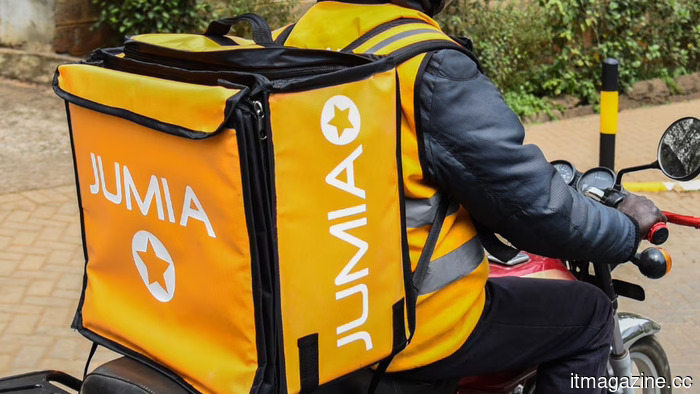 Jumia is reducing its workforce by an additional 10%. The context is centered around AI, while the aim is to achieve profitability by the set deadline.
Jumia is reducing its workforce by an additional 10%, attributing the decision to AI workflows. Since 2022, the company has eliminated over half of its employees. The deadline for achieving profitability in Q4 is approaching.
Jumia is reducing its workforce by an additional 10%. The context is centered around AI, while the aim is to achieve profitability by the set deadline.
Jumia is reducing its workforce by an additional 10%, attributing the decision to AI workflows. Since 2022, the company has eliminated over half of its employees. The deadline for achieving profitability in Q4 is approaching.
 Samsung's AI smart glasses are expected to launch in July, and they may be called Galaxy Glasses.
Samsung might unveil the Galaxy Glasses at the Unpacked event in July, integrating Android XR and Gemini with cameras, microphones, and speakers to create a voice-first AI wearable connected to the Galaxy ecosystem.
Samsung's AI smart glasses are expected to launch in July, and they may be called Galaxy Glasses.
Samsung might unveil the Galaxy Glasses at the Unpacked event in July, integrating Android XR and Gemini with cameras, microphones, and speakers to create a voice-first AI wearable connected to the Galaxy ecosystem.
 Android applications are now capable of monitoring your habits and location to provide task recommendations.
Your Android device has been subtly monitoring your Saturday activities, gym routine, and streaming preferences, and it has already determined what recommendations to make next.
Android applications are now capable of monitoring your habits and location to provide task recommendations.
Your Android device has been subtly monitoring your Saturday activities, gym routine, and streaming preferences, and it has already determined what recommendations to make next.
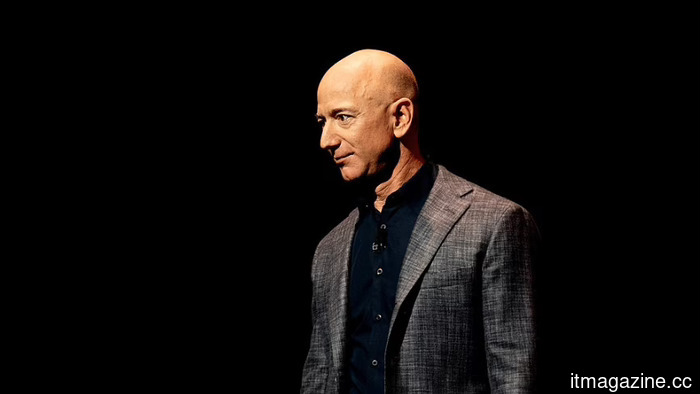 After 25 years of personally signing the checks, Bezos is now allowing outside investors into Blue Origin.
Blue Origin is getting ready to accept external funding for the first time in its 25-year existence, just three weeks ahead of SpaceX's $1.75 trillion IPO pricing.
After 25 years of personally signing the checks, Bezos is now allowing outside investors into Blue Origin.
Blue Origin is getting ready to accept external funding for the first time in its 25-year existence, just three weeks ahead of SpaceX's $1.75 trillion IPO pricing.
 The six largest banks on Wall Street eliminated 15,000 positions and reported $47 billion in profits. The CEOs ceased their pretense.
In the first quarter of 2026, the six largest banks in the U.S. eliminated 15,000 positions while earning $47 billion in profits. The CEOs acknowledged that AI played a significant role in these job cuts. JPMorgan, Citi, Goldman Sachs, Bank of America, and Wells Fargo are now sharing this information.
The six largest banks on Wall Street eliminated 15,000 positions and reported $47 billion in profits. The CEOs ceased their pretense.
In the first quarter of 2026, the six largest banks in the U.S. eliminated 15,000 positions while earning $47 billion in profits. The CEOs acknowledged that AI played a significant role in these job cuts. JPMorgan, Citi, Goldman Sachs, Bank of America, and Wells Fargo are now sharing this information.
Fanuc collaborates with Google to introduce Gemini AI and the Intrinsic platform to 1.1 million industrial robots.
Fanuc's stock reached an all-time high following its collaboration with Google to merge Gemini Enterprise and the Intrinsic robotics platform into its industrial robotic systems globally.