
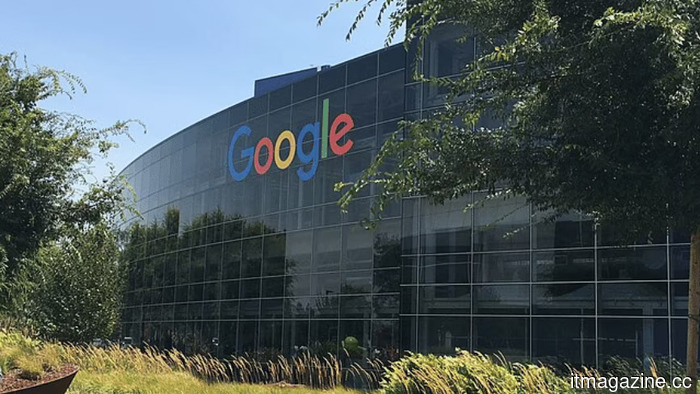
Meta and Google financially support the youth organizations they refer to when addressing regulators.
An eight-month investigation, a $6 million landmark verdict, and a National PTA that has now ended its sponsorship with Meta. The distinction between unbiased expert and corporate advocate appears, based on the evidence, to be a budget consideration.
Meta and Google have invested years in financing a network of parent and child-safety organizations in the U.S. that repeatedly act as third-party endorsements when these companies require an independent voice for regulators.
Reuters reported on this practice on Thursday, following up on an investigation initiated by the Tech Transparency Project in August. The National PTA seemed to confirm this in February when it terminated a 15-year partnership with Meta and opted not to renew it for 2026.
The list of affiliations is extensive. Meta has been a corporate sponsor for the National PTA, the Family Online Safety Institute (where it has a board position), ConnectSafely, and PROJECT ROCKIT in Australia for a long time.
It also operates a research and publication division named Trust, Transparency & Control Labs, which produces reports on the design of its kid-oriented products. Meta sometimes references this unit in submissions to regulators in Ireland and Australia as if it functioned independently.
Google, through YouTube, supports a similar array of organizations, including FOSI, ConnectSafely, and the National PTA, and funds curricula found in school digital literacy programs.
The mechanism is quite simple: when Meta or Google introduces a teen-safety feature, a friendly nonprofit provides a positive statement for the announcement. The companies then use this statement in their regulatory filings and congressional testimony to demonstrate expert validation. Although funding is genuine, it often goes undisclosed in the announcements.
This pattern has been noted across various initiatives like Instagram Teen Accounts in September 2024, the 2023 expansion of Horizon Worlds for teens, and the Messenger Kids launch in 2017.
Some figures are significant. Meta has been a National PTA national sponsor since at least 2010, when it entered into an in-kind partnership valued at $1 million; however, the PTA does not share the total amount of Meta funding.
ConnectSafely receives a payment as a member of Meta’s Safety Advisory Council. PROJECT ROCKIT in Australia has been awarded at least $1 million for anti-bullying projects and additional six-figure payments for consultations on the metaverse.
The Family Online Safety Institute operates as a paid-membership organization, where the platform companies represented on its board are also its financial backers, a situation that requires no embellishment.
The most significant change is the PTA’s departure. In February, following disclosures during the Los Angeles bellwether trial regarding Meta’s internal research on Instagram and adolescent mental health, the PTA president informed members that the organization would not seek renewal funding from Meta.
The trial concluded in March with a $6 million verdict, marking the first of around 2,000 consolidated cases. The two companies are planning to appeal. After fifteen years of accepting Meta's funding, the PTA viewed the verdict as a signal to discontinue their partnership.
Meta’s argument, when provided, is that funding is disclosed on the groups' own websites and on its Family Center page. While this is accurate, it is equally true that the announcements quoting these organizations do not include this disclosure, that the disclosure pages are not consulted by regulators referencing the quotes, and that TTC Labs has, in formal regulatory submissions, been characterized in a way that implies independence rather than ownership.
Whether this constitutes legal misrepresentation is a matter for attorneys to determine. The conversational interpretation is self-evident.
Procedurally, what changes from here? The bipartisan Kids Online Safety Act and several age-verification bills at the state level are advancing through the U.S. legislative process, and the ecosystem of funded advocates is the visible component of the lobbying effort opposing them.
The assertion that funding a child-safety organization is distinct from purchasing its stance holds some validity. It is not inherently wrong but not infallibly right, and the imbalance has become public enough that it has cost the two companies their most prominent nonprofit ally.
The intriguing question now is whether the other organizations on the list will follow suit.
Other articles
 How Coinspaid emerged as one of the leading remote-first employers in Fintech
Coinspaid established a remote-first fintech culture that emphasizes ownership, flexibility, learning, and the long-term development of employees within its global teams.
How Coinspaid emerged as one of the leading remote-first employers in Fintech
Coinspaid established a remote-first fintech culture that emphasizes ownership, flexibility, learning, and the long-term development of employees within its global teams.
 Reasons why global companies are shifting towards mass payouts with cryptocurrency.
Large-scale cryptocurrency payouts are transforming the global payment system. Discover how crypto payments to numerous recipients provide gig platforms with a scalable, quicker, and more dependable option compared to conventional payment methods.
Reasons why global companies are shifting towards mass payouts with cryptocurrency.
Large-scale cryptocurrency payouts are transforming the global payment system. Discover how crypto payments to numerous recipients provide gig platforms with a scalable, quicker, and more dependable option compared to conventional payment methods.
 Reasons why international companies are transitioning to cryptocurrency for mass payments.
Large-scale cryptocurrency payouts are transforming the global payment system. Discover how crypto payouts to various recipients provide gig platforms with a scalable, quicker, and more dependable option compared to conventional payment methods.
Reasons why international companies are transitioning to cryptocurrency for mass payments.
Large-scale cryptocurrency payouts are transforming the global payment system. Discover how crypto payouts to various recipients provide gig platforms with a scalable, quicker, and more dependable option compared to conventional payment methods.
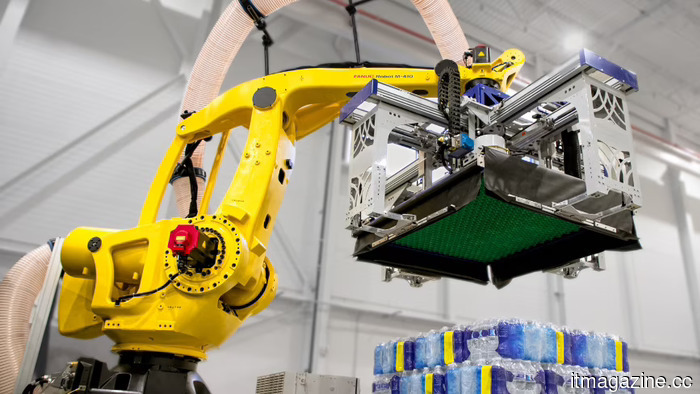 Fanuc collaborates with Google to integrate Gemini AI and the Intrinsic platform into 1.1 million industrial robots.
Fanuc's stock reached an all-time high following its collaboration with Google to incorporate Gemini Enterprise and the Intrinsic robotics platform into its global industrial robot systems.
Fanuc collaborates with Google to integrate Gemini AI and the Intrinsic platform into 1.1 million industrial robots.
Fanuc's stock reached an all-time high following its collaboration with Google to incorporate Gemini Enterprise and the Intrinsic robotics platform into its global industrial robot systems.
 Microsoft introduces tab intelligence to the Edge browser, and I genuinely hope Apple incorporates it into Safari.
Microsoft has enhanced Edge by allowing Copilot to reason across all of your open tabs. This feature is truly beneficial, and it makes me hope that Apple will introduce something similar for Safari.
Microsoft introduces tab intelligence to the Edge browser, and I genuinely hope Apple incorporates it into Safari.
Microsoft has enhanced Edge by allowing Copilot to reason across all of your open tabs. This feature is truly beneficial, and it makes me hope that Apple will introduce something similar for Safari.
 Google may be working on a robust new Gemini AI model aimed at surpassing ChatGPT.
Google's upcoming Gemini model may close the AI gap, but the true challenge lies in its ability to capture developer routines, manage autonomous tasks, and make ChatGPT seem less robotic.
Google may be working on a robust new Gemini AI model aimed at surpassing ChatGPT.
Google's upcoming Gemini model may close the AI gap, but the true challenge lies in its ability to capture developer routines, manage autonomous tasks, and make ChatGPT seem less robotic.
Meta and Google financially support the youth organizations they refer to when addressing regulators.
Meta and Google have established a network for advocating for children in the U.S. that they reference to regulators. The PTA withdrew in February. Reuters has the full list.