
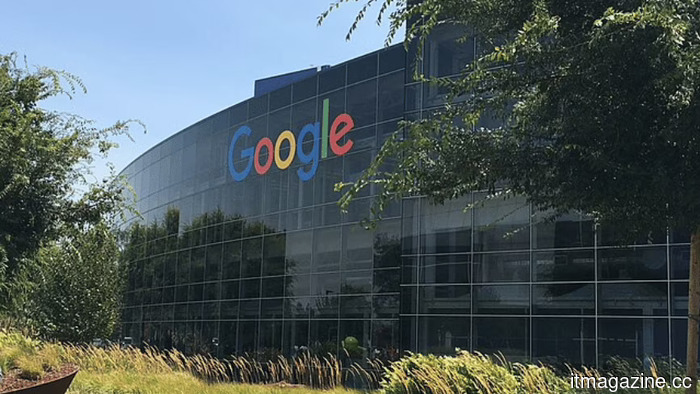
Meta and Google support the children's organizations they reference to regulators.
An eight-month investigation, a $6 million landmark verdict, and a National PTA that has now terminated its sponsorship with Meta. The distinction between an independent expert and a corporate spokesperson appears to be a budget consideration based on the evidence.
Meta and Google have invested years in financially supporting a network of U.S. parent and child-safety organizations that frequently emerge as third-party supporters when the two companies require an independent voice for regulators.
On Thursday, Reuters reported on this practice, picking up on an investigative lead initiated by the Tech Transparency Project in August and which the National PTA seemingly confirmed in February when it ended its 15-year corporate partnership with Meta and decided not to renew it for 2026.
The list of these organizations is extensive. Meta has been a long-term corporate sponsor of the National PTA, the Family Online Safety Institute (where it holds a board position), ConnectSafely, and PROJECT ROCKIT in Australia.
Meta also operates a research and publication division called Trust, Transparency & Control Labs, which releases reports on the design of Meta’s own child-focused products and has sometimes been referred to as a distinct entity in submissions to regulators in Ireland and Australia.
Google, via YouTube, finances a similar set of groups, including FOSI, ConnectSafely, and the National PTA, while also supporting curricula that appear in school digital literacy programs.
The mechanism behind this process is simple. When Meta or Google introduces a feature aimed at teen safety, a friendly nonprofit provides a positive quote for the announcement. The companies then cite this quote in regulatory filings and congressional testimonies as evidence of expert support. While the funding is real, it is not disclosed in the announcements.
This pattern is observable across various initiatives, such as Instagram Teen Accounts in September 2024, the expansion of Horizon Worlds for teens in 2023, and the launch of Messenger Kids in 2017.
Certain proportions are significant. Meta has been a national sponsor of the National PTA since at least 2010, committing to an in-kind partnership valued at $1 million; however, the PTA refrains from disclosing the total funding from Meta.
ConnectSafely receives an honorarium for its participation in Meta’s Safety Advisory Council. PROJECT ROCKIT in Australia has received at least $1 million for anti-bullying initiatives and six-figure amounts for consultations on the metaverse.
The Family Online Safety Institute operates as a paid-membership organization, where the platform companies on its board also function as its funding sources, a structure that requires no euphemism.
The most significant shift is the PTA’s decision. In February, following revelations from the Los Angeles bellwether trial regarding Meta’s internal research on Instagram and adolescent mental health, the PTA president informed members that the organization would not seek further funding from Meta.
The trial wrapped up in March with a $6 million verdict, the first of approximately 2,000 consolidated cases, and both companies intend to appeal. After receiving Meta’s financial support for fifteen years, the PTA used the verdict as a signal to step back.
Meta’s defense, when presented, is that the funding is disclosed on the organizations’ own websites and Meta’s Family Center page. While this is accurate, it is also true that the announcements quoting these groups do not include such disclosures; the disclosure pages are seldom reviewed by the regulators referencing the quotes, and that TTC Labs has particularly been described in regulatory submissions in a manner that suggests independence rather than ownership.
Whether this equates to legal misrepresentation is a matter for lawyers. However, the layman’s interpretation is clear.
What will change moving forward is procedural. The bipartisan Kids Online Safety Act and several state-level age-verification bills are progressing through the U.S. legislative framework, and the ecosystem of funded advocates is a visible segment of the lobbying force opposing them.
The claim that financing a child-safety organization is not tantamount to buying its stance is credible. It is not inherently wrong, but it is not always correct either. The degree of asymmetry has now become public enough that it has caused the two companies to lose their most prominent nonprofit association.
The intriguing question remains whether the remaining organizations on the list will follow suit.
Other articles
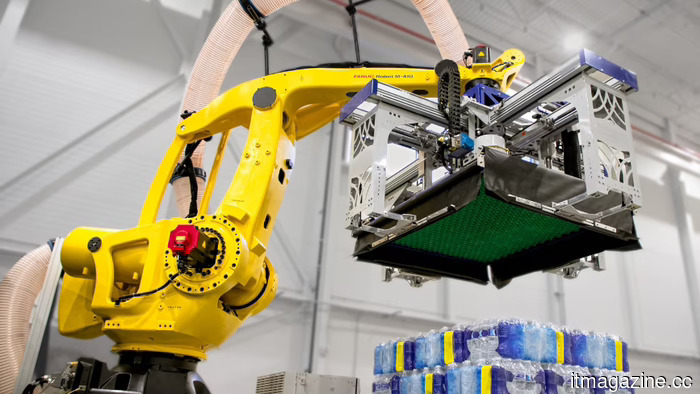 Fanuc collaborates with Google to introduce Gemini AI and the Intrinsic platform to 1.1 million industrial robots.
Fanuc's stock reached an all-time high following its collaboration with Google to merge Gemini Enterprise and the Intrinsic robotics platform into its industrial robotic systems globally.
Fanuc collaborates with Google to introduce Gemini AI and the Intrinsic platform to 1.1 million industrial robots.
Fanuc's stock reached an all-time high following its collaboration with Google to merge Gemini Enterprise and the Intrinsic robotics platform into its industrial robotic systems globally.
 The six largest banks on Wall Street eliminated 15,000 positions and reported $47 billion in profits. The CEOs ceased their pretense.
In the first quarter of 2026, the six largest banks in the U.S. eliminated 15,000 positions while earning $47 billion in profits. The CEOs acknowledged that AI played a significant role in these job cuts. JPMorgan, Citi, Goldman Sachs, Bank of America, and Wells Fargo are now sharing this information.
The six largest banks on Wall Street eliminated 15,000 positions and reported $47 billion in profits. The CEOs ceased their pretense.
In the first quarter of 2026, the six largest banks in the U.S. eliminated 15,000 positions while earning $47 billion in profits. The CEOs acknowledged that AI played a significant role in these job cuts. JPMorgan, Citi, Goldman Sachs, Bank of America, and Wells Fargo are now sharing this information.
 More advertisements are being introduced on Netflix, even though there are already 250 million subscribers paying to watch content that includes ads.
Netflix's ad-supported plan now attracts 250 million active viewers each month. If you're subscribed to the lower-cost option, your experience with ads on Netflix is set to change in some notable ways.
More advertisements are being introduced on Netflix, even though there are already 250 million subscribers paying to watch content that includes ads.
Netflix's ad-supported plan now attracts 250 million active viewers each month. If you're subscribed to the lower-cost option, your experience with ads on Netflix is set to change in some notable ways.
 The six biggest banks on Wall Street eliminated 15,000 positions and reported profits of $47 billion. The CEOs ceased their pretenses.
In the first quarter of 2026, the six largest banks in the US cut 15,000 jobs while reporting profits of $47 billion. Their CEOs specifically attributed the job losses to the impact of AI. JPMorgan, Citi, Goldman Sachs, Bank of America, and Wells Fargo are now revealing...
The six biggest banks on Wall Street eliminated 15,000 positions and reported profits of $47 billion. The CEOs ceased their pretenses.
In the first quarter of 2026, the six largest banks in the US cut 15,000 jobs while reporting profits of $47 billion. Their CEOs specifically attributed the job losses to the impact of AI. JPMorgan, Citi, Goldman Sachs, Bank of America, and Wells Fargo are now revealing...
 If you drop the Steam Controller, it will make a loud noise, and I’m unsure how to react to that.
Valve included a humorous Easter egg in the new Steam Controller, leading many to abandon their sold-out $99 controllers just to activate the famous Wilhelm scream.
If you drop the Steam Controller, it will make a loud noise, and I’m unsure how to react to that.
Valve included a humorous Easter egg in the new Steam Controller, leading many to abandon their sold-out $99 controllers just to activate the famous Wilhelm scream.
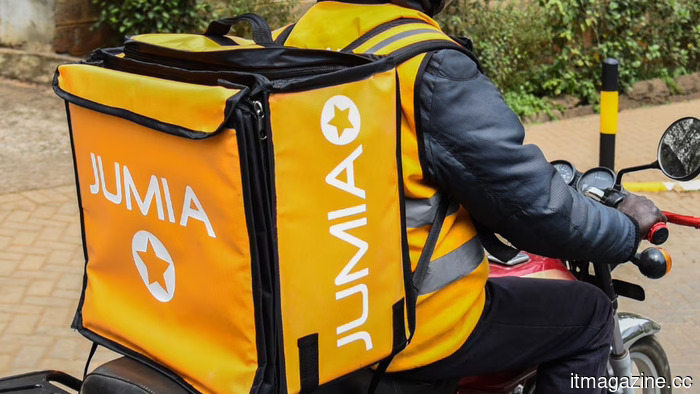 Jumia is reducing its workforce by an additional 10%. The context is centered around AI, while the aim is to achieve profitability by the set deadline.
Jumia is reducing its workforce by an additional 10%, attributing the decision to AI workflows. Since 2022, the company has eliminated over half of its employees. The deadline for achieving profitability in Q4 is approaching.
Jumia is reducing its workforce by an additional 10%. The context is centered around AI, while the aim is to achieve profitability by the set deadline.
Jumia is reducing its workforce by an additional 10%, attributing the decision to AI workflows. Since 2022, the company has eliminated over half of its employees. The deadline for achieving profitability in Q4 is approaching.
Meta and Google support the children's organizations they reference to regulators.
Meta and Google established a network in the U.S. focused on advocating for children, which they reference to regulators. The PTA withdrew in February. Reuters provides the remaining details.