
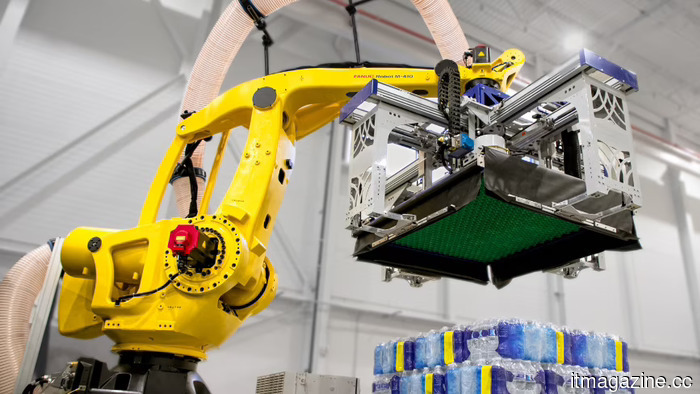
Fanuc collaborates with Google to integrate Gemini AI and the Intrinsic platform into 1.1 million industrial robots.
**Summary:** Fanuc, the largest industrial robot manufacturer globally with 1.1 million robots installed worldwide, is collaborating with Google Cloud to integrate Gemini Enterprise and the Intrinsic robotics platform into its systems, mimicking Google's Android strategy for factory robots, which has led to Fanuc's stock reaching an all-time high.
Fanuc leads the global market in industrial robots, while Google excels in software platforms. On Wednesday, the two companies revealed a partnership that combines these strengths: Fanuc will embed Google Cloud’s Gemini Enterprise and Intrinsic robotics platform into its industrial robots, allowing the existing 1.1 million Fanuc robots in factories to comprehend human instructions, identify objects, and operate autonomously. Following the announcement, Fanuc's shares soared 16 percent to 8,880 yen, as the market quickly recognized the significance of this integration.
This collaboration suggests that Google is bringing to factory robots the same transformative influence that Android had on smartphones.
**The Android Concept**
In February 2026, Google transitioned Intrinsic, its robotics software arm, from the experimental Other Bets division to its core operations, signifying a strategic rather than administrative move. Intrinsic has developed Flowstate, a web-based platform allowing manufacturers to create robotic applications without extensive coding. This platform streamlines motion planning, machine learning integration, and task coordination across various hardware. Factories can interchange robot arms from different manufacturers while utilizing the same Intrinsic-powered software.
The comparison is apt. Just as Android doesn’t manufacture phones but provides an operating system for a wide range of devices, Intrinsic doesn’t create robots but offers the intelligence layer that functions across multiple manufacturers’ hardware. This grants Google access to a vast number of industrial machines without the need for physical manufacturing.
The Fanuc partnership marks a significant achievement similar to Samsung’s role with Android, as Fanuc holds a substantial share of global robot shipments and has surpassed 1.1 million installed robots across diverse sectors like automotive and pharmaceuticals. When the leading robot manufacturer adopts a software platform, it prompts the entire industry to reassess.
**Details of the Partnership**
The technical aspects are crucial. Fanuc plans to utilize Google Cloud’s Gemini Enterprise, the same AI platform serving 8 million enterprise seats in 2,800 companies, to enhance its robot systems to interpret natural language instructions, recognize and categorize objects in varied environments, and manage multiple robots autonomously. Additionally, Fanuc will fully align with Intrinsic’s Flowstate development environment, allowing programming of Fanuc robots via a user-friendly web interface rather than proprietary code.
Since showcasing AI capabilities at the International Robot Exhibition in Tokyo last December, Fanuc has delivered over 1,000 robots with these features and reports growing demand. A demonstration of a system enabling collaborative and non-collaborative robots to work together using natural language is planned for later this month. The partnership with Google fills a gap in Fanuc’s existing physical AI technologies.
Accenture is already investing in General Robotics, which utilizes AI across various robots, highlighting how consultancies are building business models around multi-vendor AI orchestration. Google’s involvement alters the landscape significantly, as Intrinsic benefits from support by a firm worth $4.6 trillion, generating $70 billion in annual cloud revenue, and possessing leading generative AI models.
**About Fanuc**
Fanuc originated from a Fujitsu division in 1956 and became an independent company in 1972. Based in Oshino near Mount Fuji, the corporate campus is surrounded by forests and characterized by its distinctive yellow color. By 1982, Fanuc commanded half of the global CNC market, a position it still maintains. The company produces CNC systems for machine tools, industrial robots for factory operations, and robomachines that combine both functionalities, outperforming all competitors in quality and volume.
In the fiscal year 2025, Fanuc recorded record sales of 857 billion yen (approximately $5.7 billion) with an operating margin of 21.4 percent. Despite a 16 percent decline in robot sales due to lower demand in major markets, particularly in the automotive sector, the announcement around physical AI and the partnership with Google indicates Fanuc’s focus on enhancing the capabilities of its already sold robots, rather than just increasing new sales.
The Nvidia GTC 2026, which attracted 30,000 attendees, emphasized physical AI as a prominent theme. Fanuc, previously partnered with Nvidia, announced plans to integrate Nvidia’s simulation frameworks and Omniverse libraries into its AI solutions, while the Google collaboration adds a foundational layer to this infrastructure, resulting in a two-platform AI capability unrivaled by competitors.
**Market Overview**
The physical AI market is expected to grow from $1.5 billion in 2026 to $15.2 billion by 2032, with a compound annual growth rate of 47 percent. The adjacent industry for robotics intelligence software is projected to expand by $49 billion by 2031 as factories move
Other articles
 The six biggest banks on Wall Street eliminated 15,000 positions and reported profits of $47 billion. The CEOs ceased their pretenses.
In the first quarter of 2026, the six largest banks in the US cut 15,000 jobs while reporting profits of $47 billion. Their CEOs specifically attributed the job losses to the impact of AI. JPMorgan, Citi, Goldman Sachs, Bank of America, and Wells Fargo are now revealing...
The six biggest banks on Wall Street eliminated 15,000 positions and reported profits of $47 billion. The CEOs ceased their pretenses.
In the first quarter of 2026, the six largest banks in the US cut 15,000 jobs while reporting profits of $47 billion. Their CEOs specifically attributed the job losses to the impact of AI. JPMorgan, Citi, Goldman Sachs, Bank of America, and Wells Fargo are now revealing...
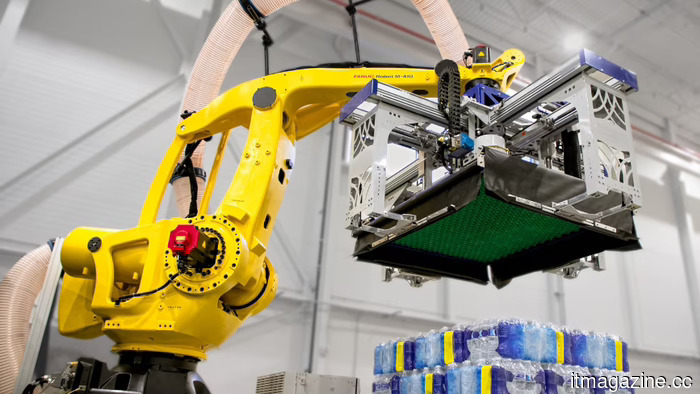 Fanuc collaborates with Google to introduce Gemini AI and the Intrinsic platform to 1.1 million industrial robots.
Fanuc's stock reached an all-time high following its collaboration with Google to merge Gemini Enterprise and the Intrinsic robotics platform into its industrial robotic systems globally.
Fanuc collaborates with Google to introduce Gemini AI and the Intrinsic platform to 1.1 million industrial robots.
Fanuc's stock reached an all-time high following its collaboration with Google to merge Gemini Enterprise and the Intrinsic robotics platform into its industrial robotic systems globally.
 Furry robotic seals are being utilized for mental health support at a hospital in the UK.
An NHS trust in Kent and Medway is testing out PARO, a therapeutic robot baby seal, to assist patients with learning disabilities in feeling more at ease during their appointments.
Furry robotic seals are being utilized for mental health support at a hospital in the UK.
An NHS trust in Kent and Medway is testing out PARO, a therapeutic robot baby seal, to assist patients with learning disabilities in feeling more at ease during their appointments.
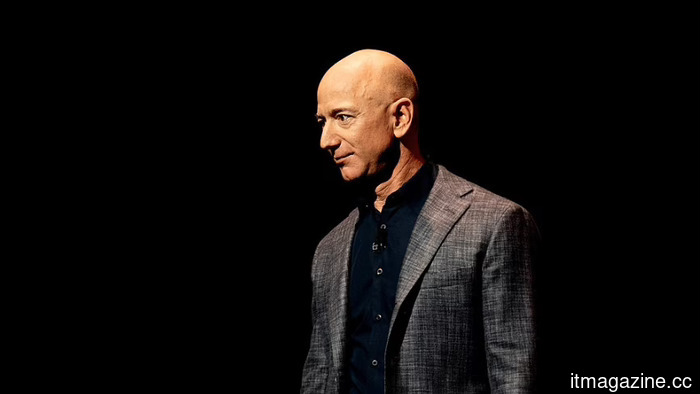 After 25 years of personally signing the checks, Bezos is now allowing outside investors into Blue Origin.
Blue Origin is getting ready to accept external funding for the first time in its 25-year existence, just three weeks ahead of SpaceX's $1.75 trillion IPO pricing.
After 25 years of personally signing the checks, Bezos is now allowing outside investors into Blue Origin.
Blue Origin is getting ready to accept external funding for the first time in its 25-year existence, just three weeks ahead of SpaceX's $1.75 trillion IPO pricing.
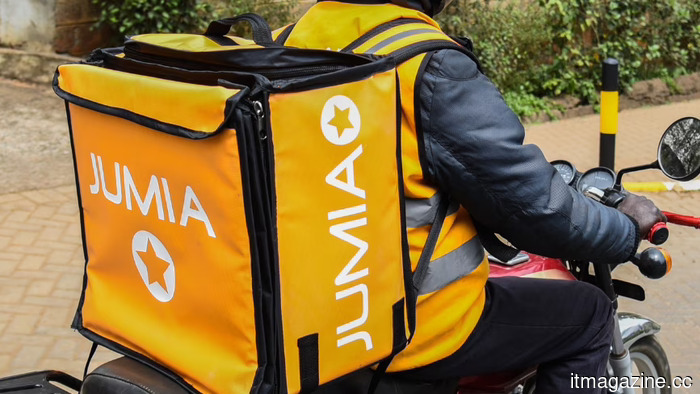 Jumia is reducing its workforce by an additional 10%. The focus is on AI, with profitability as the target.
Jumia is reducing its workforce by an additional 10%, attributing the decision to AI workflows. Since 2022, the company has eliminated over half of its employees. The deadline for achieving profitability in Q4 is approaching.
Jumia is reducing its workforce by an additional 10%. The focus is on AI, with profitability as the target.
Jumia is reducing its workforce by an additional 10%, attributing the decision to AI workflows. Since 2022, the company has eliminated over half of its employees. The deadline for achieving profitability in Q4 is approaching.
 Furry robotic seals are being utilized for mental health treatment at a hospital in the UK.
An NHS trust in Kent and Medway is testing PARO, a robotic baby seal designed for therapy, to assist patients with learning disabilities in feeling more at ease during their appointments.
Furry robotic seals are being utilized for mental health treatment at a hospital in the UK.
An NHS trust in Kent and Medway is testing PARO, a robotic baby seal designed for therapy, to assist patients with learning disabilities in feeling more at ease during their appointments.
Fanuc collaborates with Google to integrate Gemini AI and the Intrinsic platform into 1.1 million industrial robots.
Fanuc's stock reached an all-time high following its collaboration with Google to incorporate Gemini Enterprise and the Intrinsic robotics platform into its global industrial robot systems.