
The Comeback of Spatial Computing in Gaming
For several years, spatial computing in gaming has primarily revolved around head-mounted devices. While virtual reality (VR) headsets, augmented reality (AR) glasses, and mixed-reality wearables have taken center stage in virtual gaming, many of these devices still encounter issues reminiscent of their early versions, such as complicated setups, comfort concerns, and the sense of isolation experienced by users.
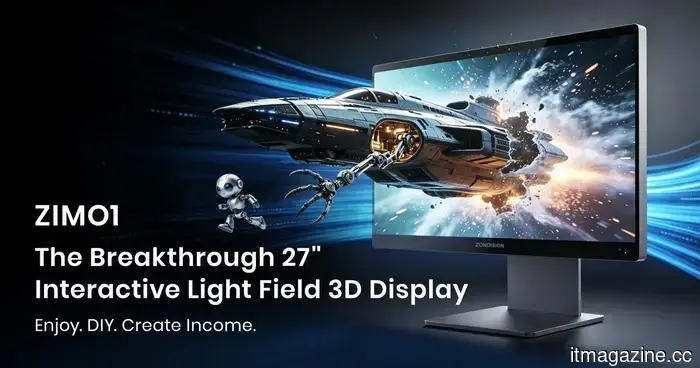
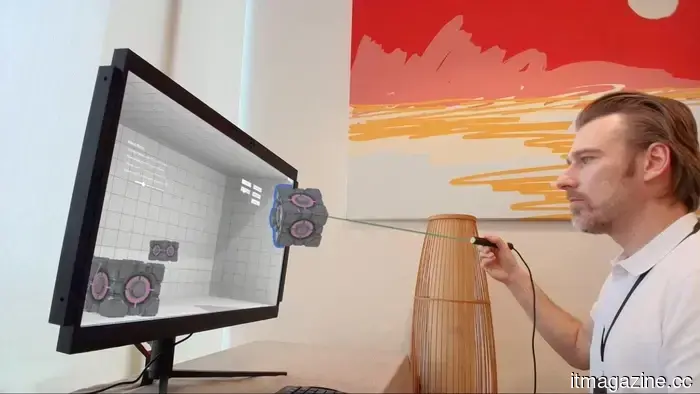
Currently, engineers and designers in the display sector aim to eliminate the need for wearable devices. A notable example is the ZIMO1 interactive light-field display developed by Zondision, which leverages screen-based technology for three-dimensional visualization.
Although glasses-free 3D is not a novel idea, various devices have struggled with challenges like restricted viewing angles, image quality problems, and user fatigue.
The Technology Behind Glasses-Free 3D
Hardware and software engineers have several methods to create glasses-free 3D effects. Some of the more common techniques include:
- Parallax Barrier Displays, which employ a layer of vertical slits to direct unique images to each eye.
- Lenticular Lens Displays, which utilize small lenses to guide different images to each eye.
- Volumetric Displays, which produce a true 3D visual by projecting light onto rotating displays or using lasers or LEDs to create light points in mid-air.
Some advanced monitors even incorporate artificial intelligence to transform 2D content into 3D.
Image used with permission from the copyright holder.
The Advantages and Disadvantages of Glasses-Free Displays
The main benefit of glasses-free displays is that they eliminate the need for bulky headsets or glasses for viewing content in three dimensions. Such displays can offer wider viewing angles than traditional 3D glasses, allowing multiple viewers to enjoy the effects simultaneously.
However, there are challenges associated with 3D displays. Often, viewers need to maintain a specific angle to fully experience the effect. This can be problematic for movie watchers, for instance, if they are not positioned perfectly in front of the screen.
In some cases, glasses-free 3D may also lead to slightly reduced resolution, yet designers are actively developing methods to minimize the “ghosting” effects typically seen without wearables.
Future Applications for Glasses-Free Technology in Gaming
Even though major game developers and hardware manufacturers are rapidly adopting this technology, glasses-free monitors are still undergoing refinement. Similar to 3D glasses and headsets, some users report instances when the 3D effects from monitors can be overwhelming, prompting them to take breaks.
Nevertheless, the intensity of the 3D effects produced by these monitors can be adjusted, and users can become accustomed to the technology with prolonged exposure to the 3D visuals. As this technology continues to advance and users adjust to its applications, glasses-free 3D technology may increasingly appear in locations where 3D effects are more sought after, such as movie theaters and museum exhibits.
Digital Trends collaborates with external contributors. All contributor content undergoes review by the Digital Trends editorial team.
Other articles
 The Android Show 2026: Updates on Gemini Intelligence, Googlebook, Android 17, and more.
Google entered The Android Show with an unexpected laptop, an AI feature that handles your tasks, and a much-needed security upgrade.
The Android Show 2026: Updates on Gemini Intelligence, Googlebook, Android 17, and more.
Google entered The Android Show with an unexpected laptop, an AI feature that handles your tasks, and a much-needed security upgrade.
 Samsung’s One UI 8.5 has complicated the process of checking free storage, as it seems that math is now considered a feature.
One UI 8.5 has removed the clear display of available storage in Device Care, forcing Galaxy users to estimate their free space or depend on cumbersome alternatives.
Samsung’s One UI 8.5 has complicated the process of checking free storage, as it seems that math is now considered a feature.
One UI 8.5 has removed the clear display of available storage in Device Care, forcing Galaxy users to estimate their free space or depend on cumbersome alternatives.
 The Camera app on the Apple iPhone might finally stop catering exclusively to beginners.
Apple is said to be revamping the iPhone Camera app to include customizable control widgets, enhanced photo features, grid tools, and a Siri mode for Visual Intelligence.
The Camera app on the Apple iPhone might finally stop catering exclusively to beginners.
Apple is said to be revamping the iPhone Camera app to include customizable control widgets, enhanced photo features, grid tools, and a Siri mode for Visual Intelligence.
 Europe's reliance on cloud services poses a political risk, in addition to being a technical issue.
Europe's reliance on external cloud services impacts not only its AI sovereignty but also its data sovereignty, leading to increased political vulnerability.
Europe's reliance on cloud services poses a political risk, in addition to being a technical issue.
Europe's reliance on external cloud services impacts not only its AI sovereignty but also its data sovereignty, leading to increased political vulnerability.
 Prime Video has just announced some disappointing news regarding Henry Cavill's live-action Voltron film.
Amazon has announced that Henry Cavill's live-action Voltron movie will bypass theaters and debut on Prime Video, leaving fans who anticipated a theatrical release feeling disappointed.
Prime Video has just announced some disappointing news regarding Henry Cavill's live-action Voltron film.
Amazon has announced that Henry Cavill's live-action Voltron movie will bypass theaters and debut on Prime Video, leaving fans who anticipated a theatrical release feeling disappointed.
 The Camera app on the Apple iPhone may finally stop assuming that all users are novices.
Apple is said to be revamping the iPhone Camera app, introducing customizable control widgets, enhanced photo features, grid tools, and a Siri mode for Visual Intelligence.
The Camera app on the Apple iPhone may finally stop assuming that all users are novices.
Apple is said to be revamping the iPhone Camera app, introducing customizable control widgets, enhanced photo features, grid tools, and a Siri mode for Visual Intelligence.
The Comeback of Spatial Computing in Gaming
For several years, spatial computing in gaming has primarily relied on head-mounted devices. Although virtual reality (VR) headsets, augmented reality (AR) glasses, and mixed-reality wearables have taken center stage in virtual gaming, many still face issues similar to those of their early versions, such as complicated setup processes and device comfort, […]