
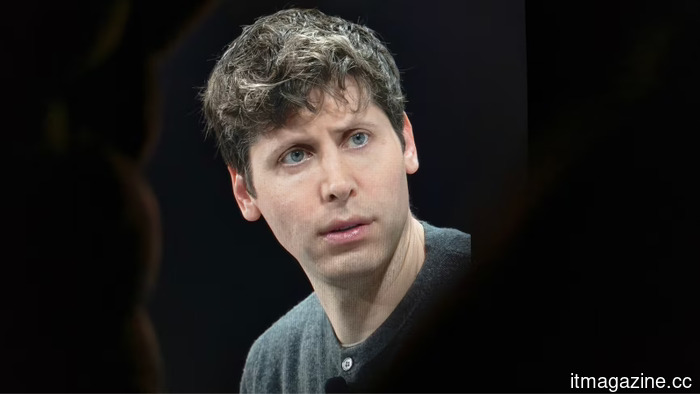
OpenAI purchases Tomoro as the initial component of a $14 billion Deployment Company.
TL;DR OpenAI is acquiring Tomoro, an AI consulting firm based in Edinburgh that was established alongside it, marking the initial acquisition for its $14 billion Deployment Company. This move emulates Palantir's forward-deployed engineer model, aiming to bridge the divide between AI capabilities and enterprise implementation.
Tomoro was founded in 2023 in partnership with OpenAI. The firm, operating from Edinburgh and London, developed AI concierges for Virgin Atlantic, in-game support agents for Supercell, and deployment systems for clients like Fidelity International, Tesco, Red Bull, Mattel, and the NBA. Within a year, it tenfolded its monthly revenue and pledged £10 million to support AI talent in Scotland. It employed around 150 forward-deployed engineers and specialists dedicated to integrating OpenAI’s models into clients' production environments.
On Monday, Tomoro announced it has agreed to join OpenAI's Deployment Company as its founding acquisition, which was launched with over $4 billion in initial capital from 19 investment firms. Regulatory approval and typical closing conditions must be met. The model company has transitioned into a service provider, as the lab that focused on developing intelligence now builds a consulting force to implement it.
The subsidiary has been initiated with a $4 billion investment from a consortium led by TPG, alongside co-leads Advent International, Bain Capital, and Brookfield. The remaining investors include firms like SoftBank, Goldman Sachs, and Warburg Pincus. OpenAI maintains a controlling interest, ensuring its private equity partners a 17.5% annual return over five years.
The need for this subsidiary arises because enterprise AI adoption has stalled, an issue that improved models cannot resolve. By February 2026, OpenAI’s annual revenue reached $25 billion, with enterprise customers already accounting for over 40% of that figure and likely to match consumer revenue by year-end. More than a million businesses utilize OpenAI’s products, but significant integration challenges remain, as model efficiency is no longer the limiting factor. These challenges include integration, change management, security evaluation, and the necessity to rethink business processes to accommodate AI.
The solution from the Deployment Company is to embed engineers within client organizations, collaborating with existing teams to pinpoint high-value opportunities and construct onsite production systems. This approach is not new; it follows the model pioneered by Palantir.
Palantir established the forward-deployed engineer method through years of work with defense and intelligence sectors, where the complexity and confidentiality of the environments demanded direct on-site support. The company dispatched its engineers to intelligence agencies and private-sector clients because its platform required extensive customization for usability. This close operational collaboration led to a 133% year-over-year surge in Palantir’s US commercial revenue, with the FDE model credited for yielding 640% returns for early investors.
OpenAI is applying this principle to a larger market. The 150 engineers at Tomoro will form the core of a deployment initiative that will expand through further acquisitions funded by the $4 billion reserve. These engineers won't sell software; instead, they will work within enterprises to create systems that enable OpenAI's software to deliver tangible business results. This distinction is crucial: while a software license is simply a product, embedded engineers establish a relationship that creates switching costs impervious to competitors.
The fundraising efforts by Anthropic signal an evolution in AI labs, shifting focus towards enterprise infrastructure. Anthropic has initiated a $1.5 billion joint venture with Blackstone, Hellman & Friedman, and Goldman Sachs dedicated to its deployment arm. Google has also allocated $750 million to support partners deploying agentic AI. The three leading foundation model companies have independently recognized that the financial opportunity lies not in selling intelligence, but in the actual implementation.
Tomoro was intentionally established as a consultancy aligned with OpenAI. Its co-founders—Rishabh Sagar, Albert Phelps, Chris Spencer, Ed Broussard, Chloe Kelleher, Ash Garner, and Sandi Chanda—built the firm on the premise that bridging the AI access-deployment gap itself constituted a viable business. In just two and a half years, Tomoro secured a notable client roster typically built over a decade by other consulting firms.
At Supercell, Tomoro introduced an in-game support agent for 110 million users in just 12 weeks, processing 500 million tokens daily on GPT-4o and 200 million on GPT-4o-mini across five games. This implementation reduced support ticket resolution costs by 90%, improved customer satisfaction by 20%, and achieved an average response time of seven seconds. For Virgin Atlantic, Tomoro developed an AI travel concierge to address booking inquiries and customer service effectively. The firm grew its workforce fourfold in the year preceding the acquisition.
Sebastian Steinhaeuser, SAP’s COO, characterized Tomoro differently in discussions regarding the SAP-n8n partnership last week. However, the Deployment Company’s terminology indicates that Tomoro is regarded as the
Other articles
 Android 17 will simplify the process of preventing apps from discreetly tracking your location while running in the background.
Today at the Android Show I/O Edition, Google revealed a new series of updates for Android 17 focused on privacy and theft protection, featuring a new location button that automatically removes an app's access to your exact location when you close it.
Android 17 will simplify the process of preventing apps from discreetly tracking your location while running in the background.
Today at the Android Show I/O Edition, Google revealed a new series of updates for Android 17 focused on privacy and theft protection, featuring a new location button that automatically removes an app's access to your exact location when you close it.
 Google has just unveiled a new type of laptop that integrates Gemini throughout.
Google has officially announced Googlebooks, a new line of laptops centered on its Gemini AI assistant. Laptops from Acer, Asus, Dell, HP, and Lenovo are anticipated to launch this fall, but pricing and complete hardware specifications have yet to be revealed.
Google has just unveiled a new type of laptop that integrates Gemini throughout.
Google has officially announced Googlebooks, a new line of laptops centered on its Gemini AI assistant. Laptops from Acer, Asus, Dell, HP, and Lenovo are anticipated to launch this fall, but pricing and complete hardware specifications have yet to be revealed.
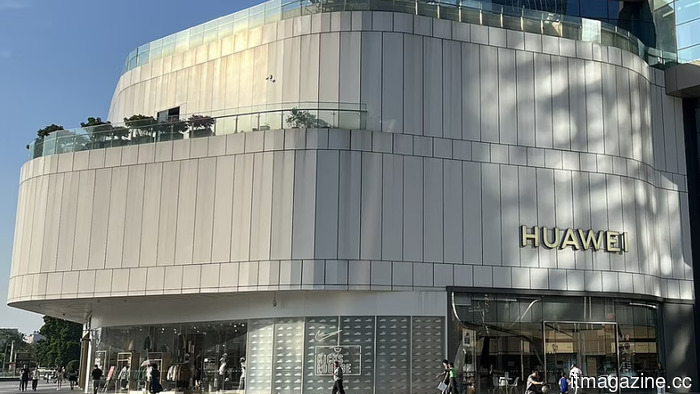 Two days prior to Trump's arrival, Beijing aired a segment about Huawei's covert chip laboratory on national television. The audience for this message was not the Chinese public.
China displayed Huawei's clandestine chip laboratory on prime-time television just days before Trump's visit to Beijing. The airing indicates that US export restrictions have strengthened, rather than weakened, China's aspirations in the chip industry.
Two days prior to Trump's arrival, Beijing aired a segment about Huawei's covert chip laboratory on national television. The audience for this message was not the Chinese public.
China displayed Huawei's clandestine chip laboratory on prime-time television just days before Trump's visit to Beijing. The airing indicates that US export restrictions have strengthened, rather than weakened, China's aspirations in the chip industry.
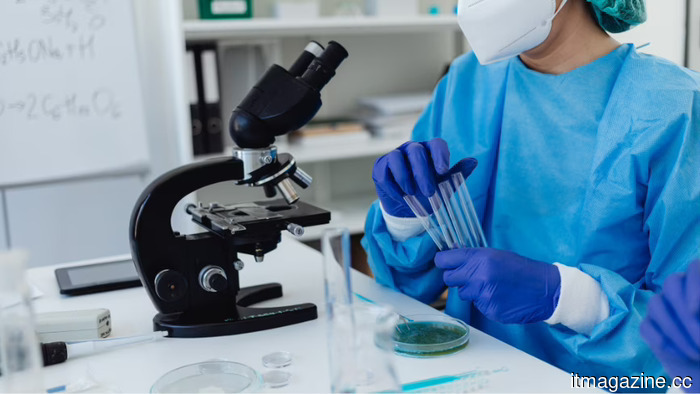 Bristol Myers Squibb has entered into a $15.2 billion pharmaceutical agreement with China's Hengrui as it faces an impending patent expiration.
BMS is providing Hengrui with $15.2 billion for 13 developmental drugs in the fields of oncology and immunology. This agreement highlights how the patent expiration issues faced by major pharmaceutical companies have made Chinese innovation crucial.
Bristol Myers Squibb has entered into a $15.2 billion pharmaceutical agreement with China's Hengrui as it faces an impending patent expiration.
BMS is providing Hengrui with $15.2 billion for 13 developmental drugs in the fields of oncology and immunology. This agreement highlights how the patent expiration issues faced by major pharmaceutical companies have made Chinese innovation crucial.
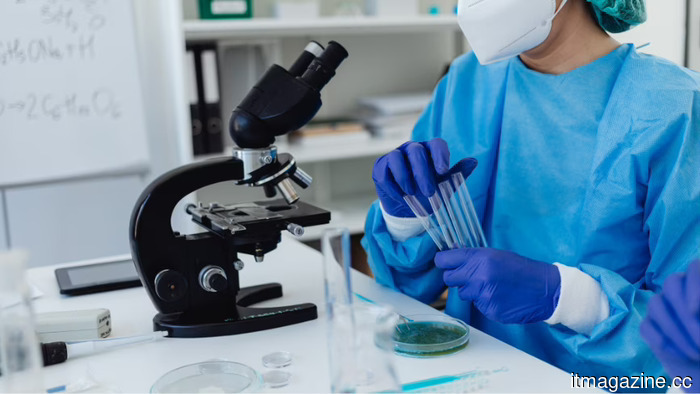 Bristol Myers Squibb signs a $15.2 billion agreement with China's Hengrui as a patent expiration crisis approaches.
BMS is set to pay Hengrui $15.2 billion for 13 early-stage drugs in the fields of oncology and immunology. This agreement highlights the critical role of Chinese innovation due to the patent cliff facing Big Pharma.
Bristol Myers Squibb signs a $15.2 billion agreement with China's Hengrui as a patent expiration crisis approaches.
BMS is set to pay Hengrui $15.2 billion for 13 early-stage drugs in the fields of oncology and immunology. This agreement highlights the critical role of Chinese innovation due to the patent cliff facing Big Pharma.
 Google introduces Googlebook: Android-driven AI laptops take the place of Chromebooks, featuring Gemini at the operating system level.
Google has discontinued ChromeOS and introduced Googlebook, a high-end Android laptop featuring the Gemini interface. The Magic Pointer transforms the cursor into an AI assistant. These devices will be available this autumn.
Google introduces Googlebook: Android-driven AI laptops take the place of Chromebooks, featuring Gemini at the operating system level.
Google has discontinued ChromeOS and introduced Googlebook, a high-end Android laptop featuring the Gemini interface. The Magic Pointer transforms the cursor into an AI assistant. These devices will be available this autumn.
OpenAI purchases Tomoro as the initial component of a $14 billion Deployment Company.
Tomorrow, the Edinburgh-based AI company established in collaboration with OpenAI, is set to be the inaugural acquisition of a $14 billion subsidiary that places engineers within businesses. Accenture saw a decline of 3%.