
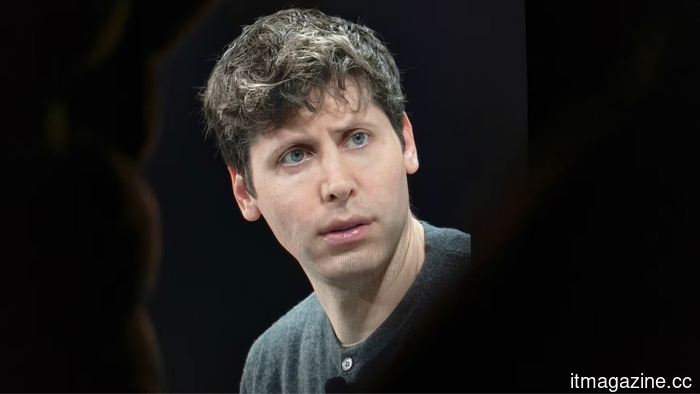
OpenAI acquires Tomoro as a foundational element of a $14 billion deployment firm.
OpenAI is set to acquire Tomoro, an AI consulting firm based in Edinburgh that was established concurrently with OpenAI, as the initial acquisition of its $14 billion Deployment Company. This move mimics Palantir’s forward-deployed engineer model to bridge the divide between AI capabilities and enterprise implementation.
Founded in 2023 in collaboration with OpenAI, Tomoro created AI concierges for Virgin Atlantic, in-game support agents for Supercell, and deployment solutions for companies like Fidelity International, Tesco, Red Bull, Mattel, and the NBA. In just one year, it increased its monthly revenue tenfold and committed £10 million to nurture Scottish AI talent. The firm employed around 150 forward-deployed engineers and specialists who worked directly within client organizations to ensure OpenAI’s models were operational in the real world.
On Monday, Tomoro announced that it has reached an agreement to be the first acquisition of the OpenAI Deployment Company, a subsidiary launched by OpenAI with over $4 billion in initial investment from 19 investment firms. The agreement is pending regulatory approval and typical closing conditions. The model company has transformed into a services company, shifting from an AI lab focused on developing intelligence to establishing a consulting force to implement it.
The Deployment Company was initiated with $4 billion from a syndicate led by TPG, alongside co-lead founding partners Advent International, Bain Capital, and Brookfield. The remaining 15 investors include names like SoftBank, Goldman Sachs, Warburg Pincus, B Capital, BBVA, Emergence Capital, and consulting giants Bain & Company, Capgemini, and McKinsey. OpenAI maintains a majority ownership and controlling stake. This structure ensures that its private equity investors receive a 17.5 percent annualized return over five years.
The need for the subsidiary arises because enterprise AI adoption has plateaued, which improved models cannot resolve. OpenAI’s annualized revenue is projected to hit $25 billion by February 2026, with enterprise customers accounting for over 40 percent of this total, expected to equal consumer revenue by year-end. While more than a million businesses utilize OpenAI’s products, significant barriers still exist regarding integrating these offerings into core business processes. Model performance is no longer the limiting factor; instead, challenges lie in integration, change management, security assessments, and the gradual redesign of business workflows around AI.
The solution implemented by the Deployment Company is to embed engineers directly within client organizations to collaborate with their teams in identifying high-value opportunities and establishing production systems onsite. This model is not new and has its roots in Palantir’s approach.
Palantir advanced the forward-deployed engineer model through years of engagements in defense and intelligence sectors, where software needed to be operational in intricate institutions that were not amenable to remote assistance. The company deployed its engineers directly to intelligence agencies and military clients, as its platform often required significant customization to be usable. This close operational model significantly boosted Palantir’s US commercial revenue by 133 percent annually, generating 640 percent returns for early investors, which highlights the potential effectiveness of such an approach.
OpenAI is applying this strategy in a wider market context. Tomoro’s team of 150 engineers will form the foundational group for a deployment operation that will expand through additional acquisitions supported by the $4 billion capital. These engineers will not sell software; instead, they will be embedded within enterprises to develop systems that yield business results with OpenAI’s software. This distinction is crucial: while a software license represents a product, an embedded engineer fosters a relationship, creating switching costs that are hard for competitors to dismantle.
Anthropic's recent multi-billion-dollar fundraising indicates that the AI lab model is transitioning from research to enterprise infrastructure. Anthropic has formed a $1.5 billion joint venture with Blackstone, Hellman and Friedman, and Goldman Sachs, which acts as its deployment arm. Google has committed $750 million to support partners in deploying agentic AI. The three leading foundation model companies have independently recognized that profit lies not in selling intelligence but rather in its implementation.
Tomoro was designed from the outset as an OpenAI-aligned consultancy. Co-founders Rishabh Sagar, Albert Phelps, Chris Spencer, Ed Broussard, Chloe Kelleher, Ash Garner, and Sandi Chanda built the firm on the premise that the divide between AI access and deployment represented a standalone business opportunity. This assertion proved correct; within two and a half years, Tomoro amassed a client list that many consulting firms take a decade to build.
For Supercell, the Finnish gaming company behind Clash of Clans, Tomoro deployed an in-game support agent for 110 million users in just 12 weeks. The system handles 500 million daily tokens on GPT-4o and 200 million on GPT-4o-mini across five games, lowering the cost of resolving support tickets by 90 percent, increasing customer satisfaction scores by 20 percent, and achieving an
Other articles
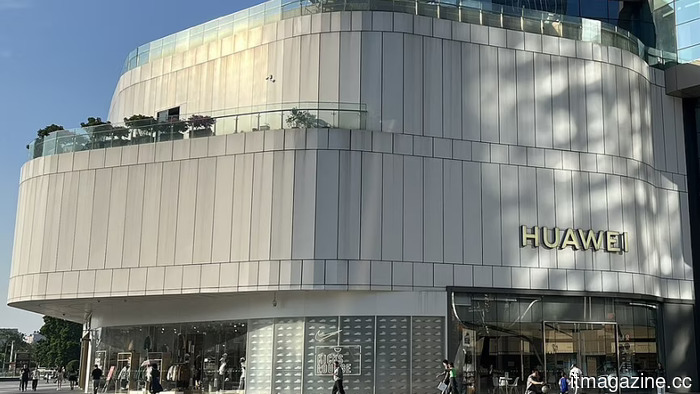 Beijing showcased Huawei's hidden chip laboratory on national television just two days prior to Trump's arrival. The intended audience was not the Chinese public.
China unveiled Huawei's clandestine chip laboratory on prime-time television just days prior to Trump's visit to Beijing. This broadcast indicates that US export restrictions have strengthened, rather than weakened, China's aspirations in the semiconductor industry.
Beijing showcased Huawei's hidden chip laboratory on national television just two days prior to Trump's arrival. The intended audience was not the Chinese public.
China unveiled Huawei's clandestine chip laboratory on prime-time television just days prior to Trump's visit to Beijing. This broadcast indicates that US export restrictions have strengthened, rather than weakened, China's aspirations in the semiconductor industry.
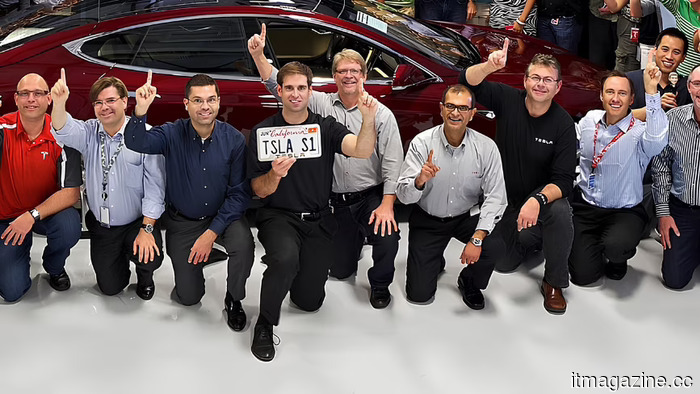 Former Tesla CFO Deepak Ahuja has joined Redwood Materials as the battery recycler shifts its focus to AI-driven energy infrastructure.
Deepak Ahuja, the CFO who led Tesla's IPO, is joining Redwood Materials as the company shifts its focus from battery recycling to supplying power for AI data centers using second-life EV batteries.
SAP announces its Autonomous Enterprise featuring over 200 AI agents and a partnership with Anthropic at Sapphire 2026.
At Sapphire 2026, SAP introduced the Autonomous Enterprise, incorporating over 200 AI agents into finance, supply chain, and HR, and collaborating with Anthropic. Its stock has decreased by 41%.
Former Tesla CFO Deepak Ahuja has joined Redwood Materials as the battery recycler shifts its focus to AI-driven energy infrastructure.
Deepak Ahuja, the CFO who led Tesla's IPO, is joining Redwood Materials as the company shifts its focus from battery recycling to supplying power for AI data centers using second-life EV batteries.
SAP announces its Autonomous Enterprise featuring over 200 AI agents and a partnership with Anthropic at Sapphire 2026.
At Sapphire 2026, SAP introduced the Autonomous Enterprise, incorporating over 200 AI agents into finance, supply chain, and HR, and collaborating with Anthropic. Its stock has decreased by 41%.
 Bristol Myers Squibb has finalized a $15.2 billion agreement for a pharmaceutical collaboration with China's Hengrui as the threat of patent expirations approaches.
BMS is set to pay Hengrui $15.2 billion for 13 early-stage drugs in the fields of oncology and immunology. This agreement highlights how the patent cliff faced by Big Pharma has rendered Chinese innovation essential.
n8n integrated into SAP Joule Studio as an AI orchestration layer leads to a valuation increase to $5.2 billion.
SAP has integrated n8n within Joule Studio to link its 200 AI agents with non-SAP systems. The Berlin-based workflow automation startup is now recognized as Germany's most valuable AI firm.
Bristol Myers Squibb has finalized a $15.2 billion agreement for a pharmaceutical collaboration with China's Hengrui as the threat of patent expirations approaches.
BMS is set to pay Hengrui $15.2 billion for 13 early-stage drugs in the fields of oncology and immunology. This agreement highlights how the patent cliff faced by Big Pharma has rendered Chinese innovation essential.
n8n integrated into SAP Joule Studio as an AI orchestration layer leads to a valuation increase to $5.2 billion.
SAP has integrated n8n within Joule Studio to link its 200 AI agents with non-SAP systems. The Berlin-based workflow automation startup is now recognized as Germany's most valuable AI firm.
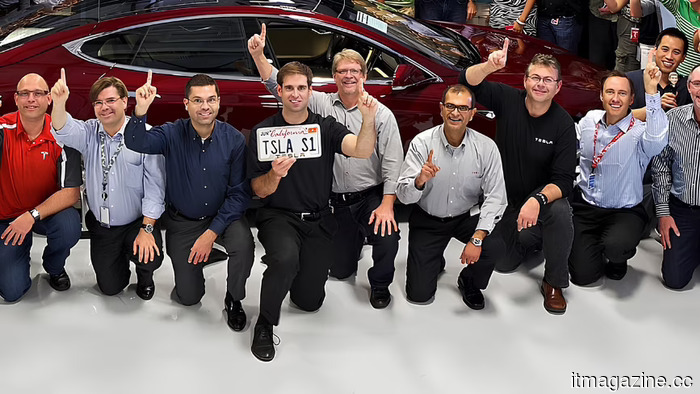 Former Tesla CFO Deepak Ahuja has joined Redwood Materials as the battery recycler shifts its focus to AI-driven energy infrastructure.
Deepak Ahuja, the CFO who led Tesla's public offering, is joining Redwood Materials as the company shifts its focus from battery recycling to supplying power for AI data centers using second-life electric vehicle batteries.
Former Tesla CFO Deepak Ahuja has joined Redwood Materials as the battery recycler shifts its focus to AI-driven energy infrastructure.
Deepak Ahuja, the CFO who led Tesla's public offering, is joining Redwood Materials as the company shifts its focus from battery recycling to supplying power for AI data centers using second-life electric vehicle batteries.
OpenAI acquires Tomoro as a foundational element of a $14 billion deployment firm.
Tomoro, the Edinburgh-based AI company established in partnership with OpenAI, is set to be the first acquisition of a $14 billion subsidiary that will place engineers within businesses. Accenture's shares dropped by 3%.