
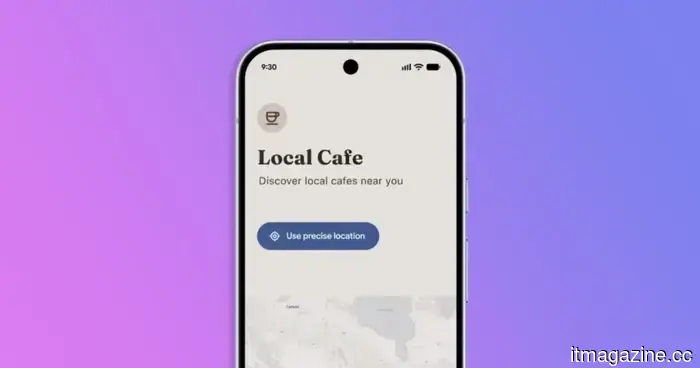
Android 17 will simplify the process of preventing apps from discreetly tracking your location while running in the background.
Google is rolling out a new location button, a contact picker, and enhanced theft protections in Android 17.
In conjunction with new scam protection measures, Google unveiled a distinct set of privacy and theft protection enhancements for Android at the Android Show I/O Edition today. These updates allow users to have more control over which apps can access their location and contacts. New tools will also make it more difficult for stolen phones to be accessed and easier for users to recover them, giving Android users greater ownership of their personal data.
Your location and contacts remain private
Android 17 will feature a new location button that provides apps with precise location access only while they are actively in use. Once the app is closed, access will be automatically revoked, eliminating permanent permissions or repeated requests.
An on-screen location indicator, first seen in an Android 16 QPR3 beta, will appear at the top of the screen anytime any app accesses your location, similar to the existing indicators for camera and microphone usage. Tapping this indicator will display which apps have recently accessed your location and allow you to adjust permissions immediately through a “Recent app use” dialog.
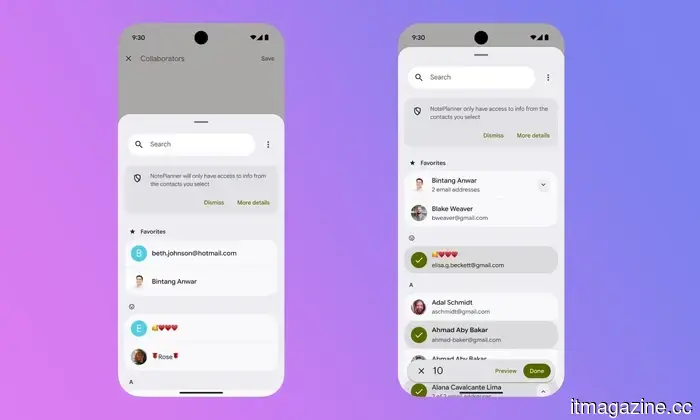
A revamped contact picker will offer finer control over which apps can view information in your address book. Instead of granting universal access to all contacts, users can share access to specific contacts for the duration necessary for a particular task. Apps will also be able to specify which contact fields they require, ensuring they don’t access more data than necessary.
Google indicated that app developers will be encouraged to implement both the location button and the contact picker in order to adhere to Google Play policy.
Enhanced measures for stolen phones
With Android 17, Google will globally implement expanded theft protections as standard. The Remote Lock and Theft Detection Lock features will be enabled by default on all new Android 17 devices, as well as those newly reset or upgraded to the latest operating system. In regions such as Argentina, Chile, Colombia, Mexico, and the UK, these protections will also cover devices running Android 10 and above, following a successful pilot program in Brazil.
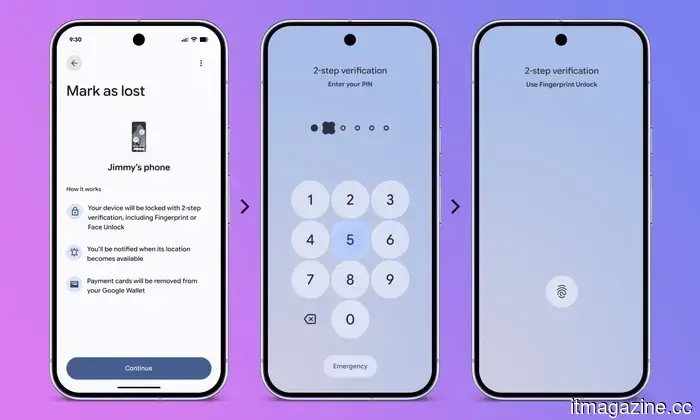
The Find Hub Mark as Lost tool will require biometric authentication to unlock any device marked as lost in Android 17, preventing thieves who know your PIN from disabling tracking or accessing your phone. Activating the Mark as Lost feature will also conceal Quick Settings and turn off new Wi-Fi and Bluetooth connections on the device.
Additionally, Android 17 will limit the number of failed PIN and password attempts before lockout and will increase the waiting time between unsuccessful tries, significantly complicating brute-force access.
To facilitate recovery, the device’s IMEI will be viewable from the lock screen on Android 12 and later versions. Law enforcement, device manufacturers, or mobile network operators can use this identifier to confirm ownership and return the device. Users will have the option to disable this feature in settings.
Collectively, these updates address some of the more enduring concerns regarding Android's privacy. Apps will no longer need access to your entire address book to find a single contact, your location data will not persist once an app is closed, and a stolen phone will be significantly more challenging to unlock, even if the thief knows your PIN.


Other articles
 Former Tesla CFO Deepak Ahuja has joined Redwood Materials as the battery recycler shifts its focus to AI-driven energy infrastructure.
Deepak Ahuja, the CFO who led Tesla's public offering, is joining Redwood Materials as the company shifts its focus from battery recycling to supplying power for AI data centers using second-life electric vehicle batteries.
Former Tesla CFO Deepak Ahuja has joined Redwood Materials as the battery recycler shifts its focus to AI-driven energy infrastructure.
Deepak Ahuja, the CFO who led Tesla's public offering, is joining Redwood Materials as the company shifts its focus from battery recycling to supplying power for AI data centers using second-life electric vehicle batteries.
 6 actions Gemini Intelligence is set to take on your Android devices.
Google is introducing these Gemini features to Android, broadening their availability across applications and devices to automate daily activities, streamline browsing, and enhance your phone's helpfulness while ensuring you remain in control.
SAP announces its Autonomous Enterprise featuring over 200 AI agents and a partnership with Anthropic at Sapphire 2026.
At Sapphire 2026, SAP introduced the Autonomous Enterprise, incorporating over 200 AI agents into finance, supply chain, and HR, and collaborating with Anthropic. Its stock has decreased by 41%.
6 actions Gemini Intelligence is set to take on your Android devices.
Google is introducing these Gemini features to Android, broadening their availability across applications and devices to automate daily activities, streamline browsing, and enhance your phone's helpfulness while ensuring you remain in control.
SAP announces its Autonomous Enterprise featuring over 200 AI agents and a partnership with Anthropic at Sapphire 2026.
At Sapphire 2026, SAP introduced the Autonomous Enterprise, incorporating over 200 AI agents into finance, supply chain, and HR, and collaborating with Anthropic. Its stock has decreased by 41%.
 OpenAI purchases Tomoro as the initial component of a $14 billion Deployment Company.
Tomorrow, the Edinburgh-based AI company established in collaboration with OpenAI, is set to be the inaugural acquisition of a $14 billion subsidiary that places engineers within businesses. Accenture saw a decline of 3%.
OpenAI purchases Tomoro as the initial component of a $14 billion Deployment Company.
Tomorrow, the Edinburgh-based AI company established in collaboration with OpenAI, is set to be the inaugural acquisition of a $14 billion subsidiary that places engineers within businesses. Accenture saw a decline of 3%.
 Google has discovered the first zero-day exploit developed by AI and has successfully prevented a planned large-scale exploitation event.
Google's GTIG discovered the first zero-day exploit created with AI and prevented a widespread exploitation incident. The report indicates that state actors are leveraging AI for vulnerability research and autonomous malware development.
Google has discovered the first zero-day exploit developed by AI and has successfully prevented a planned large-scale exploitation event.
Google's GTIG discovered the first zero-day exploit created with AI and prevented a widespread exploitation incident. The report indicates that state actors are leveraging AI for vulnerability research and autonomous malware development.
 Google introduces Googlebook: AI laptops powered by Android that take the place of Chromebooks, integrating Gemini at the operating system level.
Google has discontinued ChromeOS and introduced Googlebook, a high-end Android laptop featuring the Gemini interface. The Magic Pointer transforms the cursor into an AI assistant. Devices are set to be released this fall.
Google introduces Googlebook: AI laptops powered by Android that take the place of Chromebooks, integrating Gemini at the operating system level.
Google has discontinued ChromeOS and introduced Googlebook, a high-end Android laptop featuring the Gemini interface. The Magic Pointer transforms the cursor into an AI assistant. Devices are set to be released this fall.
Android 17 will simplify the process of preventing apps from discreetly tracking your location while running in the background.
Today at the Android Show I/O Edition, Google revealed a new series of updates for Android 17 focused on privacy and theft protection, featuring a new location button that automatically removes an app's access to your exact location when you close it.