
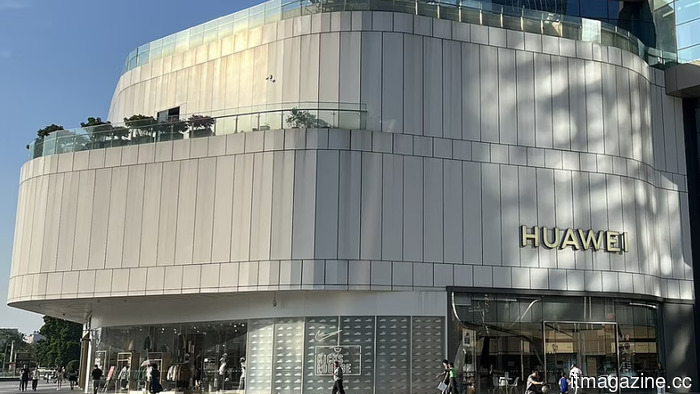
Two days prior to Trump's arrival, Beijing aired a segment about Huawei's covert chip laboratory on national television. The audience for this message was not the Chinese public.
Beijing featured Huawei’s secret chip lab on prime-time television just two days before Trump’s state visit, signaling that US export controls have strengthened China’s semiconductor ambitions centered on a national champion out of reach for the US. On Friday night, China Central Television aired previously unseen footage of the Chip Fundamental Technology Research Laboratory at Huawei’s Lianqiu Lake campus in Shanghai. This segment was part of Xinwen Lianbo, the state-run news program viewed by over 200 million people each night, showcasing Huawei founder Ren Zhengfei hosting Vice-Premier Ding Xuexiang at the facility. The broadcast did not reveal the lab's developments, as its timing conveyed more than the specifics could.
President Donald Trump will arrive in Beijing on Tuesday for a three-day state visit—his first to China in his second term—bringing along notable figures like Elon Musk, Tim Cook, Larry Fink, and Boeing’s Kelly Ortberg. His agenda includes discussions on trade, the Iran conflict, Taiwan, and semiconductors. Beijing’s choice to showcase Huawei’s secretive chip research facility on national television 48 hours prior to the American delegation's arrival aimed the message at the delegation rather than the Chinese public.
The Lianqiu Lake campus, Huawei’s largest R&D center globally, spans 2,600 acres in Jinze, Shanghai's Qingpu district, and cost approximately 10 billion yuan (about 1.4 billion dollars) to build over three years. The facility consists of eight blocks with 104 buildings and over 40,000 offices, along with an internal railway system, surpassing both Apple Park and Microsoft’s Redmond campus in size. Huawei anticipates employing 35,000 researchers focused on semiconductors, wireless networks, smartphones, autonomous vehicles, and energy systems.
The chip laboratory, though previously known to analysts and industry observers, had never been featured in Chinese state media before. Ren Zhengfei, who seldom appears publicly, personally accompanied Vice-Premier Ding Xuexiang, who manages China’s science and technology policy, through the facility. This visit was not merely an inspection, but rather an endorsement.
Since being placed on the US trade blacklist in 2019, Huawei has been restricted from obtaining advanced chips or related manufacturing equipment, aimed at crippling its semiconductor production capabilities. However, seven years later, Huawei’s AI chip revenue is projected to hit 12 billion dollars in 2026, reflecting a 60 percent increase from 2025, with targets set for 1.6 million Ascend dies this year.
The Ascend 910C, produced by SMIC using a 7-nanometer process without extreme ultraviolet lithography, delivers about 60 percent of Nvidia’s H100 inference performance. The newer Ascend 920, fabricated on SMIC’s 6-nanometer node, achieves 900 teraflops and provides four terabytes per second of memory bandwidth, while the Ascend 950PR began mass production in March 2026, with orders nearly reaching 800,000 units this year, in addition to the significant volume of earlier chips planned for shipment.
In late April, DeepSeek launched its V4 models, and Huawei’s newest Ascend chips were promptly adapted. DeepSeek spent months reprogramming its core code to align with Huawei’s CANN framework, moving away from Nvidia's CUDA ecosystem that has dominated AI development for two decades. The chip lab featured on CCTV is not engaged in theoretical research but is producing silicon that powers China’s most sophisticated AI models.
In the first half of 2025, Huawei invested 96.9 billion yuan in research and development, amounting to 22.7 percent of its revenue—a record percentage that resulted in a 32 percent decline in net profit. The company has funded over 60 Chinese semiconductor companies through Hubble, an investment platform established in 2019, the same year it was blacklisted by the US. Ren Zhengfei aims to lead over 2,000 Chinese firms striving for 70 percent self-sufficiency in semiconductors across the entire value chain by 2028.
Huawei's R&D spending is remarkable by any standard, exceeding 20 percent of its revenue on chip research at a time when access to the most advanced manufacturing tools is restricted. SMIC’s most advanced process, the 7-nanometer node for the Ascend 910C, was developed by repurposing older deep ultraviolet lithography equipment in ways the machines weren’t initially designed for. Yield rates are lower than TSMC’s, costs are higher, and the chips are less powerful than Nvidia’s latest generation. Nevertheless, the message conveyed by Beijing on Friday night was clear.
The broadcast serves as a negotiating tactic masked as a news feature. China's semiconductor industry still lags behind the forefront, with the disparity between Huawei's best chip and Nvidia’s measured in generations, not mere increments. However, the strategic issue that Trump's delegation
Other articles
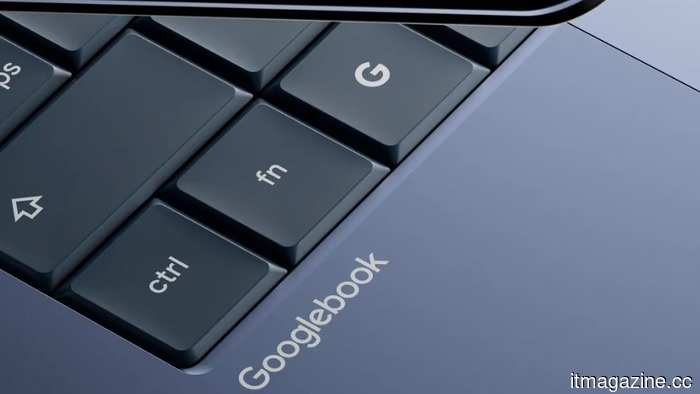 Google introduces Googlebook: Android-driven AI laptops take the place of Chromebooks, featuring Gemini at the operating system level.
Google has discontinued ChromeOS and introduced Googlebook, a high-end Android laptop featuring the Gemini interface. The Magic Pointer transforms the cursor into an AI assistant. These devices will be available this autumn.
Google introduces Googlebook: Android-driven AI laptops take the place of Chromebooks, featuring Gemini at the operating system level.
Google has discontinued ChromeOS and introduced Googlebook, a high-end Android laptop featuring the Gemini interface. The Magic Pointer transforms the cursor into an AI assistant. These devices will be available this autumn.
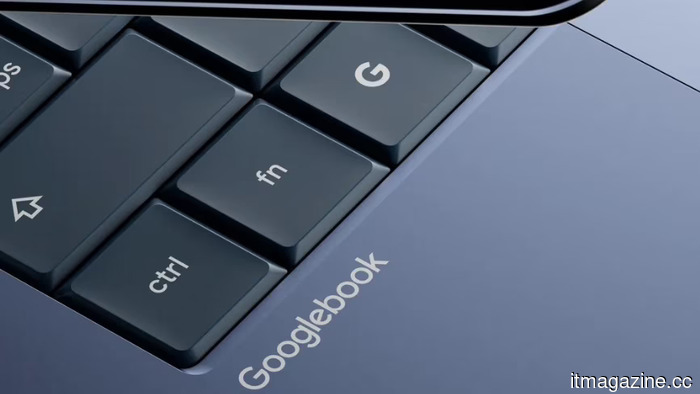 Google introduces Googlebook: AI laptops powered by Android that take the place of Chromebooks, integrating Gemini at the operating system level.
Google has discontinued ChromeOS and introduced Googlebook, a high-end Android laptop featuring the Gemini interface. The Magic Pointer transforms the cursor into an AI assistant. Devices are set to be released this fall.
Google introduces Googlebook: AI laptops powered by Android that take the place of Chromebooks, integrating Gemini at the operating system level.
Google has discontinued ChromeOS and introduced Googlebook, a high-end Android laptop featuring the Gemini interface. The Magic Pointer transforms the cursor into an AI assistant. Devices are set to be released this fall.
 JPMorgan submits a second tokenized money market fund on Ethereum as the competition for blockchain advancements on Wall Street intensifies.
JPMorgan submitted an application for its second tokenized money market fund on Ethereum, aligning with BlackRock in the competition to establish blockchain-based finance under the Genius Act framework.
JPMorgan submits a second tokenized money market fund on Ethereum as the competition for blockchain advancements on Wall Street intensifies.
JPMorgan submitted an application for its second tokenized money market fund on Ethereum, aligning with BlackRock in the competition to establish blockchain-based finance under the Genius Act framework.
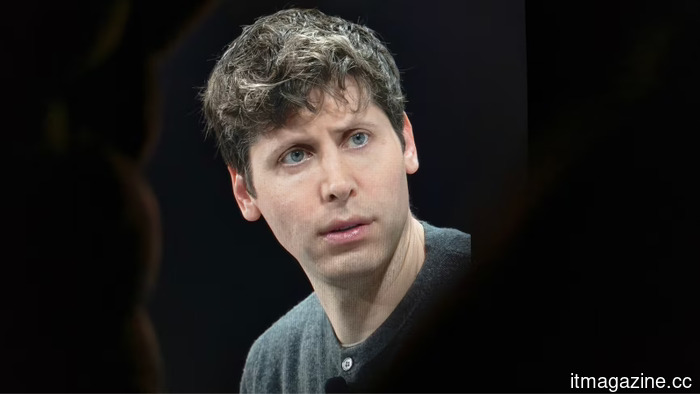 OpenAI purchases Tomoro as the initial component of a $14 billion Deployment Company.
Tomorrow, the Edinburgh-based AI company established in collaboration with OpenAI, is set to be the inaugural acquisition of a $14 billion subsidiary that places engineers within businesses. Accenture saw a decline of 3%.
n8n integrated within SAP Joule Studio as an AI orchestration layer, leading to a valuation increase to $5.2 billion.
SAP has integrated n8n within Joule Studio to link its 200 AI agents with non-SAP systems. The Berlin-based workflow automation startup is currently the most valuable AI company in Germany.
OpenAI purchases Tomoro as the initial component of a $14 billion Deployment Company.
Tomorrow, the Edinburgh-based AI company established in collaboration with OpenAI, is set to be the inaugural acquisition of a $14 billion subsidiary that places engineers within businesses. Accenture saw a decline of 3%.
n8n integrated within SAP Joule Studio as an AI orchestration layer, leading to a valuation increase to $5.2 billion.
SAP has integrated n8n within Joule Studio to link its 200 AI agents with non-SAP systems. The Berlin-based workflow automation startup is currently the most valuable AI company in Germany.
Two days prior to Trump's arrival, Beijing aired a segment about Huawei's covert chip laboratory on national television. The audience for this message was not the Chinese public.
China displayed Huawei's clandestine chip laboratory on prime-time television just days before Trump's visit to Beijing. The airing indicates that US export restrictions have strengthened, rather than weakened, China's aspirations in the chip industry.