
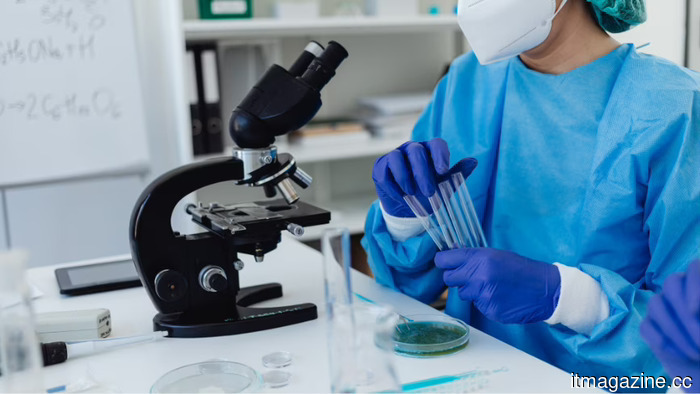
Bristol Myers Squibb signs a $15.2 billion agreement with China's Hengrui as a patent expiration crisis approaches.
**Summary:** Bristol Myers Squibb has finalized a $15.2 billion agreement with China's Hengrui Medicine, encompassing 13 early-stage drug programs, as the patent challenges faced by Big Pharma make Chinese innovation essential for commercial sustainability—despite efforts from the BIOSECURE Act to detach the biotech sectors of both nations.
Bristol Myers Squibb has entered into a deal valued at $15.2 billion with Jiangsu Hengrui Medicine, the largest pharmaceutical firm in China based on market capitalization. This agreement includes 13 early-phase drug initiatives in the fields of oncology, hematology, and immunology, none of which have begun human clinical trials. The announcement coincided with President Trump’s visit to Beijing for his inaugural state visit in his second term, although the timing is merely coincidental while the economic motivations are clear.
Bristol Myers Squibb is about to face a patent cliff projected to result in a loss of approximately $300 billion in revenue from the global pharmaceutical industry by 2030. The company’s major products, Opdivo and Eliquis, which generate over $22 billion annually, are expected to lose exclusivity around 2028. As the company seeks new molecules, it finds it cannot innovate quickly enough by itself, while China is capable of doing so.
**Details of the Deal:**
Bristol Myers Squibb will initially pay Hengrui $600 million upon closing, $175 million after a year, and an additional $175 million contingent on developments in 2028, leading to a total of $950 million in structured payments soon after. The remaining $14.25 billion is tied to various development, regulatory, and commercial milestones. BMS will gain exclusive global rights to four oncology and hematology products from Hengrui outside of mainland China, Hong Kong, and Macau, while Hengrui will receive exclusive rights to four of BMS's immunology assets in those territories. Additionally, both companies will collaborate on the discovery and development of five further programs using Hengrui’s research capabilities.
This arrangement indicates that BMS is not acquiring Hengrui, but rather licensing its research outcomes. The hopeful American firm facing a patent crisis is investing in the Chinese company that boasts a strong development pipeline. The transaction is anticipated to finalize in the third quarter of 2026, depending on the results of an antitrust review. Following the announcement, Hengrui’s share price rose, while BMS’s remained stable.
**About the Pipeline:**
Hengrui has transformed from the type of Chinese pharmaceutical company American executives envisaged a decade ago; it is no longer just a generics manufacturer. It currently has over 90 therapies under clinical development across 400 trials, including more than 20 international studies. It ranks among the top 10 global pharma pipelines, alongside brands like Pfizer and Roche, according to Citeline. In the first quarter of 2026, its R&D expenditures surpassed 2.22 billion yuan, representing 27% of revenue. Hengrui has 30 drugs approved in China, with 20 more authorized in the EU, the US, and Japan. Its market capitalization stands at about $54.6 billion, with reported profit growth of 21.8% in the first quarter. The deal with BMS marks the largest international licensing agreement for Hengrui and follows a year in which Chinese drug firms collectively executed $137.7 billion in out-licensing deals, nearly ten-fold the total from 2021.
**Addressing the Patent Cliff:**
The patent cliff affecting the pharmaceutical sector is not a future concern; it is currently impacting companies. BMS reported full-year revenues of $48.2 billion for 2025, slightly down from $48.3 billion in 2024, and expects revenues between $46 billion and $47.5 billion for 2026. Revenue from legacy products dropped 15% to $21.8 billion in 2025, and sales of Pomalyst fell from $3.55 billion to $2.73 billion due to generic competition. Although BMS’s growth portfolio, including Opdivo, Breyanzi, Reblozyl, and Camzyos, saw a 16% year-over-year increase, it must outpace the decline.
BMS is not the only company affected. The broader industry anticipates losing over $300 billion in revenue due to expiring patents between 2025 and 2030. Merck’s Keytruda, currently the leading drug at $29.5 billion in sales for 2024, is also approaching its own patent cliff. Pfizer is racing to launch obesity medications by 2028 to compensate for lost revenues. All pharmaceutical firms are on the lookout for new molecules, with an increasing number of promising candidates emerging from China.
**Emerging Trends:**
In January, AstraZeneca finalized an $18.5 billion deal with China’s CSP
Other articles
 JPMorgan has submitted a second tokenized money market fund on Ethereum as the competition among Wall Street firms in blockchain technology intensifies.
JPMorgan has submitted an application for its second tokenized money market fund on Ethereum, entering into competition with BlackRock to create blockchain-based finance within the Genius Act framework.
JPMorgan has submitted a second tokenized money market fund on Ethereum as the competition among Wall Street firms in blockchain technology intensifies.
JPMorgan has submitted an application for its second tokenized money market fund on Ethereum, entering into competition with BlackRock to create blockchain-based finance within the Genius Act framework.
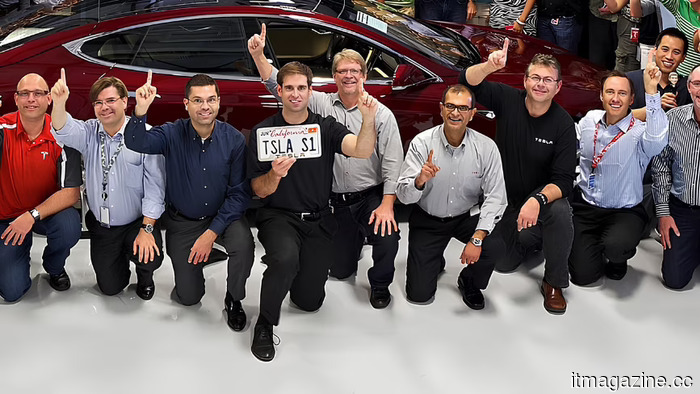 Former Tesla CFO Deepak Ahuja has joined Redwood Materials as the battery recycler shifts its focus to AI-driven energy infrastructure.
Deepak Ahuja, the CFO who led Tesla's IPO, is joining Redwood Materials as the company shifts its focus from battery recycling to supplying power for AI data centers using second-life EV batteries.
Former Tesla CFO Deepak Ahuja has joined Redwood Materials as the battery recycler shifts its focus to AI-driven energy infrastructure.
Deepak Ahuja, the CFO who led Tesla's IPO, is joining Redwood Materials as the company shifts its focus from battery recycling to supplying power for AI data centers using second-life EV batteries.
 JPMorgan submits a second tokenized money market fund on Ethereum as the competition for blockchain advancements on Wall Street intensifies.
JPMorgan submitted an application for its second tokenized money market fund on Ethereum, aligning with BlackRock in the competition to establish blockchain-based finance under the Genius Act framework.
JPMorgan submits a second tokenized money market fund on Ethereum as the competition for blockchain advancements on Wall Street intensifies.
JPMorgan submitted an application for its second tokenized money market fund on Ethereum, aligning with BlackRock in the competition to establish blockchain-based finance under the Genius Act framework.
 OpenAI purchases Tomoro as the initial component of a $14 billion Deployment Company.
Tomorrow, the Edinburgh-based AI company established in collaboration with OpenAI, is set to be the inaugural acquisition of a $14 billion subsidiary that places engineers within businesses. Accenture saw a decline of 3%.
OpenAI purchases Tomoro as the initial component of a $14 billion Deployment Company.
Tomorrow, the Edinburgh-based AI company established in collaboration with OpenAI, is set to be the inaugural acquisition of a $14 billion subsidiary that places engineers within businesses. Accenture saw a decline of 3%.
 6 actions Gemini Intelligence is set to take on your Android devices.
Google is introducing these Gemini features to Android, broadening their availability across applications and devices to automate daily activities, streamline browsing, and enhance your phone's helpfulness while ensuring you remain in control.
n8n integrated within SAP Joule Studio as an AI orchestration layer, leading to a valuation increase to $5.2 billion.
SAP has integrated n8n within Joule Studio to link its 200 AI agents with non-SAP systems. The Berlin-based workflow automation startup is currently the most valuable AI company in Germany.
6 actions Gemini Intelligence is set to take on your Android devices.
Google is introducing these Gemini features to Android, broadening their availability across applications and devices to automate daily activities, streamline browsing, and enhance your phone's helpfulness while ensuring you remain in control.
n8n integrated within SAP Joule Studio as an AI orchestration layer, leading to a valuation increase to $5.2 billion.
SAP has integrated n8n within Joule Studio to link its 200 AI agents with non-SAP systems. The Berlin-based workflow automation startup is currently the most valuable AI company in Germany.
Bristol Myers Squibb signs a $15.2 billion agreement with China's Hengrui as a patent expiration crisis approaches.
BMS is set to pay Hengrui $15.2 billion for 13 early-stage drugs in the fields of oncology and immunology. This agreement highlights the critical role of Chinese innovation due to the patent cliff facing Big Pharma.