
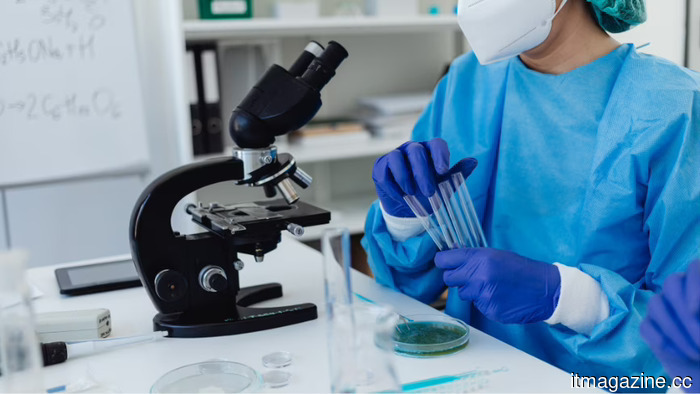
Bristol Myers Squibb has entered into a $15.2 billion pharmaceutical agreement with China's Hengrui as it faces an impending patent expiration.
**Summary:** Bristol Myers Squibb has entered into a $15.2 billion agreement with Hengrui Medicine, China's largest pharmaceutical firm, concerning 13 early-stage drug programs, highlighting the necessity for innovation amid a significant patent loss in the pharmaceutical industry. Despite the BIOSECURE Act aimed at reducing ties between U.S. and Chinese biotech sectors, this partnership showcases how American pharmaceutical companies are relying on Chinese advancements to sustain their commercial viability.
Bristol Myers Squibb (BMS) has finalized a deal valued at up to $15.2 billion with Jiangsu Hengrui Medicine, known as China's largest pharmaceutical company based on market capitalization. This agreement pertains to 13 early-stage drug programs focused on oncology, hematology, and immunology, none of which have yet commenced human clinical trials. The announcement coincided with President Trump’s inaugural state visit to China during his second term.
While the timing is a coincidence, the underlying economic factors are significant. BMS is facing a patent cliff that may result in a $300 billion revenue loss for the global pharmaceutical sector by 2030. Following the loss of exclusivity for major products like Opdivo and Eliquis around 2028, the company is in urgent need of new drug candidates, which it cannot develop quickly enough on its own, whereas China is able to deliver.
**Details of the Deal**
BMS will make an initial payment of $600 million at closing, followed by $175 million on the first anniversary and a contingent $175 million in 2028, leading to structured payments totaling $950 million in the short term. The remaining $14.25 billion will be linked to development, regulatory, and commercial milestones. BMS will hold exclusive global rights to Hengrui’s four oncology and hematology assets outside mainland China, Hong Kong, and Macau, while Hengrui will have exclusive rights to four immunology assets from BMS in those regions. Both companies will jointly discover and develop five additional programs using Hengrui’s research capabilities.
This structure indicates that BMS is not acquiring Hengrui outright but is instead licensing its research output. In this exchange, the American company facing a patent cliff is compensating the Chinese company with a robust development pipeline. The closing of the transaction is contingent upon antitrust reviews and is anticipated for the third quarter of 2026. Following the announcement, Hengrui's stock rose, while BMS's remained stable.
**Hengrui's Progress**
Hengrui has evolved from the stereotype of a Chinese pharmaceutical company as a generics manufacturer. It boasts over 90 proprietary therapies in clinical development across 400 trials, including more than 20 international studies. It ranks among Citeline’s global top ten pharma pipelines, alongside industry giants like Pfizer, Roche, and AstraZeneca. In the first quarter of 2026, its R&D expenditure surpassed 2.22 billion yuan, representing 27% of its revenue. Hengrui has also achieved commercialization of 30 drugs in China and holds 20 approvals in the EU, US, and Japan.
The company's market cap is approximately $54.6 billion, with a reported profit growth of 21.8% in the first quarter. Its drug pipeline covers varied fields, including oncology, cardiometabolic diseases, immunology, respiratory issues, and neuroscience. The BMS agreement is Hengrui’s largest international licensing deal to date and follows a year where Chinese firms collectively engaged in $137.7 billion in out-licensing agreements—an increase nearly tenfold from the previous year.
**Patent Cliff Concerns**
The patent cliff affecting the pharmaceutical industry is already in progress. BMS reported a slight revenue decline for 2025, with projections indicating further decreases in 2026, particularly with significant drops in revenues from legacy products due to new generic competition. Although BMS's growth portfolio is generating annual increases of 16%, it must outpace salary losses from its fading blockbusters.
BMS is not alone in facing this challenge; the pharmaceutical sector as a whole is preparing for the loss of over $300 billion in patent protection between 2025 and 2030. On a similar note, major products like Merck's Keytruda are approaching their own patent cliffs. The urgent need for innovations is evident, with many companies increasingly looking to Chinese firms for new drug molecules.
**Industry Trends**
AstraZeneca finalized an $18.5 billion deal with CSPC Pharmaceutical for obesity and diabetes programs, while AbbVie signed a $5.6 billion agreement with RemeGen for cancer treatments. In 2025, Chinese companies contributed roughly one-third of total global licensing expenditures, significantly increasing from prior years. The upfront payments for licensing with Chinese firms have surged from $52 million in 2022 to $172 million in early 2026, reflecting a shift in the valuation of their offerings.
Moreover, research from Stanford's 2026 AI
Other articles
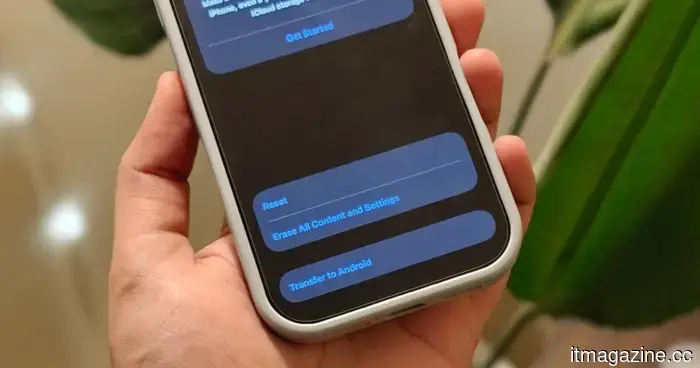 Android and iPhone are becoming increasingly similar, which may alter the way you switch between the two.
Transferring from Android to iPhone is beginning to feel less chaotic and more like simply copying, pasting, and finishing.
Android and iPhone are becoming increasingly similar, which may alter the way you switch between the two.
Transferring from Android to iPhone is beginning to feel less chaotic and more like simply copying, pasting, and finishing.
 6 actions Gemini Intelligence is set to take on your Android devices.
Google is introducing these Gemini features to Android, broadening their availability across applications and devices to automate daily activities, streamline browsing, and enhance your phone's helpfulness while ensuring you remain in control.
6 actions Gemini Intelligence is set to take on your Android devices.
Google is introducing these Gemini features to Android, broadening their availability across applications and devices to automate daily activities, streamline browsing, and enhance your phone's helpfulness while ensuring you remain in control.
 Google introduces Googlebook: AI laptops powered by Android that take the place of Chromebooks, integrating Gemini at the operating system level.
Google has discontinued ChromeOS and introduced Googlebook, a high-end Android laptop featuring the Gemini interface. The Magic Pointer transforms the cursor into an AI assistant. Devices are set to be released this fall.
Google introduces Googlebook: AI laptops powered by Android that take the place of Chromebooks, integrating Gemini at the operating system level.
Google has discontinued ChromeOS and introduced Googlebook, a high-end Android laptop featuring the Gemini interface. The Magic Pointer transforms the cursor into an AI assistant. Devices are set to be released this fall.
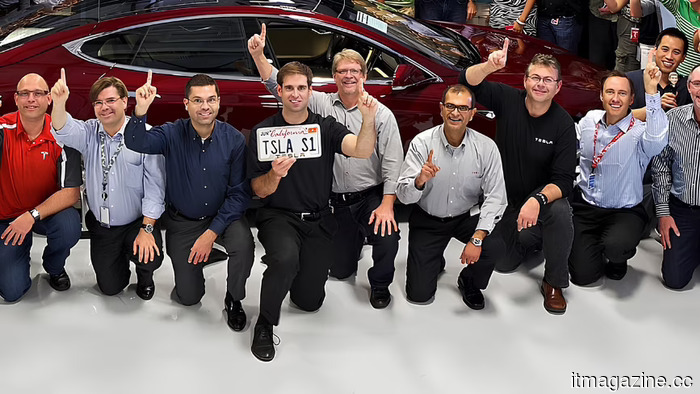 Former Tesla CFO Deepak Ahuja has joined Redwood Materials as the battery recycler shifts its focus to AI-driven energy infrastructure.
Deepak Ahuja, the CFO who led Tesla's public offering, is joining Redwood Materials as the company shifts its focus from battery recycling to supplying power for AI data centers using second-life electric vehicle batteries.
SAP introduces the Autonomous Enterprise featuring over 200 AI agents and a partnership with Anthropic at Sapphire 2026.
SAP introduced the Autonomous Enterprise during Sapphire 2026, incorporating over 200 AI agents in finance, supply chain, and HR, and collaborating with Anthropic. Its stock has declined by 41%.
Former Tesla CFO Deepak Ahuja has joined Redwood Materials as the battery recycler shifts its focus to AI-driven energy infrastructure.
Deepak Ahuja, the CFO who led Tesla's public offering, is joining Redwood Materials as the company shifts its focus from battery recycling to supplying power for AI data centers using second-life electric vehicle batteries.
SAP introduces the Autonomous Enterprise featuring over 200 AI agents and a partnership with Anthropic at Sapphire 2026.
SAP introduced the Autonomous Enterprise during Sapphire 2026, incorporating over 200 AI agents in finance, supply chain, and HR, and collaborating with Anthropic. Its stock has declined by 41%.
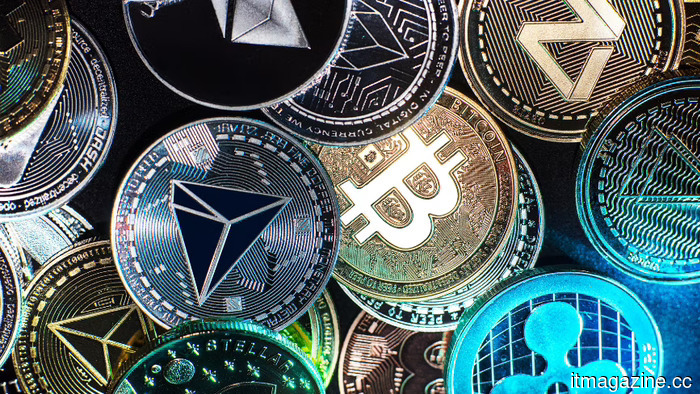 JPMorgan submits a second tokenized money market fund on Ethereum as the competition for blockchain advancements on Wall Street intensifies.
JPMorgan submitted an application for its second tokenized money market fund on Ethereum, aligning with BlackRock in the competition to establish blockchain-based finance under the Genius Act framework.
JPMorgan submits a second tokenized money market fund on Ethereum as the competition for blockchain advancements on Wall Street intensifies.
JPMorgan submitted an application for its second tokenized money market fund on Ethereum, aligning with BlackRock in the competition to establish blockchain-based finance under the Genius Act framework.
Bristol Myers Squibb has entered into a $15.2 billion pharmaceutical agreement with China's Hengrui as it faces an impending patent expiration.
BMS is providing Hengrui with $15.2 billion for 13 developmental drugs in the fields of oncology and immunology. This agreement highlights how the patent expiration issues faced by major pharmaceutical companies have made Chinese innovation crucial.