
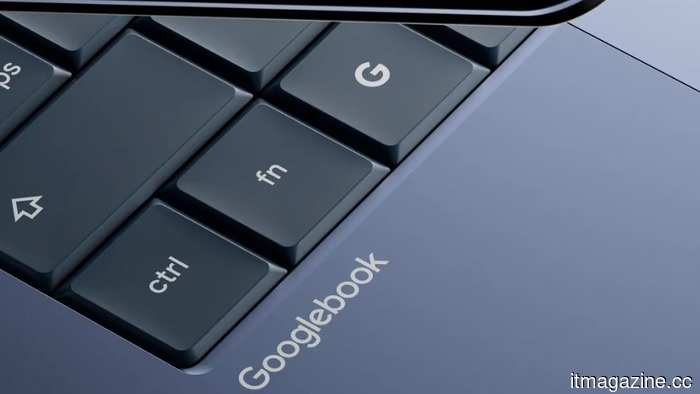
Google introduces Googlebook: Android-driven AI laptops take the place of Chromebooks, featuring Gemini at the operating system level.
**TL;DR** Google has phased out ChromeOS, introducing Googlebook, a premium Android laptop featuring Gemini at its core, effectively transforming the cursor into an AI assistant and integrating its vast 3.6 billion-device ecosystem into a desktop environment for the first time.
Google has discontinued the Chromebook. After 15 years, the company that developed the browser-as-an-operating-system model has realized that a browser alone is insufficient. During the Android Show on Monday, Google presented Googlebook, a new category of high-end laptops running Android, with Gemini built directly into the operating system. These devices are set to be released this autumn from brands like Acer, ASUS, Dell, HP, and Lenovo, effectively replacing ChromeOS, which will no longer receive updates.
This rebranding isn't merely superficial. Googlebook operates on what Google refers to internally as Aluminium OS, a version of Android 17 redesigned specifically for a true desktop experience, complete with a custom window manager, genuine multitasking, and Gemini integrated into every user interaction. There are no emulation layers, no compatibility modes, and no containers. The operating system is Android, the applications are native, and the AI serves not as a sidebar assistant, but as the primary interface.
**The cursor**
A standout feature is the Magic Pointer. Developed alongside Google’s DeepMind team, it converts the laptop cursor into an AI agent that is aware of context. For instance, hovering over a date in an email prompts Gemini to schedule a meeting, pointing at two images creates a composite, and selecting text can result in summaries, translations, or rewrites. This feature allows the cursor—historically the oldest interaction method in personal computing—to directly connect with a large language model, enabling it to perceive and act on screen content.
Magic Pointer is not a traditional chatbot and requires no prompts. It intuitively grasps the context of whatever the cursor interacts with and presents options even before the user requests them. This distinction is significant as it embodies a new approach to integrating AI into personal computing. While Apple incorporates intelligence into individual applications and Microsoft places Copilot beside the workspace, Google embeds Gemini directly into the pointing device.
Another key feature is Create your Widget, allowing users to describe a custom widget in simple language, with Gemini generating it instantly by collecting data from Gmail, Calendar, web searches, and other Google services into a single personalized dashboard. These widgets are created based on user descriptions rather than chosen from a predefined selection, emphasizing personalization.
**The unification**
Googlebook addresses a persistent issue that has hindered Google for a decade. ChromeOS functioned primarily as a web-centric operating system that executed Android applications within a compatibility layer. While it was functional, it was not optimal. Android apps on Chromebooks operated in containers that lacked direct access to the file system, struggled to interact with desktop windows, and couldn't utilize hardware features as effectively as on a smartphone. The platform essentially had two distinct components, neither of which performed as well as necessary.
Aluminium OS resolves this fragmentation. Android applications function natively on the laptop because it runs on Android itself. A feature named Cast my Apps enables users to access any application from their Android phone on the Googlebook’s display without the need to download anything. Quick Access allows straightforward access to phone files through the laptop's file browser without manual transfers. The phone and laptop now share an operating system, an app ecosystem, and an AI infrastructure.
The European Commission is gearing up to compel Google to provide rival AI assistants with the same access to Android that Gemini receives, a decision that could determine if the deep integration of Gemini in Googlebook serves as a competitive advantage or an enforced open platform. A ruling on this matter is anticipated in July, while Googlebook is expected to launch in the autumn. Thus, the timelines for regulation and product release appear to be converging.
**The market**
Googlebook enters a reshaped laptop market influenced by two significant trends. First, there’s Apple’s MacBook Neo, a $599 laptop running macOS on an A18 Pro chip derived from the iPhone, marking Apple's first entry price below $600. Second, the Snapdragon X Elite has brought competitive battery life and AI capabilities to Windows laptops for the first time in years.
Google's strategy is to completely shift away from the lower-end market. Googlebook is positioned as a high-end product, featuring what Google describes as premium craftsmanship and materials. Each device will come equipped with a Glowbar, an LED strip in the keyboard that responds to Gemini's activity. Google aims to create an AI device that happens to be a laptop, rather than a budget laptop with AI capabilities.
This pivot is notable given that Chromebooks thrived due to their affordability. Google is deploying Gemini into four million GM vehicles, embedding the same AI into cars, mobile devices, wearables, and now laptops. The strategy is clear: Google does not intend for Gemini to be a standalone product but rather an intelligence layer that connects
Other articles
 OpenAI acquires Tomoro as a foundational element of a $14 billion deployment firm.
Tomoro, the Edinburgh-based AI company established in partnership with OpenAI, is set to be the first acquisition of a $14 billion subsidiary that will place engineers within businesses. Accenture's shares dropped by 3%.
SAP announces its Autonomous Enterprise featuring over 200 AI agents and a partnership with Anthropic at Sapphire 2026.
At Sapphire 2026, SAP introduced the Autonomous Enterprise, incorporating over 200 AI agents into finance, supply chain, and HR, and collaborating with Anthropic. Its stock has decreased by 41%.
OpenAI acquires Tomoro as a foundational element of a $14 billion deployment firm.
Tomoro, the Edinburgh-based AI company established in partnership with OpenAI, is set to be the first acquisition of a $14 billion subsidiary that will place engineers within businesses. Accenture's shares dropped by 3%.
SAP announces its Autonomous Enterprise featuring over 200 AI agents and a partnership with Anthropic at Sapphire 2026.
At Sapphire 2026, SAP introduced the Autonomous Enterprise, incorporating over 200 AI agents into finance, supply chain, and HR, and collaborating with Anthropic. Its stock has decreased by 41%.
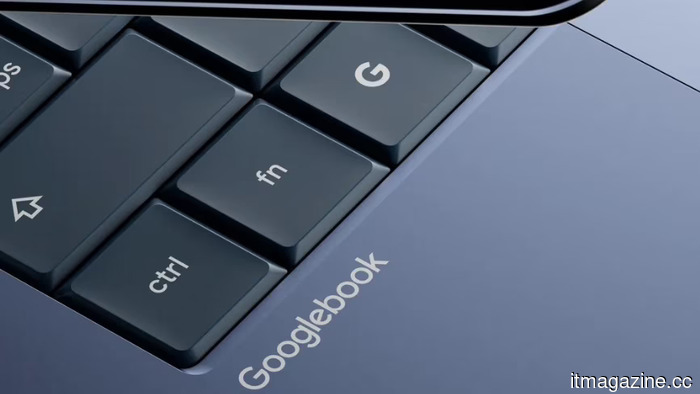 Google introduces Googlebook: AI laptops powered by Android that take the place of Chromebooks, integrating Gemini at the operating system level.
Google has discontinued ChromeOS and introduced Googlebook, a high-end Android laptop featuring the Gemini interface. The Magic Pointer transforms the cursor into an AI assistant. Devices are set to be released this fall.
Google introduces Googlebook: AI laptops powered by Android that take the place of Chromebooks, integrating Gemini at the operating system level.
Google has discontinued ChromeOS and introduced Googlebook, a high-end Android laptop featuring the Gemini interface. The Magic Pointer transforms the cursor into an AI assistant. Devices are set to be released this fall.
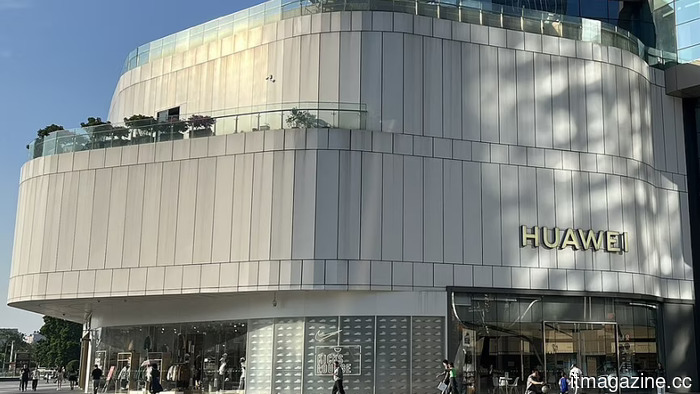 Beijing showcased Huawei's hidden chip laboratory on national television just two days prior to Trump's arrival. The intended audience was not the Chinese public.
China unveiled Huawei's clandestine chip laboratory on prime-time television just days prior to Trump's visit to Beijing. This broadcast indicates that US export restrictions have strengthened, rather than weakened, China's aspirations in the semiconductor industry.
Beijing showcased Huawei's hidden chip laboratory on national television just two days prior to Trump's arrival. The intended audience was not the Chinese public.
China unveiled Huawei's clandestine chip laboratory on prime-time television just days prior to Trump's visit to Beijing. This broadcast indicates that US export restrictions have strengthened, rather than weakened, China's aspirations in the semiconductor industry.
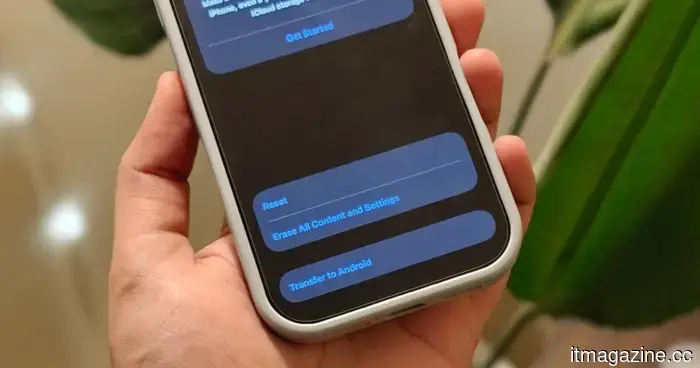 Android and iPhone are becoming increasingly similar, which may alter the way you switch between the two.
Transferring from Android to iPhone is beginning to feel less chaotic and more like simply copying, pasting, and finishing.
Android and iPhone are becoming increasingly similar, which may alter the way you switch between the two.
Transferring from Android to iPhone is beginning to feel less chaotic and more like simply copying, pasting, and finishing.
Google introduces Googlebook: Android-driven AI laptops take the place of Chromebooks, featuring Gemini at the operating system level.
Google has discontinued ChromeOS and introduced Googlebook, a high-end Android laptop featuring the Gemini interface. The Magic Pointer transforms the cursor into an AI assistant. These devices will be available this autumn.